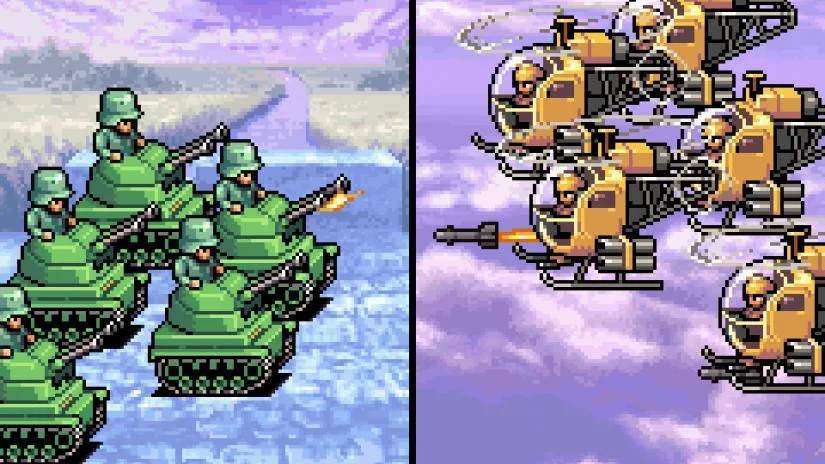
Economic Optimization & Fund Management
In Advance Wars, mastering your economy and production pipeline is as crucial as battlefield tactics. This section delves into the strategic management of funds, the efficient deployment of forces, and the critical role of property control. Success hinges on your ability to secure a steady income, capture vital facilities, and maintain a robust flow of reinforcements to outmaneuver and overwhelm your opponent.
We'll explore the intricate relationship between your turn-based income, the varying costs of unit production, and the strategic value of different infrastructure types like Cities, Factories, Airports, and Ports. Effective economic management allows you to not only replace combat losses but also to build a superior force capable of dictating the pace of the war.
Understanding Your Income Sources
Your primary source of income in Advance Wars comes from properties you control. Each property generates a fixed amount of funds at the beginning of your turn. The more properties you control, the larger your war chest becomes, enabling you to build more powerful units and maintain map control.
Property Types & Income Generation
All capturable properties in Advance Wars provide a consistent income of 1000G per turn once captured. This applies universally to:
- Cities: The most common property, vital for income and often strategically placed. They also provide a defensive bonus to units stationed on them.
- Headquarters (HQ): Your starting base, provides income and acts as a production facility for ground units. Capturing an enemy HQ is also a primary win condition.
- Factories: Essential for producing ground units (e.g., Infantry, Tanks, Artillery). They also provide a defensive bonus and can repair/resupply ground units.
- Airports: Necessary for producing air units (e.g., Fighters, Bombers, Helicopters). They provide a defensive bonus and can repair/resupply air units.
- Ports: Required for producing naval units (e.g., Cruisers, Battleships, Submarines). They provide a defensive bonus and can repair/resupply naval units.
Key Takeaway: Prioritize capturing properties early and consistently. Every property secured is 1000G added to your budget each turn, which quickly compounds over the course of a battle. The defensive bonuses and repair/resupply capabilities of production facilities add significant strategic value beyond just income.
Unit Production & Cost Management
Effective fund management means balancing the need for cheap, numerous units with the strategic advantage offered by expensive, powerful units. Understanding the cost of each unit is fundamental to planning your turns and long-term strategy. This section details the cost, strategic role, and specific notes for every unit available in Advance Wars, categorized by their production facility.
Ground Units (Produced at Factories & HQ)
Ground units form the backbone of your army, essential for capturing properties, holding territory, and engaging in direct combat. Their diverse roles require careful consideration of cost versus utility.
| Unit | Cost (G) | Strategic Role | Notes |
|---|---|---|---|
| Infantry | 1000 | Cheap, capture properties, decent anti-infantry, weak in direct combat. | Essential for economic expansion and screening. Can traverse all terrain types, though slowly. Their low cost makes them ideal for absorbing damage or blocking enemy movement. |
| Mech | 3000 | Stronger than Infantry, good anti-vehicle, slow, can capture. | Better combat stats than Infantry, especially against vehicles and other Mechs. Ideal for defensive captures in contested areas or as a more robust capturing unit. Their movement is restricted by terrain. |
| Recon | 4000 | Fast, good vision, weak combat, best for scouting and quick captures. | Excellent for revealing Fog of War, quickly reaching distant neutral properties, or harassing isolated enemy units. Their speed makes them invaluable for early map control. |
| Tank | 6000 | Main combat unit, versatile, good against most ground units. | The backbone of most ground armies. Good balance of cost, movement, and firepower. Effective against Infantry, Mechs, and other Tanks. A core unit for offensive pushes. |
| Medium Tank | 16000 | Heavy combat unit, devastating firepower, slow, high cost. | High-tier ground unit, capable of destroying most units in one hit. Requires significant economic investment. Best used to spearhead attacks or break through heavily defended positions. Vulnerable to indirect fire and Bombers. |
| APC | 5000 | Transports Infantry/Mechs, resupplies fuel/ammo, no attack. | Crucial for rapid deployment of capturing units and extending the operational range of combat units. An APC can resupply adjacent units, making them vital for sustained operations far from production facilities. |
| Artillery | 12000 | Long-range indirect fire, vulnerable up close, requires support. | Excellent for breaking defensive lines and suppressing enemy advances from a safe distance. Must be protected by direct combat units. Their range allows them to strike without retaliation. |
| Rocket | 15000 | Longer-range indirect fire than Artillery, higher damage, more expensive. | Even more powerful indirect fire than Artillery, but with fewer shots and higher cost. Ideal for concentrated fire on high-value targets. Like Artillery, they are defenseless at close range. |
| Anti-Air | 8000 | Specialized anti-air, also effective against Infantry/Mechs. | Your primary defense against enemy air units. Surprisingly effective against light ground units too. Essential for protecting your ground forces from B-Copters and Bombers. |
| Missile | 12000 | Long-range anti-air, immobile, requires support. | Static anti-air defense with an extended range, specifically designed to counter Fighters and Bombers. Must be deployed strategically to cover key areas or units. |
| Neotank (Advance Wars 2 only) | 22000 | Superior to Medium Tank in every aspect, high cost. | The ultimate ground combat unit. Faster, stronger, and more durable than a Medium Tank. A game-changer when mass-produced, but its extreme cost demands a robust economy. |
Air Units (Produced at Airports)
Air units offer unparalleled mobility and striking power, capable of bypassing ground defenses and delivering devastating attacks. However, they are expensive and vulnerable to specialized anti-air units.
| Unit | Cost (G) | Strategic Role | Notes |
|---|---|---|---|
| T-Copter | 5000 | Transports Infantry/Mechs over any terrain, no attack. | Allows for rapid deployment of capturing units or flanking maneuvers over impassable terrain. Crucial for island maps or quick captures behind enemy lines. Vulnerable to all attacking units. |
| B-Copter | 9000 | Versatile air-to-ground combat, good against tanks and infantry. | A flexible air unit that can deal significant damage to ground units. Excellent for harassing, scouting, and supporting ground pushes. Vulnerable to Fighters and Anti-Air. |
| Fighter | 20000 | Air superiority, excels at destroying other air units. | Essential for controlling the skies. Can quickly eliminate enemy B-Copters and Bombers. Has limited fuel, requiring careful management or proximity to Airports/APC. |
| Bomber | 22000 | Devastating air-to-ground attacks, especially against heavy armor. | The ultimate ground unit destroyer. Extremely powerful but very expensive and vulnerable to Fighters and Anti-Air. Best used to eliminate high-value targets like Medium Tanks or Battleships. |
| Stealth Bomber (Advance Wars 2 only) | 24000 | Invisible in Fog of War, powerful air-to-ground, high cost. | An advanced version of the Bomber, capable of remaining hidden in Fog of War until it attacks. This stealth capability allows for devastating surprise attacks on enemy units or facilities. Extremely high cost. |
Naval Units (Produced at Ports)
Naval units are critical for maps with significant water bodies, enabling amphibious assaults, coastal bombardments, and control of sea lanes. They are generally expensive but offer unique strategic advantages.
| Unit | Cost (G) | Strategic Role | Notes |
|---|---|---|---|
| Lander | 12000 | Transports ground units across water, no attack. | Critical for amphibious assaults and expanding your economic reach across water bodies. Can carry two ground units (Infantry/Mech/Tank/etc.). Extremely vulnerable to all attacks. |
| Cruiser | 18000 | Anti-air and anti-submarine capabilities, can carry B-Copters. | A versatile naval unit for defense against air and submerged threats. Can also transport two B-Copters, extending their range and providing air support. Essential for naval control. |
| Submarine | 20000 | Stealth unit, powerful torpedoes against ships, vulnerable when surfaced. | Excellent for ambushing enemy naval units. Requires careful management of dive/surface states. Submerged, they are invisible in Fog of War but consume more fuel. Vulnerable to Cruisers and Bombers. |
| Battleship | 28000 | Long-range indirect fire, devastating against land and sea units. | The most expensive unit, capable of shelling targets from a vast distance. Can turn the tide of a naval or coastal battle. Immobile after firing. Requires protection from Submarines and Bombers. |
Optimal Capture Strategies & Early Game Priorities
The early game is critical for establishing economic dominance. A strong economic foundation allows you to out-produce your opponent in the mid and late game.
Early Game Capture Priorities
- Infantry Rush for Cities: In most maps, your first few turns should focus on producing Infantry from your HQ and sending them to capture as many neutral cities as possible. Infantry are the only units capable of capturing properties and are the cheapest unit to produce. Aim for 2-3 Infantry on the first turn if your funds allow.
- Secure Production Facilities: After securing initial cities, prioritize capturing neutral Factories, Airports, and Ports that are strategically important or close to your front lines. These facilities allow you to diversify your unit production and provide forward repair/resupply points.
- Prioritize Contested Properties: If a neutral city or facility is equidistant or closer to the enemy, it becomes a higher priority. Denying the enemy income and production capabilities is as valuable as gaining them for yourself.
- Defensive Captures: Don't neglect cities near your HQ, even if they seem less contested. Every city adds to your income, and these provide a safe, consistent boost.
- Property Prioritization by Map Layout:
- Chokepoint Cities: Capturing cities that control access to key areas can provide both income and a defensive advantage. Placing a strong defensive unit on such a city can halt an enemy advance.
- Forward Production Facilities: If a Factory or Airport is close to the front, capturing it allows you to produce units directly into the battle, saving precious turns on movement. This can be a game-changer for maintaining pressure.
- Coastal Ports: On maps with significant water, securing Ports early can lead to naval dominance, which can then support land operations through coastal bombardment or amphibious landings.
Balancing Infantry vs. High-Cost Units
- Early Game (Turns 1-5): Focus heavily on Infantry production. A good rule of thumb is to produce 2-3 Infantry for every combat unit in the very early turns, depending on map size and property distribution. Your goal is to maximize your income growth. Consider building a Recon or APC to speed up captures on larger maps, especially if neutral properties are spread out.
- Mid Game (Turns 6-15): As your income grows, you can start investing in more expensive combat units like Tanks, B-Copters, or Artillery. However, always ensure you have enough Infantry to continue capturing new properties, act as cheap blockers, or scout. This is when you start building units to counter the enemy's emerging threats and establish a balanced force.
- Late Game (Turns 16+): With a strong economy, you can afford to mass produce powerful units like Medium Tanks, Bombers, and Battleships, which can turn the tide of battle. Continue to use Infantry for capturing any remaining neutral properties or for front-line screening. At this stage, you should be able to replace losses without significant economic strain, focusing on overwhelming the opponent.
Managing Cash Flow & Strategic Spending
Beyond simply generating income, how you spend your funds is paramount. Smart cash flow management can give you a significant advantage, allowing you to maintain initiative and react effectively to enemy movements.
Budgeting for the Next Turn
Always consider your next turn's income when making purchases. Sometimes it's better to save a few thousand G to afford a critical unit next turn (e.g., a Tank to counter an enemy push, or a Fighter to deal with an incoming Bomber) rather than spending all your funds on less impactful units now. This foresight prevents you from being caught flat-footed.
Repair & Resupply Costs
Units can be repaired and resupplied at your HQ, Factories, Airports, and Ports. This costs money proportional to the damage or missing fuel/ammo. While sometimes necessary, excessive repairs can drain your funds. Weigh the cost of repairing a heavily damaged unit against building a new one or deploying a fresh unit from a production facility. Often, it's more cost-effective to let a damaged unit retreat and defend a property while a new, full-health unit takes its place on the front line.
- Repair Cost: 100G per HP restored.
- Resupply Cost: Proportional to fuel/ammo needed.
Strategic Unit Deployment
Where you produce units matters. Producing a Tank at a forward Factory saves turns of movement compared to producing it at your HQ. This can be crucial for reinforcing a contested area or launching a surprise attack. Conversely, producing expensive units at your HQ, far from the front, can be safer from immediate enemy attack.
Advanced Economic Strategies
Beyond basic income generation and unit production, several advanced strategies can significantly impact your economic advantage and overall success.
Property Blocking
This tactic involves positioning a unit (usually a cheap Infantry) on a neutral property that an enemy Infantry is attempting to capture. By moving your unit onto the property, you prevent the enemy from continuing their capture progress. This forces the enemy to either attack your unit (wasting a turn and potentially losing their unit) or move their unit away, buying you valuable time to capture it yourself or reinforce the area. This is particularly effective on properties near the front lines or those that are critical chokepoints.
Step-by-step Property Blocking:
- Identify Target: Observe enemy Infantry moving towards a neutral city or production facility.
- Calculate Movement: Determine if your Infantry (or other capturing unit) can reach the property before or on the same turn as the enemy.
- Position Unit: Move your Infantry onto the neutral property. This immediately halts any enemy capture progress on that tile.
- Force Reaction: The enemy must now either attack your unit (which might be a favorable trade for you if your unit is cheap or well-defended) or divert their capturing unit, giving you an economic lead.
Baiting & Fund Traps
This strategy involves intentionally exposing a unit, often a moderately expensive one, to draw out and destroy a more valuable enemy unit. While not strictly economic, it indirectly impacts the economy by creating a negative unit trade for the opponent.
For example, placing a Tank in a position where an enemy Medium Tank can attack it, but then having Artillery or Bombers ready to retaliate and destroy the Medium Tank. The cost of your Tank (6000G) is significantly less than the enemy Medium Tank (16000G), resulting in a net economic gain for you, even if your Tank is destroyed.
Considerations for Baiting:
- Unit Value: Ensure the bait unit is significantly cheaper than the target unit.
- Retaliation: Have overwhelming force ready to destroy the enemy unit after it takes the bait.
- CO Power: Timing a CO Power with a bait can amplify its effectiveness, ensuring the enemy unit is destroyed.
Denial of Production Facilities
Beyond capturing properties for income, actively denying the enemy access to production facilities is a powerful economic weapon. This can be achieved by:
- Direct Capture: Capturing an enemy's neutral Factory, Airport, or Port before they can.
- Blocking Access: Positioning units to prevent enemy Infantry from reaching their own neutral facilities.
- Destroying Units: Eliminating enemy capturing units before they can secure a facility.
- Siege: Surrounding or bombarding enemy-controlled production facilities to prevent them from building units or to force them to spend funds on repairs.
COs with Economic Advantages
Certain Commanding Officers (COs) have unique abilities that directly or indirectly boost their economy or hinder the opponent's. Leveraging these CO powers is crucial for economic warfare.
- Max (Orange Star): While not directly economic, Max's powerful direct combat units often lead to more efficient unit trades, effectively saving funds by destroying enemy units faster. His CO Power, Max Force, further enhances this.
- Sami (Orange Star): Sami's Infantry and Mechs have enhanced capture rates and combat strength. This allows her to capture properties faster and hold them more effectively, accelerating her economic growth and making property blocking more potent. Her CO Power, Double Time, makes her capturing units even more formidable.
- Kanbei (Yellow Comet): Kanbei's units are more expensive but also significantly stronger. While this seems like an economic disadvantage, his units often survive longer and achieve more impactful trades, potentially saving funds on replacements in the long run. His CO Power, Morale Boost, makes his already strong units nearly invincible.
- Grit (Blue Moon): Grit's indirect combat units (Artillery, Rockets, Battleships) have increased range and power. By safely destroying enemy units from a distance, Grit can maintain his force's integrity and inflict economic damage on the opponent without risking his own units in direct combat. His CO Power, Snipe Attack, further extends this advantage.
- Sturm (Black Hole - Advance Wars 2): Sturm's units are more expensive but have increased movement and defense. His CO Power, Meteor Strike, can devastate enemy units and properties, inflicting massive economic damage and potentially destroying production facilities or capturing units.
- Lash (Black Hole - Advance Wars 2): Lash gains a combat bonus on terrain with high defense stars. By strategically fighting on cities or mountains, her units become incredibly cost-effective, often winning engagements against superior numbers and preserving her economic advantage. Her CO Power, Terrain Tactics, further amplifies this.
Understanding and exploiting these CO-specific advantages can significantly alter your economic strategy and give you a decisive edge.
Common Pitfalls & Missables in Economic Management
Even experienced You can fall into common economic traps. Being aware of these can help you avoid costly mistakes.
- Over-committing to Expensive Units Early: Building too many Tanks or Bombers in the early game without a solid income base will quickly deplete your funds and leave you vulnerable to a cheaper, massed Infantry/Tank rush. Always prioritize income growth first.
- Neglecting Infantry Production: Infantry are cheap and essential for capturing. Forgetting to produce them means slower income growth and fewer units to screen or block.
- Ignoring Neutral Properties: Every neutral property is 1000G/turn waiting to be claimed. Don't leave them uncaptured, especially if they are safe.
- Poor Unit Trades: Consistently losing expensive units to cheaper enemy units (e.g., a Tank to an Anti-Air, or a Bomber to a Fighter) will quickly put you at an economic disadvantage. Always aim for favorable unit trades.
- Wasting Funds on Unnecessary Repairs: Sometimes a 1 HP Infantry is still useful for blocking or scouting. Don't repair every scratch; evaluate if the unit's remaining utility outweighs the repair cost.
- Leaving Production Facilities Unprotected: A captured Factory or Airport is a huge asset. If it's too close to the front, ensure it has adequate protection, or it can be easily recaptured or destroyed, setting back your production significantly.
- Not Adapting to Enemy CO: Playing against a CO like Sami requires a different economic approach than playing against Max. Understand their economic strengths and weaknesses and adjust your spending accordingly.
- Forgetting Fuel/Ammo: Units run out of fuel and ammo. Allowing a critical unit to run dry in the middle of a battle can be as costly as losing it, especially for air and indirect fire units. Factor in resupply needs when planning movements.
By diligently managing your funds, prioritizing property capture, making smart unit production choices, and leveraging advanced economic strategies, you can build an unstoppable war machine and dominate the battlefield in Advance Wars.
Compare items & equipment inAnimal Crossing: Pocket Camp