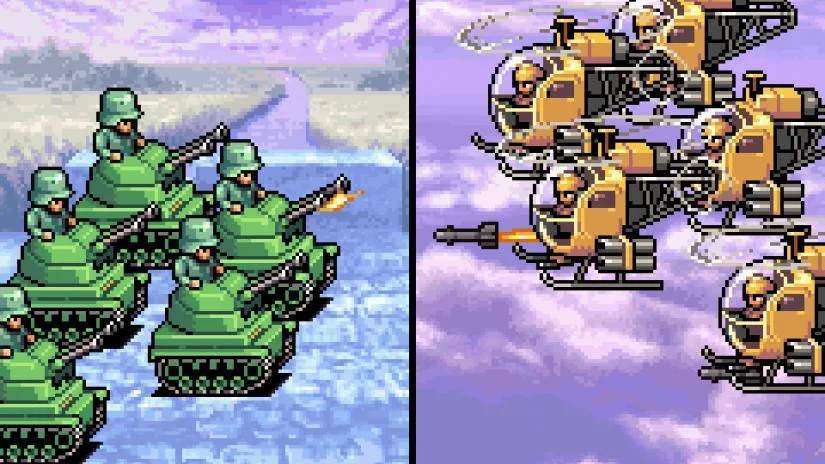
Damage Calculation & RNG
Understanding how damage is calculated in Advance Wars is crucial for mastering the battlefield. While the game provides a predicted damage range, knowing the underlying mechanics allows for more precise planning and exploitation of statistical advantages. This section breaks down the core damage formula and the role of Random Number Generation (RNG).
The Core Damage Formula
At its heart, Advance Wars damage is determined by a relatively straightforward formula, but several factors contribute to the final outcome. The general calculation can be summarized as:
Damage = (Attacker's HP / 10) * (Weapon Power * CO Attack Bonus * Terrain Defense) * (100% + RNG)
Let's break down each component:
- Attacker's HP / 10: This represents the attacking unit's current health. A unit at full health (10 HP) will deal its maximum potential damage, while a unit at 5 HP will only deal half. This is why keeping your units healthy is paramount for offensive power.
- Weapon Power: Each unit's primary and secondary weapons have a base power value against different unit types. For example, a Tank's main cannon has high power against other ground units, while its machine gun has lower power against infantry. You can view these values by selecting a unit and checking its stats.
- CO Attack Bonus: Your chosen Commanding Officer (CO) provides a percentage bonus (or penalty) to your units' attack power. This bonus is applied directly to the weapon power. For instance, a CO with a +10% attack bonus will make a weapon with 100 power effectively deal 110 power.
- Terrain Defense: The terrain your defending unit occupies grants a defensive bonus, reducing incoming damage. Each star of terrain defense reduces damage by 10%.
- 0 Stars (Road, Plain): 0% defense.
- 1 Star (Wood): 10% defense.
- 2 Stars (Mountain, City): 20% defense.
- 3 Stars (HQ, Pipe Seam): 30% defense.
The Role of RNG (Luck)
Even with all the above factors, the final damage isn't perfectly predictable. Advance Wars incorporates a "Luck" factor, or Random Number Generation (RNG), which adds a small degree of variability to each attack. This RNG typically falls within a range of +/- 0-9% of the calculated damage. This means:
- Minimum Damage: The calculated damage minus 9%.
- Maximum Damage: The calculated damage plus 9%.
The game will always display the predicted damage range before you commit to an attack, showing both the minimum and maximum possible damage. While this range can sometimes be frustrating, it adds a layer of unpredictability that can lead to both surprising victories and unexpected defeats. Some COs, like Nell, have abilities that specifically interact with or enhance this luck factor, making their attacks more likely to hit for higher damage.
Actionable Strategies for Damage Optimization
To consistently maximize your damage output and minimize incoming damage, follow these steps:
- Maintain Unit Health: Always prioritize repairing damaged units, especially your primary attackers. A 10 HP Tank will deal significantly more damage than a 5 HP Tank. Use APCs to resupply and repair, or move units onto owned Cities/Bases.
- Utilize CO Powers: Activate your CO's Power or Super Power at opportune moments. Many COs offer substantial attack bonuses during their power, which can turn the tide of battle. For example, Andy's Hyper Repair can heal units, indirectly boosting their offensive power.
- Exploit Terrain: When attacking, try to lure enemy units off high-defense terrain. When defending, always position your units on terrain with the highest possible defense stars. A unit on a Mountain (20% defense) will take less damage than one on a Road (0% defense).
- Target Weaknesses: Understand unit matchups. Tanks are strong against Mechs, Anti-Air are strong against Helicopters, etc. Attacking a unit with a weapon it's weak against will inherently result in higher base damage.
- Consider RNG: While you can't control RNG, be aware of the damage range. If an attack shows a range of 7-9 HP, and you need 8 HP to destroy the enemy, be prepared for the possibility of only dealing 7 HP and leaving the enemy alive. Conversely, if you're desperate, sometimes taking a chance on the higher end of the RNG can pay off.
By diligently applying these principles, you'll move beyond simply looking at the predicted damage numbers and gain a deeper understanding of the tactical nuances that define success in Advance Wars.