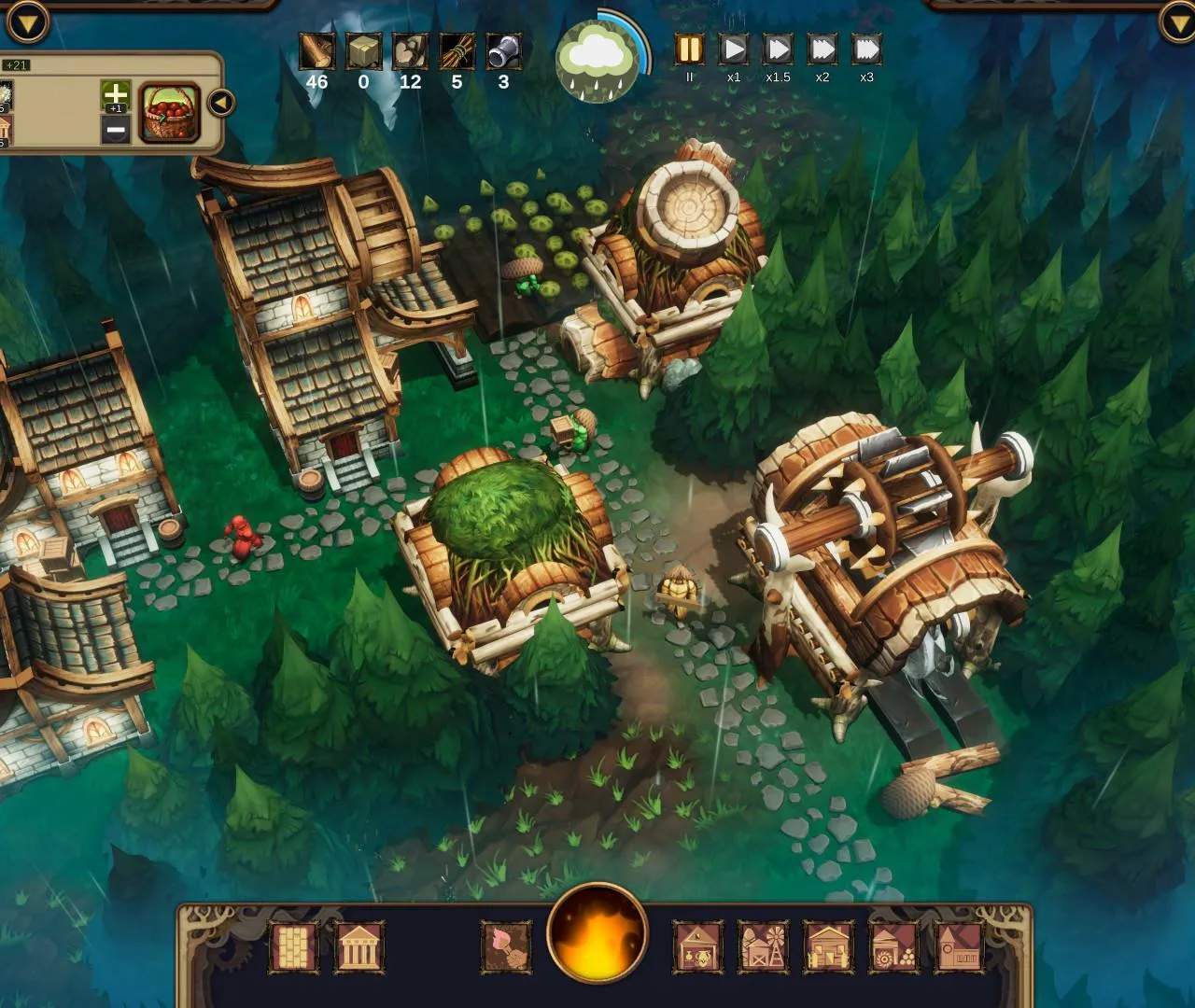
Glade Events: Opportunities & Dangers
Exploring the untamed wilds of the Blight is a core element of survival and expansion in Against the Storm. Beyond the immediate resources, hidden glades often conceal valuable opportunities and perilous challenges in the form of Glade Events. This section focuses on the crucial initial phases of encountering these events: discovery, careful assessment, and the strategic decision-making required before committing your precious resources.
Unlike the dedicated guide on 'High-Difficulty Glade Events' which delves into the intricate execution and advanced strategies for overcoming the most formidable challenges, this guide provides a foundational understanding. Here, we equip you with the knowledge to identify potential threats and boons, understand their immediate implications, and make informed choices about which events to engage with and when. Once discovered, events typically require assigning villagers and specific resources to complete within a time limit, with success leading to rewards and failure often incurring penalties.
Unveiling the Unknown: Glade Discovery
Glades are revealed by sending your woodcutters to clear paths through the dense forest. Each glade you open presents a new set of circumstances, and with it, the potential for a Glade Event. These events are not always immediately obvious; sometimes they are hidden within ruins, ancient altars, or strange geological formations.
- Strategic Woodcutting: Don't just clear trees randomly. Plan your woodcutting routes to efficiently uncover new glades, prioritizing directions that might lead to critical resources or strategic choke points. Consider the size of the glade you are about to open, as larger glades are more likely to contain higher-tier events.
- Anticipate the Reveal: As you approach a new glade boundary, prepare for the unexpected. Have a mental checklist of your current resources, villager count, and overall settlement stability. It's often wise to have a few idle villagers or a surplus of common building materials before opening a new glade.
- Visual Cues: Pay attention to the visual design of glades. Some glades might hint at the nature of the event within – ominous structures or corrupted flora often indicate dangerous or forbidden events, while lush, fertile ground or ancient, overgrown ruins might suggest more peaceful or pristine opportunities.
Glade Event Categories
Glade Events are officially categorized, and understanding these distinctions is key to effective planning. While visual cues offer hints, the game explicitly labels events once discovered, often with distinct icons.
- Peaceful Events: These are the safest and most common. They typically offer minor rewards with little to no risk or resource cost, often requiring only a small amount of common resources or a short time commitment from a few villagers. They are frequently found in smaller, less threatening glades and are almost always worth completing for their reliable, albeit modest, benefits. Examples include a small cache of resources, a minor Resolve boost, or a temporary production buff.
- Dangerous Events: Marked with a red skull icon, these events pose significant threats. They often require specific resources, villager types, or substantial time commitments and can inflict severe penalties if failed, such as increased Hostility, villager injuries, or resource loss. These are the most frequently encountered challenging events and require careful consideration of your current settlement's capabilities before engagement. Successfully completing them yields moderate to significant rewards, including rare resources, blueprints, or powerful temporary buffs.
- Forbidden Events: Distinguished by a purple skull icon, these are the most perilous events in the game. They demand substantial resources, specific villager types, and often have very tight time limits. Failure almost always results in catastrophic penalties, including significant Hostility increases, multiple villager deaths, severe Resolve drops, or even permanent negative modifiers to your settlement. They are typically found in larger, more ominous glades and should only be attempted when your settlement is robust and well-prepared, as their rewards are often game-changing, offering unique blueprints, legendary resources, or powerful permanent perks.
- Pristine Events: These are rare and highly rewarding, often providing unique blueprints, large quantities of rare resources, or powerful global buffs. They usually come with moderate to high difficulty, often comparable to Dangerous or even some Forbidden events, but their rewards are proportionally greater and rarely involve direct negative consequences for failure (though the opportunity cost of resources and time can be high). They are often found in visually distinct, untouched-looking glades, sometimes featuring unique flora or geological formations, and represent prime opportunities for significant progress.
Initial Assessment: Risk vs. Reward
Once a Glade Event is discovered, the game will present you with a brief description and often, a choice. This is your critical decision point. Rushing into an event without proper preparation can be catastrophic, especially on higher difficulties. Conversely, ignoring a beneficial event can slow your progress significantly.
Key Factors for Assessment:
- Event Type and Difficulty:
- Peaceful Events: Low risk, low reward. Almost always worth engaging.
- Dangerous Events: Moderate to high risk, moderate to high reward. Requires careful consideration of your current resources and villager availability.
- Forbidden Events: Very high risk, very high reward. Only attempt if extremely well-prepared with surplus resources and specific villager species.
- Pristine Events: Moderate to high risk, exceptional reward. Prioritize these if feasible, as their benefits can significantly accelerate your progress.
- Required Resources:
- Does the event demand specific goods like Planks, Fabric, Tools, or even rare items like Amber?
- Do you have these resources readily available, or can you produce them quickly without disrupting your core economy?
- Consider the opportunity cost of these resources. Are they better spent elsewhere, or is the event's reward more critical to your current needs?
- Villager Requirements:
- Some events require a certain number of villagers, sometimes of a specific species (e.g., Beavers for construction, Harpies for delicate work, Lizardmen for dangerous tasks, Humans for farming, Foxes for foraging).
- Can you spare the required villagers without crippling your production lines or significantly lowering Resolve?
- Remember that villagers assigned to events are temporarily unavailable for other tasks, potentially impacting resource generation or service provision.
- Time Limits:
- Many Glade Events have a timer. Failing to complete an event within the allotted time often results in negative consequences.
- Prioritize timed events, especially those with high rewards or severe penalties for failure.
- Factor in travel time for villagers and resource delivery. Ensure your storage is close or that transport routes are efficient.
- Potential Rewards:
- What are the potential gains? Food, Building Materials, Luxury Goods, Blueprints, Perks (global buffs), or even new Villagers?
- Does the reward address a critical need for your settlement (e.g., a new food source, a missing production chain, a solution to a Resolve crisis)?
- Is the reward worth the risk and investment, especially compared to other available options or potential event failures?
- Potential Penalties:
- What happens if you fail or ignore the event? Increased Hostility, Villager Resolve loss, Corruption, or even Villager Deaths?
- Can your settlement absorb these penalties without collapsing? On higher difficulties, even minor penalties can snowball into a failed expedition.
Initial Engagement: Making the Call
Once you've assessed the event, you have a few options:
- Accept and Commit: If the risk is manageable and the reward is desirable, assign villagers and resources to begin the event. Monitor its progress closely, ensuring resources are delivered and villagers remain assigned.
- Delay (if possible): Some events don't have immediate timers, allowing you to prepare. Use this time to gather necessary resources, recruit specific villagers through new arrivals, or construct buildings that will aid in event completion (e.g., a Toolsmith to produce Tools).
- Ignore: For events that are too costly, too dangerous, or offer negligible rewards for your current situation, sometimes the best strategy is to simply ignore them. Be aware that some ignored events might still trigger minor negative effects over time, such as a slight increase in Hostility or a small Resolve penalty.
- Scout and Retreat: For truly dangerous or forbidden events, it might be wise to scout the glade, identify the event and its requirements, and then retreat your woodcutters to focus on safer areas until your settlement is stronger and better equipped to handle the challenge. This allows you to plan for a future attempt without immediately incurring penalties.
Example Scenario: The "Ancient Shrine" (Dangerous Event)
You uncover a glade containing an "Ancient Shrine." The description mentions it requires 10 Stone and 5 Planks to cleanse, taking 2 minutes. The reward is a temporary +3 Global Resolve and 5 Amber. Failure results in +5 Hostility.
- Assessment: You have plenty of Stone and Planks, and your builders are currently idle. Your Resolve is stable, but a boost would be nice, and Amber is always valuable for trading or purchasing perks. The Hostility penalty for failure is manageable, especially if you have a good source of Reputation.
- Decision: Accept. Assign 2 builders to the shrine. Ensure your Stonecutter Camp and Lumber Mill are producing enough to cover the cost without disrupting other essential constructions. Monitor your resource levels to ensure the required materials are delivered promptly.
Example Scenario: The "Corrupted Grove" (Forbidden Event)
You discover a "Corrupted Grove" that requires 15 Tools and 3 Lizardmen to purify, taking 3 minutes. The reward is a new Blueprint for a high-tier building (e.g., a Guild House or a Temple). Failure results in -5 Global Resolve and 2 Villager Deaths.
- Assessment: You only have 5 Tools and no Toolsmith building to produce more. You also only have 1 Lizardman currently in your settlement. The reward is enticing, as a new high-tier blueprint could significantly boost your economy or Resolve, but the cost is prohibitive, and the failure penalty is severe, potentially leading to a death spiral of low Resolve and further villager departures.
- Decision: Ignore for now. Prioritize establishing Tool production (by building a Toolsmith or trading for Tools) and recruiting more Lizardmen through new villager arrivals before attempting such a high-risk, high-reward event. Focus on safer glades and building up your infrastructure in the meantime. This event could be a target for a later stage of the game when your settlement is more robust.
By mastering the art of glade discovery and initial event assessment, you lay the groundwork for a successful settlement. Every decision made at this stage can significantly impact your colony's trajectory, allowing you to capitalize on opportunities and skillfully navigate the dangers of the Blight.