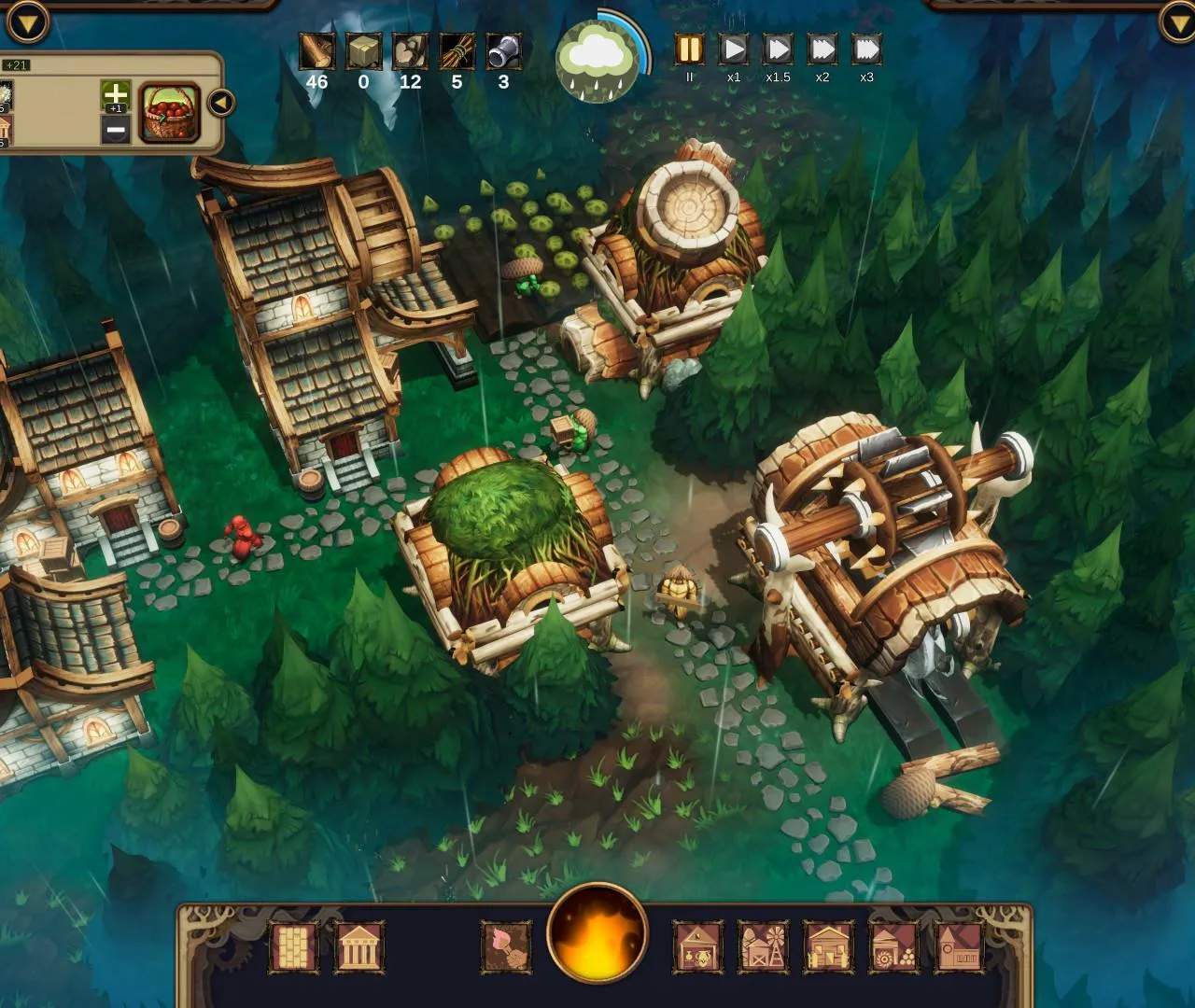
Sunken City: The Ultimate Test of the Viceroy
Welcome, Viceroy, to the ultimate crucible of your reign: the Sunken City. This guide will prepare you for the harrowing journey through the Sealed Forest, the final, most perilous biome in Against the Storm, where the very fabric of reality threatens to unravel. While the Sunken City itself is the overarching narrative and the ultimate goal of your efforts across multiple expeditions, the Sealed Forest is the physical manifestation of that final, desperate struggle against the Blightstorm.
Think of the Sunken City as the grand campaign, culminating in the Sealed Forest expedition. This is not just another settlement; it is the final stand, a desperate race against time to mend the Ancient Seal and temporarily push back the encroaching Blightstorm. Every decision, every resource, every citizen's life hinges on your ability to master this oppressive environment.
Understanding the Sealed Forest: The Final Biome
The Sealed Forest is unlike any other biome you've encountered. It's a land scarred by ancient magic and the relentless Blightstorm, designed to test every facet of your strategic prowess. Forget the familiar rhythms of resource gathering; here, scarcity is the norm, and innovation is key to survival.
- Resource Scarcity:
- No Natural Ore or Stone: Unlike other biomes, you will find no natural deposits of Ore or Stone. This necessitates a heavy reliance on traders, glade events, or specialized buildings that can produce these vital resources from other materials. Prioritize early trade routes and secure a reliable source.
- Limited Tree Resources: While trees are abundant, they do not yield traditional bonus resources (e.g., Resin, Insects). This impacts early game production chains and forces you to adapt your building choices.
- Focus on Advanced Production: Your success will depend on efficient, multi-stage production chains that can transform basic materials into complex goods without relying on raw, naturally occurring rare resources.
- Oppressive Environment: The Sealed Forest constantly challenges your resolve and your settlement's stability. Hostility rises rapidly, and dangerous glade events are more frequent and severe.
- The Ancient Seal: Your ultimate objective is to find and repair the Ancient Seal. This is not a simple construction project; it's a multi-stage endeavor requiring specific resources and the completion of challenging tasks.
Preparing for the Expedition: Before You Enter
Success in the Sealed Forest begins long before you set foot in it. Proper preparation across your preceding expeditions is paramount.
- Gather Seal Fragments: Before attempting the Sealed Forest, you must have accumulated a sufficient number of Seal Fragments from neighboring tiles. Each completed Seal expedition contributes to the overall progress of closing the Sunken City. Ensure you have enough to activate the Ancient Seal's repair process. The number of fragments required varies based on difficulty and previous Seal completions, but generally, you'll need 3-5 fragments.
- Prioritize Traders: Traders are your lifeline in the Sealed Forest.
- Resource Gaps: They will be your primary source for Ore, Stone, and other rare materials that are scarce or non-existent in the biome. Always have goods prepared for trade, such as Planks, Fabric, or simple food items, to exchange for these critical resources.
- Blueprint Acquisition: Look for blueprints that offer alternative production methods for critical goods or provide powerful global buffs. Specifically, seek out buildings like the Stonecutter's Camp (produces Stone from Wood), the Mine (produces Ore from Stone, if you can get Stone), or workshops that can craft Tools, Barrels, or Scrolls from common resources.
- Early Trading Post: Make establishing a Trading Post a high priority in your initial building plans. Aim to have it operational by the end of year 1 or early year 2.
- Optimize Cornerstone Choices: Select Cornerstones that provide long-term resource generation, resolve bonuses, or hostility reduction. Cornerstones that offer alternative ways to acquire rare resources (e.g., "Stonecutter's Camp" producing Stone from Wood, "Geologist's Tools" for passive Ore generation) are invaluable. Also consider Cornerstones that boost global production speed, reduce glade event difficulty, or provide passive resolve for specific species.
- Secure Reputation Points: Aim to enter the Sealed Forest with a comfortable buffer of Reputation Points. These can be crucial for purchasing emergency resources from traders or quickly completing objectives. Having 3-5 unspent Reputation Points can be a game-changer for buying out a trader's stock of essential items or completing a difficult order.
- Diverse Population: While not strictly a preparation step, having a diverse population with a good mix of species (e.g., Beavers for wood/construction, Harpies for complex goods, Lizards for meat/firewood) will give you more flexibility in assigning workers to specialized buildings and meeting varied resolve needs.
Navigating the Sealed Forest: Step-by-Step Strategy
Once you've established your foothold, your focus must shift to managing the environment, expanding cautiously, and ultimately, repairing the Ancient Seal.
1. Initial Setup and Resource Management
- Scout Aggressively: Send out your scouts immediately to locate glades and potential resource nodes. Prioritize small glades first to minimize risk and quickly gain access to initial resources. Look for nodes of Clay, Berries, or Roots.
- Wood Production: Wood is still essential for fuel and construction. Establish efficient woodcutting operations early, but be mindful of the lack of bonus resources from trees. Aim for 2-3 woodcutters working constantly.
- Food Security: Focus on diverse food production. Farms, Foragers, and Trappers are all viable, but consider the biome's specific glade resources. Prioritize buildings that can produce complex food items (e.g., Porridge, Skewers, Pickled Goods) to boost resolve. Consider building a Field Kitchen early for basic complex food.
- Early Service Buildings: Consider building a Tavern or Bath House earlier than usual to manage resolve, as hostility will be a constant threat. Aim to have one operational by year 3-4, providing a crucial resolve boost for your most numerous species.
- Blueprint Prioritization: When offered blueprints, prioritize those that address your resource gaps (e.g., Stonecutter's Camp, Mine), provide alternative food production, or offer powerful resolve bonuses. Avoid highly specialized buildings that require rare resources you don't have a reliable source for yet.
2. The Beacon Tower: Your Guiding Light
The Beacon Tower is a unique and critical structure exclusive to the Sealed Forest. It is not merely a landmark; it is your primary tool for mitigating the biome's harshness and empowering your settlement.
- Location: The Beacon Tower is typically found within a large glade, often near the Ancient Seal itself. Prioritize clearing the path to it. It will appear as a distinct, glowing structure on the map.
- Activating the Tower: Once discovered, you'll need to invest resources to activate and upgrade it. This usually involves a combination of common and rare goods. For example, the first activation might require 10 Planks, 5 Fabric, and 3 Tools. Subsequent upgrades will demand more advanced goods like Barrels, Scrolls, or even specific food items.
- Specific Buffs: The Beacon Tower provides powerful global buffs that are essential for survival. These buffs can include:
- Hostility Reduction: Significantly lowers the global hostility level (e.g., -50 Hostility), making it easier to manage events and keep citizens happy. This is often the most critical buff, especially at higher difficulties.
- Production Speed Boosts: Increases the production speed of certain workshops or resource nodes (e.g., +10% to all production, +20% to Complex Food production).
- Resolve Bonuses: Provides a passive increase to the resolve of all or specific citizen types (e.g., +2 Global Resolve, +3 Harpy Resolve).
- Resource Generation: In some cases, it can even passively generate small quantities of rare resources over time (e.g., +1 Ore every 60 seconds).
- Strategic Utilization:
- Prioritize Activation: Make activating the Beacon Tower a top priority once discovered. The sooner you get its buffs, the easier the expedition becomes. Aim to activate it within the first 2-3 years.
- Resource Allocation: Carefully consider which resources to invest in upgrading the tower. Focus on buffs that address your most pressing needs (e.g., hostility if it's spiraling, production if you're bottlenecked). Don't hesitate to trade for the resources needed for upgrades.
- Long-Term Investment: The Beacon Tower is a long-term investment. Its benefits compound over time, making it easier to reach the Ancient Seal. Fully upgrading it should be a primary goal.
3. Confronting Glade Events and the Ancient Seal
The Sealed Forest is riddled with dangerous glade events, many of which are mandatory to resolve to access the Ancient Seal. These events often require specific resources or workers and can significantly impact your settlement if mishandled.
- Prioritize Dangerous Glades: While risky, dangerous glades often contain the most valuable resources and, crucially, the path to the Ancient Seal. You will need to open several dangerous glades to find the Seal and its associated events.
- Prepare for Events: Before opening a dangerous glade, ensure you have a diverse array of resources (food, tools, complex goods, building materials) and available workers to tackle potential event requirements. Always have at least 5-10 of each basic complex food, 5-10 Tools, and a decent stock of Planks and Fabric.
- The Ancient Seal's Guardian: The Ancient Seal itself is protected by a powerful Guardian. To repair the Seal, you must fulfill the Guardian's demands, which typically involve a series of tasks and resource contributions.
- Specific Requirements: These requirements are unique to each Seal expedition but often involve delivering large quantities of advanced goods (e.g., 20 Barrels of Oil, 15 Scrolls, 10 Tools), completing specific glade events (e.g., "Cleanse the Blightrot Altar"), or maintaining high resolve for a period (e.g., "Maintain 20 Resolve for 120 seconds"). These requirements are displayed in the Seal interface once discovered.
- Hostility Management: During the Seal repair process, hostility will likely spike due to the Guardian's influence and the nature of the biome. Ensure your Beacon Tower is active and upgraded, and have contingency plans for resolve drops, such as activating a Rain Collector for a temporary resolve boost or using a Sacrifice Altar if available.
- Time Limit: There is often an implicit time limit, as the Blightstorm's pressure will increase. Efficiency is key. Monitor the Blightstorm timer and the Queen's Impatience level. The faster you complete the Seal, the less risk of losing due to Impatience.
- Final Deliveries: The final stages of the Seal often require a large delivery of high-tier goods. Plan your production chains well in advance to ensure you can meet these demands without delays.
Common Pitfalls and How to Avoid Them
- Underestimating Hostility: The Sealed Forest's hostility is relentless. Do not neglect resolve management. Keep your citizens happy, and utilize the Beacon Tower's hostility reduction buffs. Always have at least two sources of complex food and consider a service building by year 3.
- Resource Bottlenecks: The lack of natural rare resources can cripple your production. Diversify your resource acquisition methods (traders, glade events, specialized buildings) and prioritize blueprints that offer flexibility. Never rely on a single source for critical resources like Stone or Ore.
- Ignoring the Beacon Tower: Delaying the activation or upgrade of the Beacon Tower will make the entire expedition significantly harder. It's a critical tool for survival. Make it a top priority once discovered.
- Rushing the Seal: While time is a factor, blindly rushing the Ancient Seal without proper preparation (resources, resolve, hostility management) will lead to a swift defeat. Build a stable foundation first, then focus on the Seal.
- Neglecting Traders: Traders are not optional in the Sealed Forest; they are essential. Always have resources ready for trade and keep an eye out for crucial blueprints or rare goods. Check every trader's inventory thoroughly.
- Poor Glade Management: Opening too many glades at once can overwhelm your settlement with events and increase hostility. Open glades strategically, one or two at a time, and ensure you have the resources and workers to deal with potential challenges.
- Lack of Tool Production: Tools are frequently required for glade events and Seal repairs. Without natural Ore, producing Tools can be difficult. Prioritize blueprints for workshops that can craft Tools from alternative materials (e.g., Copper Bars from Clay, then Tools from Copper Bars) or trade for them consistently.
Conquering the Sealed Forest and mending the Ancient Seal is the ultimate testament to a Viceroy's skill and strategic foresight. By understanding its unique challenges, leveraging the Beacon Tower, and meticulously planning your every move, you can push back the Blightstorm and ensure the survival of the Smoldering City. Good luck, Viceroy; the fate of humanity rests on your shoulders.