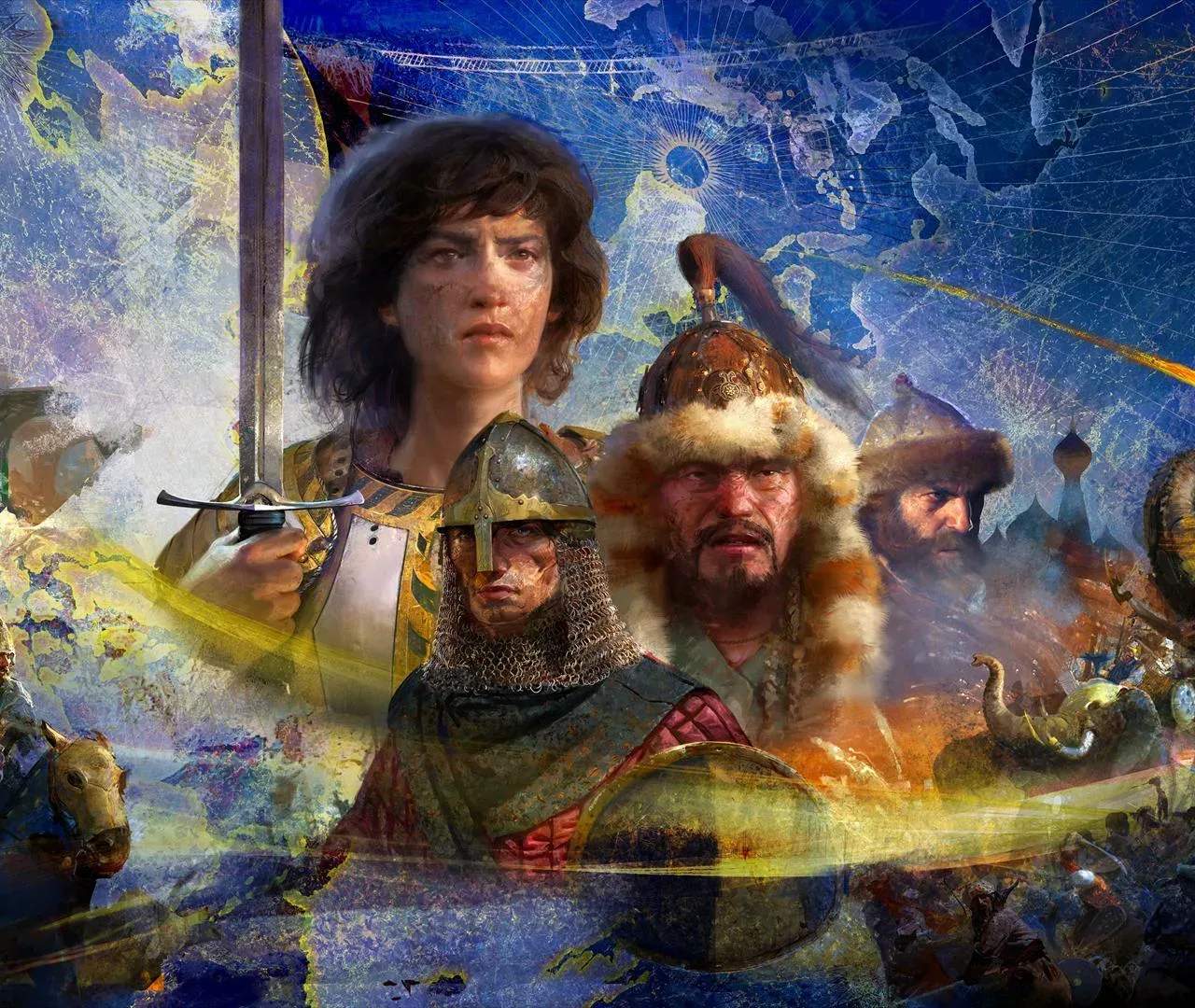
Team Game Roles & Composition
Success in Age of Empires IV team games hinges on more than just individual skill; it requires a cohesive strategy built around specialized roles and a balanced civilization composition. Understanding these dynamics is crucial for dominating the battlefield and securing victory.
I. Core Team Roles
Every effective team typically benefits from players specializing in specific functions. While flexibility is key, having a primary role in mind helps streamline early game decisions and late-game coordination.
- The Rusher (Aggressor)
- Objective: Apply early game pressure, disrupt enemy economy, and secure map control.
- Key Civilizations:
- English: Their Longbowmen with the Network of Castles bonus from the Council Hall (Feudal Age Landmark) are excellent for early harassment and tower rushes. Focus on producing Longbowmen and Spearmen.
- Mongols: The Khan's early scouting and Mangudai (unique unit) are perfect for hit-and-run tactics. use the Steppe Redoubt (Feudal Age Landmark) for early gold income to fuel aggressive unit production.
- Strategy:
- Early Feudal Age: Scout aggressively to identify vulnerable enemy resource lines (gold, stone, wood).
- Unit Composition: Prioritize fast, cost-effective units like Spearmen and Longbowmen (English) or Horsemen and Mangudai (Mongols).
- Pressure Points: Target exposed villagers, build forward Outposts near enemy resource nodes, and coordinate with teammates for early pushes.
- The Boomer (Economist/Late Game Powerhouse)
- Objective: Develop a strong economy, secure vital resources, and transition into powerful late-game armies or wonder victories.
- Key Civilizations:
- French: The Royal Knights are strong, but their economic bonuses, particularly from the Chamber of Commerce (Feudal Age Landmark) and faster villager production, make them excellent boomers. Focus on expanding their economy and securing trade routes.
- Abbasid Dynasty: The House of Wisdom's economic wings (Economic Wing, Trade Wing) provide unparalleled economic scaling. Aim for a fast Castle Age and secure multiple Resource Drop-Off Sites.
- Strategy:
- Early Game: Focus on continuous villager production and securing all basic resources. Build additional Town Centers as soon as possible.
- Mid Game: Establish trade routes with allies or neutral markets. Research economic upgrades like Wheelbarrow and Hand Cart.
- Late Game: Transition into powerful siege units (Trebuchets, Bombards) or elite units (Royal Knights, Camel Archers) to support the frontline.
- The Defender (Support/Counter-Attacker)
- Objective: Protect allies, hold key positions, and launch well-timed counter-attacks.
- Key Civilizations:
- Holy Roman Empire: The Prelate's inspiration ability and strong defensive structures, especially with the Aachen Chapel (Feudal Age Landmark), make them excellent at holding ground. Focus on strong infantry and defensive upgrades.
- Delhi Sultanate: Their unique Scholar unit and research speed bonuses from the Dome of the Faith (Feudal Age Landmark) allow them to quickly adapt to enemy threats and provide strong defensive units like War Elephants in the later stages.
- Strategy:
- Early Game: Prioritize defensive structures like Outposts and Stone Walls (if appropriate). Maintain a small, flexible army to respond to threats.
- Mid Game: Research defensive upgrades for units and buildings. Keep an eye on the minimap for allied pings and reinforce as needed.
- Late Game: use powerful defensive units and siege weapons to break enemy pushes and launch coordinated counter-offensives with the team.
II. Team Composition Strategies
A well-rounded team composition leverages the strengths of different civilizations and roles to cover weaknesses and create powerful synergies.
- Aggressive Duo (Rush + Rush/Boomer)
- Example: English (Rusher) + Mongols (Rusher) or English (Rusher) + French (Boomer)
- Description: Two aggressive civilizations can overwhelm an opponent early, or one rusher can create space for a boomer to develop a powerful economy.
- Synergy: The English Longbowmen can protect Mongol Mangudai from spearmen, while the Mongols can raid effectively. If paired with a French boomer, the early pressure keeps the enemy from harassing the French economy.
- Weakness: Can struggle against strong defensive setups or if the early rush fails to inflict significant damage.
- Balanced Approach (Rush + Boomer + Defender)
- Example: English (Rusher) + French (Boomer) + Holy Roman Empire (Defender)
- Description: This classic setup provides early pressure, a strong economy, and robust defense.
- Synergy: The English apply pressure, forcing the enemy to react. The HRE defends key positions and supports the English with infantry. The French boom safely in the background, preparing for a powerful mid-to-late game push.
- Weakness: Requires excellent communication and coordination to ensure each role is fulfilling its purpose without overlapping or leaving gaps.
- Late Game Powerhouse (Boomer + Boomer + Defender)
- Example: Abbasid Dynasty (Boomer) + French (Boomer) + Delhi Sultanate (Defender)
- Description: Focuses on securing map control and booming into an unstoppable late-game army.
- Synergy: Two booming civilizations can generate immense resources. The Delhi Sultanate, with their fast research and strong defensive units, can hold off early aggression while the boomers scale.
- Weakness: Vulnerable to aggressive early game rushes. Requires strong defensive play and careful resource management to survive the initial onslaught.
III. Adapting to the Map and Opponents
While general roles are helpful, always consider the specific map and your opponents' civilizations.
- Resource Distribution: Maps with abundant gold or stone might favor civilizations with strong unique units or defensive structures.
- Chokepoints: Maps with natural chokepoints are excellent for defensive civilizations like the HRE.
- Open Maps: Open maps favor mobile, aggressive civilizations like the Mongols or French.
- Opponent's Civs: If facing multiple aggressive civilizations, a more defensive composition might be necessary. If opponents are known for booming, consider a more aggressive early game strategy.
Effective team play in Age of Empires IV is a dynamic dance of roles, civilizations, and strategic adaptation. By understanding these core concepts, you and your teammates can craft winning compositions and dominate the battlefield.