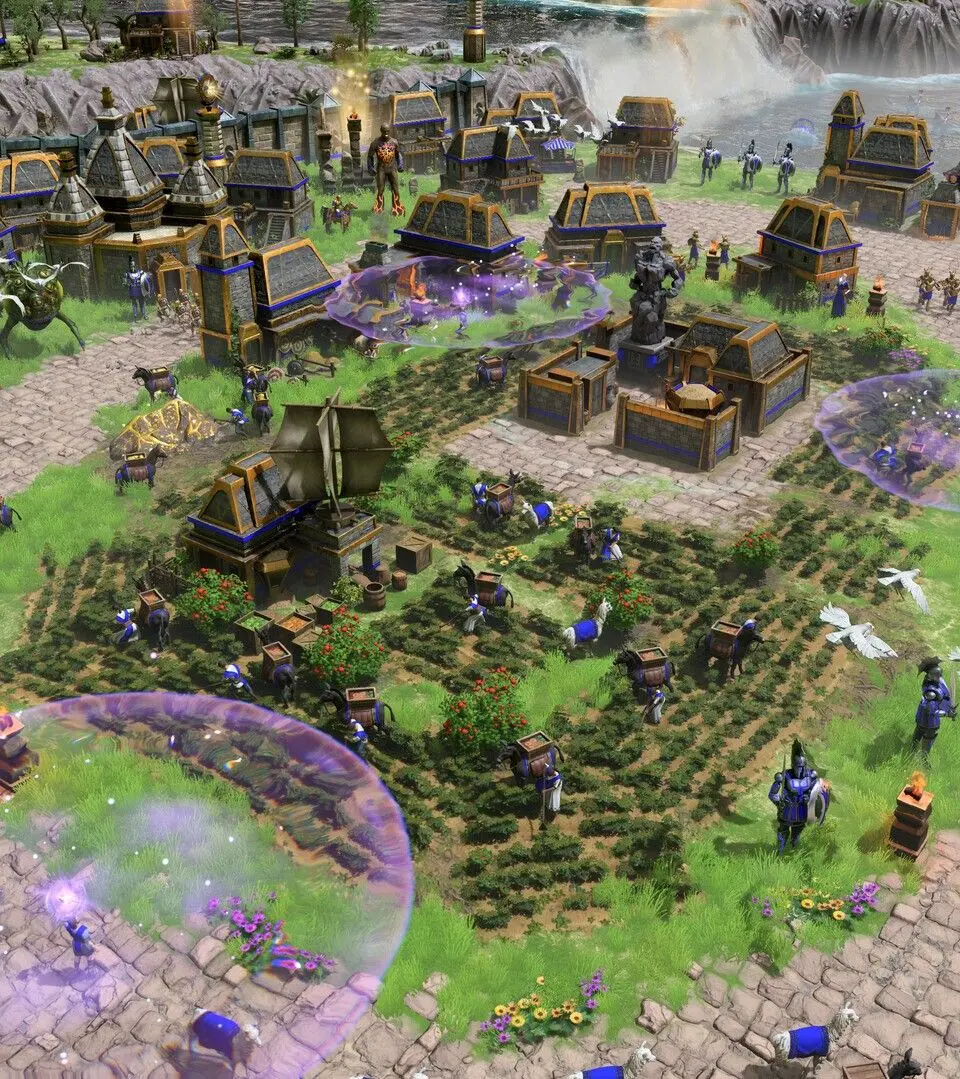
Multiplayer Battles
Engage in thrilling online battles against other players from around the world in Age of Mythology: Retold. Multiplayer offers a dynamic and unpredictable challenge, pushing your strategic thinking to its limits. Whether you prefer the competitive climb of ranked matches or the more relaxed atmosphere of casual games, the online arena provides endless replayability and opportunities to test your skills.
Multiplayer Game Modes
Before diving into the fray, it's essential to understand the common game modes available:
- Supremacy: The classic mode where players aim to defeat all enemy players by destroying their Town Centers and military units. This mode often involves a race to develop your economy and military.
- Deathmatch: Players start with a large amount of resources, allowing for immediate large-scale unit production and intense, fast-paced combat. Ideal for those who want to jump straight into action.
- Conquest: Focuses on controlling specific map objectives or territories to achieve victory.
- Lightning: A faster-paced version of Supremacy, with accelerated resource gathering and unit training.
- Custom Games: Allows players to set their own rules, maps, and victory conditions, offering immense flexibility for unique challenges or friendly skirmishes.
Essential Multiplayer Strategies
Succeeding in multiplayer requires a blend of quick decision-making, strategic planning, and adaptability. Here are some fundamental tips to elevate your gameplay:
Early Game Focus: Economy and Scouting
- Resource Management: In the early stages of any game mode, efficient resource gathering is paramount. Prioritize training Villagers and assigning them to gather food, wood, and gold. A strong economy fuels your military and technological advancements.
- Scouting is Crucial: Immediately send your starting scout unit (e.g., Pegasus, Raven, Prodromos) to explore the map. Identify your opponent's starting location, their chosen civilization, and their early build order. This information allows you to anticipate their strategies and counter them effectively. Look for their resource placement, military buildings, and any early aggression.
- Early Aggression vs. Boom: Based on your scout's findings, decide whether to pursue an early aggressive strategy (e.g., a "rush" with cheap units) or to "boom" by focusing on economic development to support a stronger late-game army.
Mid-Game Development: Army Composition and Map Control
- Counter Units: Understand the rock-paper-scissors mechanics of unit types. For example, archers counter infantry, infantry counter cavalry, and cavalry counter archers. Build an army composition that effectively counters your opponent's forces.
- Myth Units and God Powers: Integrate Myth Units and God Powers into your strategy. These powerful abilities can turn the tide of battle. Use God Powers strategically for economic boosts, defensive measures, or devastating attacks.
- Map Control: Don't just focus on your base. Control key areas of the map, especially resource-rich locations and choke points. Building watchtowers or forward bases can help maintain vision and project power.
- Communication (Team Games): In team-based matches, clear and concise communication with your allies is vital. Coordinate attacks, share resources if necessary, and warn each other of incoming threats.
Late Game: Sieges and Victory Conditions
- Siege Warfare: As games progress, you'll likely need siege units (e.g., Catapults, Ballistae, Siege Towers) to break through heavily fortified enemy defenses. Protect your siege units with frontline troops.
- Wonder Victory: In Supremacy, constructing and defending a Wonder for a set period can lead to victory. This requires a massive investment of resources and a strong defensive perimeter.
- Titan Gate: For civilizations with access to Titans, building a Titan Gate and unleashing a Titan can be a game-ending strategy, though it's a significant investment.
Achieving "First Blood"
One of the first milestones for any new multiplayer player is earning the "First Blood" achievement. This simply requires you to play a single multiplayer match. Don't be intimidated by experienced players; everyone starts somewhere. Jump into a casual game to get a feel for the pace and mechanics against human opponents. Focus on learning the interface, practicing your build orders, and understanding the flow of a real-time strategy match. The more you play, the better you'll become!