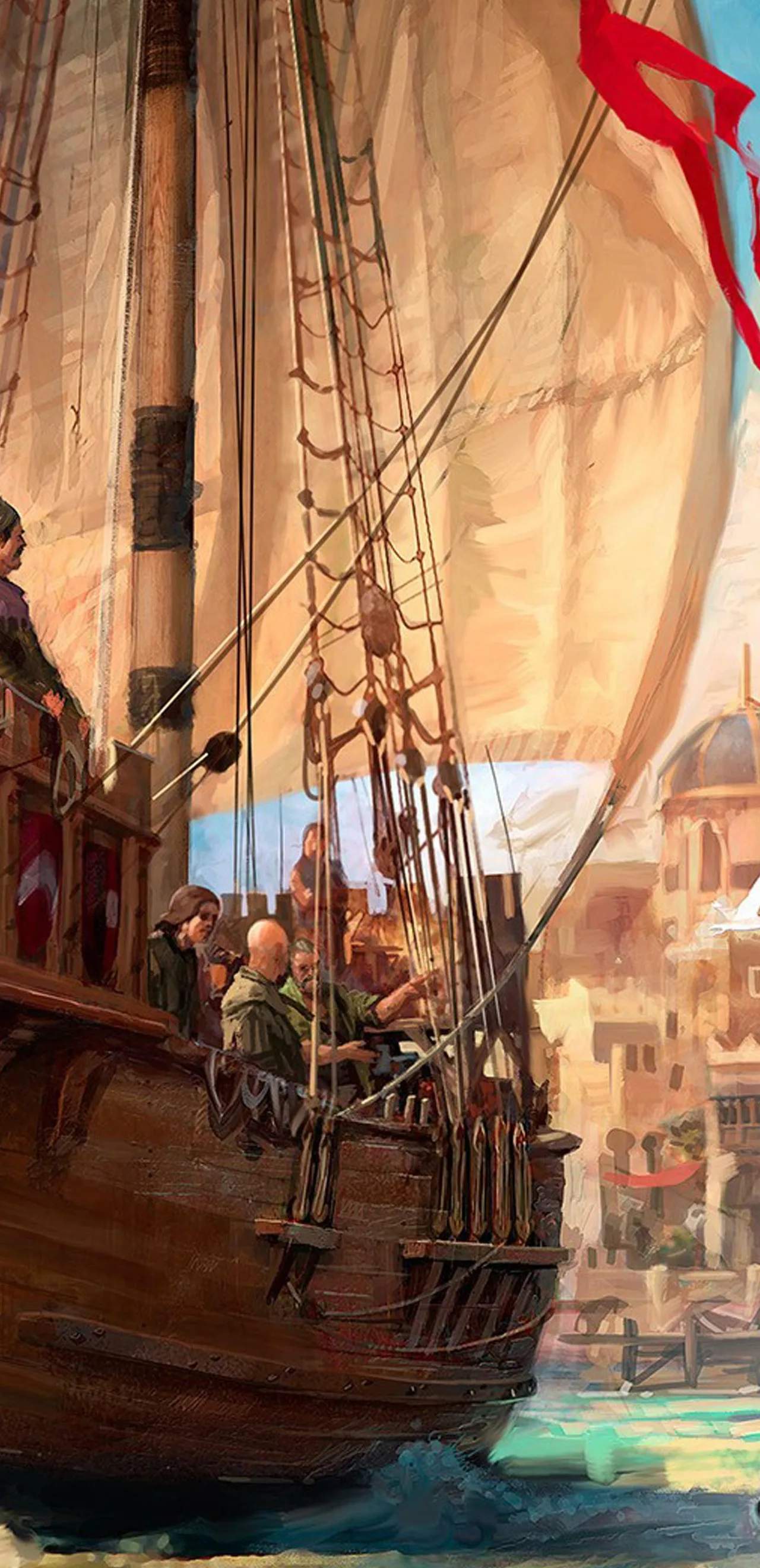
Oriental City Layouts
Mastering Oriental city layouts in Anno 1404 is crucial for efficient expansion and thriving populations. While sharing some fundamental principles with Occidental settlements, Oriental cities present unique challenges and opportunities, demanding a strategic approach to residential placement, production chains, and aesthetic integration.
Core Principles of Oriental City Planning
The foundation of any successful Oriental settlement lies in understanding the interplay between residential needs, production requirements, and the unique radii of key Oriental buildings.
- Grid-Like Residential Design: Similar to the Occident, a compact, grid-like arrangement of Nomad and Envoy houses is paramount. This maximizes the population density within the influence of essential service buildings like Mosques and Oriental Market Buildings. Aim for 4x4 or 5x5 blocks of houses, separated by roads.
- Decentralized Production Facilities: Unlike the Occident where large production hubs are common, Oriental production chains often rely on specific island fertilities (e.g., Dates, Indigo, Silk) that can be geographically dispersed. This necessitates a more decentralized approach, with smaller, specialized production clusters located near their respective raw material sources.
- Efficient Road Networks: While production might be decentralized, a robust and efficient road network is still vital. Connect all residential areas, production clusters, and warehouses with well-planned roads to minimize transport times and maximize efficiency.
- Strategic Noria Placement: Norias are indispensable for establishing farms in the dry Oriental climate. Their placement is critical, as they provide irrigation in a circular radius. Plan your farm layouts around Noria coverage to maximize arable land utilization.
Key Oriental Buildings and Their Impact on Layout
Understanding the function and radius of specific Oriental buildings is fundamental to designing an optimal city.
Mosques
Mosques provide spiritual satisfaction to Nomads and Envoys. Their influence radius is significant, making them central to residential planning.
- Placement: Position Mosques centrally within dense residential blocks. A single Mosque can often cover a substantial area of houses.
- Coverage Strategy: Aim to have every Nomad and Envoy house within the radius of at least one Mosque. Overlapping radii are acceptable but not strictly necessary for efficiency, unless you're aiming for aesthetic symmetry.
- Early Game: Prioritize one or two well-placed Mosques to cover your initial Nomad population.
- Late Game: As your Envoy population grows, you may need additional Mosques or strategically placed ones to ensure all higher-tier residences are covered.
Oriental Market Buildings
Oriental Market Buildings provide goods and services to the population and serve as collection points for local production. They also extend the reach of your warehouse network.
- Placement: Place Market Buildings strategically to cover residential areas and small production clusters. They act as mini-warehouses, reducing the travel time for goods.
- Residential Coverage: Ensure all houses are within the radius of an Oriental Market Building for optimal goods distribution.
- Production Integration: For decentralized production, a small Market Building near a cluster of Date Plantations or Indigo Farms can significantly improve efficiency by quickly collecting goods and transferring them to a larger warehouse or directly to processing facilities.
Norias
Norias are unique to the Orient and are essential for creating fertile land for various crops.
- Placement: Norias must be placed on water. Their circular irrigation radius dictates the layout of surrounding farms.
- Farm Optimization: Design your Date Plantations, Indigo Farms, and Silk Plantations to fit snugly around the Noria's radius, maximizing the number of fields irrigated by a single Noria.
- Multiple Norias: For large-scale agricultural production, you will need multiple Norias. Space them out to avoid redundant coverage while ensuring all desired farm plots are irrigated.
Archetypes of Efficient Oriental City Layouts
1. Starter Nomad Settlement (Early Game)
Focuses on rapid population growth and basic needs satisfaction.
- Residential Core: A central 4x4 or 5x5 block of Nomad houses, surrounded by roads.
- Mosque: One Mosque placed centrally within or adjacent to the residential block to cover all houses.
- Market Building: One Oriental Market Building placed to cover the residential area and provide initial goods.
- Basic Production: Small clusters of Date Plantations and Hemp Plantations, each with its own Noria if necessary, connected by roads to the Market Building or a small Warehouse.
- Warehouse: A small Warehouse near the port for import/export and initial storage.
2. Envoy Hub (Mid to Late Game)
Designed for maximizing Envoy population and supporting advanced production chains.
- Expanded Residential Blocks: Multiple, larger residential blocks (e.g., 6x6 or 7x7) of Envoy houses, interspersed with Mosques and Oriental Market Buildings.
- Service Overlap: Ensure ample Mosque and Market Building coverage for all Envoy residences. Consider placing two Mosques in a larger residential district for aesthetic balance and robust coverage.
- Specialized Production Districts: Dedicate specific areas of the island to particular production chains (e.g., a "Date District" with multiple Norias and Date Plantations, a "Silk District" with Silk Plantations and Silk Weaving Mills).
- Interconnected Warehouses: Utilize a network of Oriental Market Buildings and larger Warehouses to efficiently transport goods between production districts and the main city.
- Road Hierarchy: Implement a clear road hierarchy, with main arteries connecting districts and smaller roads within residential and production zones.
Balancing Aesthetics with Efficiency
Oriental architecture offers a rich palette for creating visually stunning cities. While efficiency is paramount, incorporating aesthetic elements can enhance player satisfaction and immersion.
- Decorative Elements: Utilize Oriental Gardens, Fountains, and Statues to break up monotonous residential blocks or highlight important buildings. Place them along main thoroughfares or in central plazas.
- Road Paving: Upgrade roads to paved paths in key areas (e.g., around Mosques, central markets) to improve both aesthetics and transport speed.
- Building Orientation: Pay attention to the orientation of buildings. Facing houses towards a central square or a scenic view can create a more pleasing urban landscape.
- Natural Integration: Work with the island's natural topography. Place production buildings in valleys or near resource nodes, and residential areas on flatter, more accessible land.
- Symmetry vs. Organic Growth: While a grid is efficient, don't be afraid to allow some organic growth around natural features or unique production chains. A blend of planned and organic can create a more realistic and visually interesting city.
Common Pitfalls and How to Avoid Them
- Insufficient Noria Coverage: A common mistake is not placing enough Norias or placing them inefficiently, leading to vast tracts of uncultivated land. Always plan your farms around Noria radii.
- Lack of Market Building Coverage: Houses outside the radius of an Oriental Market Building will suffer from reduced access to goods, hindering population growth. Regularly check your city's coverage.
- Over-centralized Production: Trying to force all Oriental production into one large hub often leads to long transport routes and inefficiencies due to dispersed fertilities. Embrace decentralization.
- Poor Road Planning: Clogged roads due to inefficient layouts will cripple your economy. Ensure clear paths for carts and minimize unnecessary detours.
- Ignoring Aesthetics Entirely: While not directly impacting efficiency, a visually unappealing city can detract from the gameplay experience. A little planning for beauty goes a long way.
By carefully considering these principles, building radii, and strategic placements, you can construct thriving, efficient, and beautiful Oriental cities that will stand the test of time in Anno 1404.