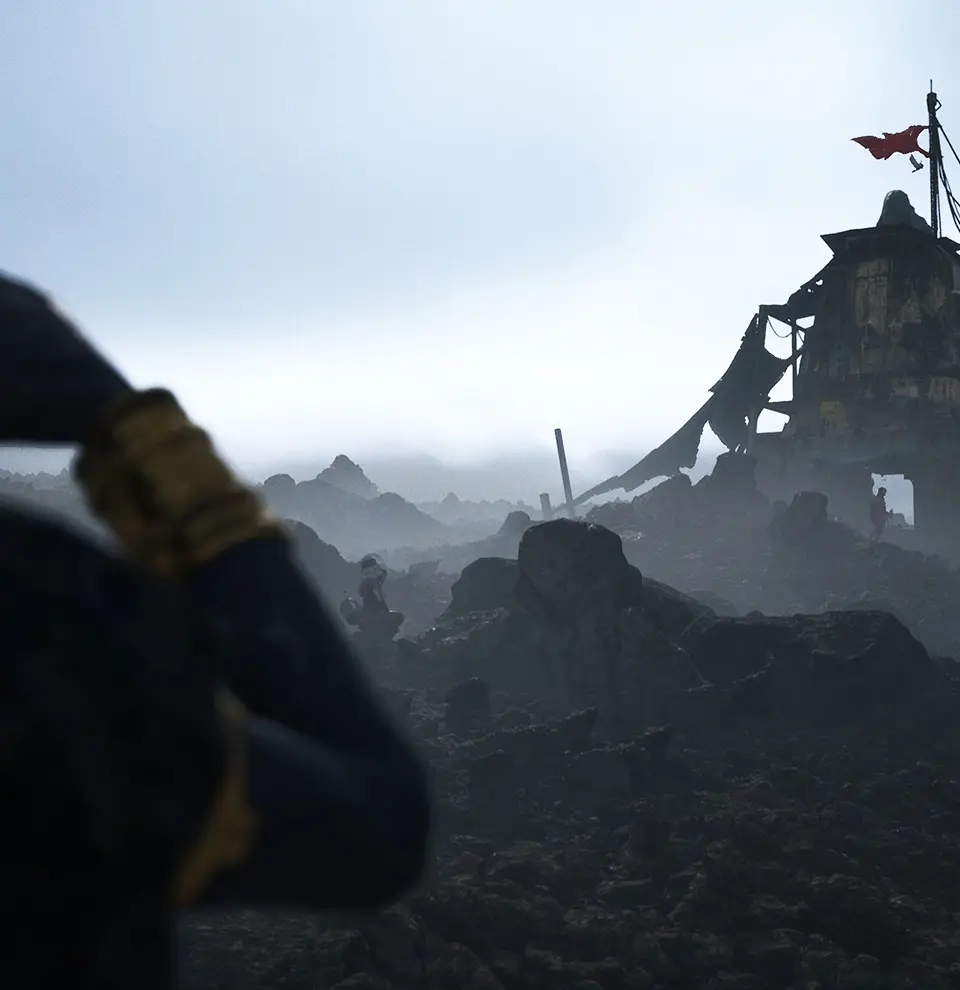
Phase 1: Armored Assault - The Colossus Offensive
The Colossus, a colossal ARC war machine, initiates its assault with a relentless barrage of heavy ordnance and energy projections. This initial phase, "Armored Assault," tests your team's coordination, cover utilization, and precision targeting. While its frontal armor is nearly impenetrable, strategic flanking and exploiting temporary vulnerabilities are key to dismantling this metallic behemoth. Success hinges on understanding its attack patterns, coordinating your team's efforts, and maximizing damage during critical openings.
The Colossus's Primary Attack Patterns & Counter-Strategies
-
Arm-Mounted Cannons (Rapid-Fire Projectiles): The Colossus will frequently unleash a stream of high-velocity projectiles from its arm-mounted cannons. These attacks are telegraphed by a brief charging sound and visual cue from the weapon barrels.
- Counter: Maintain constant movement and utilize environmental cover (e.g., ruined buildings, large debris, rock formations) to break line of sight. Avoid standing in open areas for extended periods. Dodgeroll through incoming fire if caught without cover. Prioritize targets that are actively firing at you.
-
Frontal Energy Blast (Cone Attack): A more devastating attack, the Colossus charges a powerful energy beam that sweeps across a wide frontal arc. This attack is heavily telegraphed by a bright energy buildup in its central core, accompanied by a distinct hum.
- Counter: As soon as you see the energy buildup, sprint perpendicular to the Colossus's facing direction or immediately take cover behind substantial obstacles. This attack deals massive damage and can incapacitate or eliminate Raiders caught in its path. Do NOT attempt to tank this ability. Be aware of the blast radius and ensure all team members are aware of the incoming attack.
-
Ground Slam (AoE & Weak Point Exposure): The Colossus will occasionally rear back and slam one or both of its massive arms into the ground, creating a localized Area-of-Effect (AoE) shockwave. Crucially, immediately after this attack, the heavily armored plates on its back temporarily retract, exposing critical energy conduits.
- Counter: When the Colossus prepares for a Ground Slam, move away from its immediate vicinity to avoid the shockwave. This is your primary window for damage. As soon as the slam animation concludes, focus fire on the exposed conduits on its back. This is the most critical vulnerability in this phase.
Exploiting Weak Points & Team Coordination: The Conduit Offensive
The Colossus's primary weak points in Phase 1 are the exposed energy conduits located on its back. These are only visible for a short duration after its 'Ground Slam' attack. Effective team coordination is paramount for maximizing damage during these brief windows. This phase requires a synchronized effort to transition from defensive evasion to offensive precision.
The Conduit Vulnerability Window: Strategy Breakdown
The brief period after the Ground Slam is where your team can inflict significant damage. Here's how to maximize it:
-
Aggro Management & Flanking:
- Designated Aggro Holder(s): One or two Raiders should focus on drawing and maintaining the Colossus's attention. This involves actively engaging it from the front or sides, using abilities that generate threat, and staying mobile to avoid its direct attacks. Shotguns (e.g., 'Dominator', 'Breaker'), SMGs (e.g., 'Viper', 'Stinger'), or even high-fire-rate Assault Rifles (e.g., 'Liberator', 'Vindicator') can be effective for maintaining aggro while staying mobile. The goal is to keep the Colossus facing them, allowing the rest of the team to position.
- Flanking Raiders: The remaining Raiders should position themselves to quickly flank the Colossus. As the aggro holders keep its gaze, the flanking team should be ready to move behind the boss the moment it initiates its 'Ground Slam'. Pre-positioning is key; don't wait until after the slam to move.
-
Precision Targeting: The Conduit Burst
- Once the conduits are exposed, unleash your highest single-shot damage weapons. Sniper Rifles (e.g., 'Longshot', 'Vigilant'), Bows (e.g., 'Hunter's Mark', 'Arbalest'), and high-impact Designated Marksman Rifles (DMRs) are ideal for this task. Aim for critical hits on the glowing conduits. These weapons deliver the necessary burst damage to make a significant dent in the Colossus's health during the short window.
- Optimal Engagement Distance: For Sniper Rifles and DMRs, maintain a medium to long range to ensure clear shots on the back conduits without being too close to the AoE of the Ground Slam. For Bows, a slightly closer range might be optimal for faster draw times and accuracy.
- Weapon Loadout Synergy: Ensure at least two Raiders are equipped with high-burst damage weapons. If one Raider misses a shot, the other can compensate. Communicate target priority if multiple conduits are exposed simultaneously. The objective is to destroy or heavily damage as many conduits as possible before the armor plates reset.
- Gadget Synergy: Consider using gadgets that enhance precision or damage during this window. A 'Scan Pulse' can highlight the conduits, and abilities that grant temporary damage buffs can further amplify your team's output.
Managing ARC Grunts & Environmental Hazards
The Colossus will not be your only threat. Smaller ARC Grunts will continuously spawn throughout Phase 1, attempting to distract and overwhelm your team. Ignoring them can lead to being flanked or overwhelmed, making it harder to focus on the boss. These smaller enemies serve as a constant pressure, forcing you to divide your attention.
-
Grunt Prioritization: Crowd Control is Key
- Designate one Raider (often the aggro holder or a dedicated support/DPS) to quickly clear incoming Grunts. Area-of-Effect (AoE) abilities, grenades (e.g., 'Frag Grenade', 'Incendiary Grenade'), or high-fire-rate weapons like Assault Rifles or SMGs are effective for crowd control. The goal is to prevent them from swarming your team and interrupting your focus on the Colossus.
- Spawn Points: Be aware of common Grunt spawn points around the arena. Pre-emptively engaging them as they emerge can prevent them from becoming a significant threat.
-
Maintain Focus: The Balancing Act
- While clearing Grunts is important, do not lose sight of the Colossus's attack patterns. A Raider distracted by Grunts can easily be caught by a Frontal Energy Blast or Ground Slam, wasting valuable revive opportunities or even leading to a team wipe.
- Communication is Vital: Call out when Grunts are becoming a problem and when the Colossus is about to use a major ability.
-
Environmental Awareness: Cover and Repositioning
- The battle arena will likely feature destructible cover. Be mindful that prolonged engagement in one spot can lead to your cover being destroyed, leaving you exposed. Continuously reposition and utilize new cover points as the battle progresses.
- Strategic Positioning: Use the environment to your advantage. High ground can offer better sightlines for sniping weak points, while dense cover can shield you from frontal assaults.
Recommended Loadouts & Gear for Phase 1
For Phase 1, a balanced team composition with a mix of sustained damage, burst damage, and crowd control is highly effective. Adapt your loadouts based on your team's roles and the specific challenges of the encounter.
Role-Based Loadout Recommendations
-
Aggro Holder/Frontline:
- Primary Weapon: Assault Rifle (e.g., 'Liberator', 'Vindicator') for sustained damage and grunt clear, or Shotgun (e.g., 'Dominator', 'Breaker') for high close-range damage.
- Secondary Weapon: SMG (e.g., 'Viper', 'Stinger') for mobility and close-quarters grunt clear.
- Gadget: 'Shield Bubble' for temporary protection against sustained fire, or 'Decoy Grenade' to draw aggro from Grunts and create breathing room.
- Armor/Perks: Focus on increased health, armor regeneration, or reduced incoming damage.
-
Flanking DPS (Weak Point Focus):
- Primary Weapon: Sniper Rifle (e.g., 'Longshot', 'Vigilant') or Bow (e.g., 'Hunter's Mark', 'Arbalest') for high precision burst damage on conduits.
- Secondary Weapon: Pistol (e.g., 'Sentinel', 'Guardian') for emergency grunt clear or finishing off low-health targets when primary is reloading.
- Gadget: 'Jump Pack' for rapid repositioning to flank, or 'Scan Pulse' to highlight weak points and ensure accuracy.
- Armor/Perks: Focus on increased critical hit damage, faster reload speeds, or enhanced mobility.
-
Support/Utility:
- Primary Weapon: LMG (e.g., 'Punisher', 'Annihilator') for sustained grunt suppression, or DMR for flexible damage output.
- Secondary Weapon: SMG or Pistol for self-defense.
- Gadget: 'Healing Drone' for team sustain, 'Stun Grenade' for grunt control, or 'EMP Grenade' for temporary Colossus disruption (less effective on armored phases but can interrupt smaller enemies).
- Armor/Perks: Focus on increased healing effectiveness, faster gadget cooldowns, or team buffs.
Key Gear Considerations
- Weapon Tiers: Higher rarity weapons will naturally offer better stats and perks, making them more effective against the Colossus.
- Ammo Management: Ensure your team has a plan for ammo replenishment, especially for high-demand weapons like sniper rifles.
- Synergistic Gadgets: Combining gadgets, such as a 'Scan Pulse' followed by concentrated sniper fire, can be devastating.
Common Pitfalls to Avoid During Armored Assault
Navigating the "Armored Assault" phase requires vigilance and adherence to core combat principles. Falling into these common traps can lead to unnecessary difficulty or even mission failure.
- Tunnel Vision: Focusing solely on the Colossus while ignoring incoming Grunts will quickly lead to being overrun. Grunts can disrupt your aim, force you out of cover, and create openings for the Colossus to exploit.
- Lack of Cover Utilization: Standing in the open is a death sentence against the Colossus's heavy weaponry. Always prioritize cover, and be prepared to move to new cover points as your current ones are destroyed.
- Ignoring Weak Point Windows: Failing to capitalize on the brief exposure of the Colossus's conduits after a Ground Slam will significantly prolong the fight and increase the risk of taking more damage. This is your primary damage phase; don't waste it.
- Poor Communication: Without clear callouts for aggro status, weak point exposure, incoming Grunts, and major Colossus attacks, the team will struggle to coordinate effectively. Utilize the in-game comms or external voice chat to maintain constant situational awareness.
- Over-Reliance on One Strategy: While focusing fire on conduits is key, don't neglect defensive maneuvers. Be prepared to evade, take cover, and manage Grunts simultaneously.