Large-Scale Infrastructure: Building a Thriving Colony
As your Banished settlement grows from a humble village into a bustling town, the demands on your infrastructure will escalate dramatically. Efficient large-scale infrastructure is paramount for sustaining a growing population, ensuring citizen happiness, and facilitating robust trade. This section will guide you through the strategic expansion of your production, transportation, and resource management systems.
Advanced Production & Economic Diversification
Moving beyond basic food and firewood, diversifying your production chain is crucial for economic stability and citizen well-being. These advanced buildings produce higher-value goods, essential for both internal consumption and lucrative trade.
- Tailor:
- Purpose: Produces various types of clothing (Hide Coats, Wool Coats, Leather Coats) from raw materials like Leather (from Hunters/Pastures) and Wool (from Sheep Pastures).
- Materials: Requires Leather, Wool.
- Benefits: Clothing is vital for keeping citizens warm, especially during harsh winters, preventing illness and improving overall happiness. Excess clothing can be traded for valuable resources.
- Strategy: Aim for at least one Tailor per 200-300 citizens, ensuring a steady supply of raw materials. Prioritize Wool Coats for their superior warmth and trade value. Place Tailors near your Pastures or Trading Posts for efficient material flow.
- Blacksmith:
- Purpose: Crafts Steel Tools from Iron and Coal.
- Materials: Requires Iron Ore (from Mines) and Coal (from Mines).
- Benefits: Steel Tools are significantly more durable than Stone Tools, reducing the frequency of tool replacement and improving worker efficiency across all professions. This directly impacts output from Farmers, Foresters, Miners, Quarrymen, and more.
- Strategy: Establish a Blacksmith once you have reliable access to both Iron and Coal. A single Blacksmith can typically supply tools for a large colony, but monitor tool stock closely. Consider building two if your population exceeds 500 and you have multiple mines, or if you plan to trade tools for profit. Position the Blacksmith centrally or near your primary mining operations.
- Brewery:
- Purpose: Produces Ale from various grains (Wheat, Corn, Oats, Rye, Barley).
- Materials: Requires Grains (from Farms).
- Benefits: Ale is a luxury good that significantly boosts citizen happiness. It also serves as an excellent high-value trade item, often fetching better prices than raw grains.
- Strategy: Introduce a Brewery once your food production is stable and you have surplus grains. Place it near farms for efficient material transport. While not essential for survival, Ale greatly contributes to a content populace, which in turn can lead to higher birth rates and overall productivity. Ensure you have enough storage capacity for both grains and finished ale.
Optimizing Transportation: The Road Network
Efficient movement of goods and people is fundamental to a large colony's success. Upgrading your road network is a critical step in large-scale infrastructure development. Poor road infrastructure leads to longer travel times, reduced productivity, and increased risk of starvation or freezing for citizens caught far from home during harsh weather.
- Stone Roads:
- Construction: Requires Stone. Each segment of Stone Road consumes 1 Stone.
- Benefits: Stone Roads allow for significantly faster travel for citizens and vendors compared to Dirt Paths (approximately 50% faster). This reduces travel time between workplaces, homes, and storage, leading to increased overall productivity and efficiency for all professions. They also provide a visual indication of your colony's development.
- Strategy: Prioritize upgrading main thoroughfares connecting critical production chains (e.g., mines to blacksmiths, farms to markets, residential areas to workplaces) and trade routes to Trading Posts. Gradually replace all Dirt Paths with Stone Roads as stone resources allow. Focus on high-traffic areas first.
- Placement: Lay Stone Roads in a grid-like pattern where possible, connecting all major buildings and residential zones. Avoid winding paths that increase travel distance. Straight roads are always more efficient. Consider creating a central "spine" road through your town, with smaller feeder roads branching off to specific districts.
- Step-by-step Upgrade:
- Open the "Roads and Bridges" menu (usually found under the "Building" tab).
- Select "Stone Road."
- Click and drag to replace existing Dirt Paths or lay new roads. The game will automatically remove the old path if you draw over it.
- Ensure you have sufficient Stone in your stockpiles. Assign enough Laborers to complete the construction efficiently.
- Bridges:
- Purpose: Allows passage over rivers and ravines, opening up new areas for expansion, accessing isolated resources, or creating critical shortcuts. Bridges are essential for connecting disparate parts of your growing settlement.
- Construction: Requires Stone and Wood. The cost varies depending on the length of the bridge. A typical short bridge might cost 10-20 Wood and 5-10 Stone. Longer bridges will naturally cost more.
- Benefits: Bridges eliminate long detours around water bodies, drastically reducing travel times for workers, resource gatherers, and traders. They can unlock fertile land for farms or pastures, or provide access to new mining/quarrying sites.
- Strategy: Build bridges strategically to connect isolated resource patches (e.g., a forest for a Forester, a new mining vein) or to create shortcuts, reducing travel times for resource gathering and trade. Before building, assess the potential time savings versus the resource cost. Sometimes, a longer road around a small stream is more economical than a bridge if traffic is low.
- Placement: Look for narrow points in rivers or ravines to minimize construction costs. Ensure the bridge connects directly to your existing road network for maximum efficiency.
- Step-by-step Construction:
- Open the "Roads and Bridges" menu.
- Select "Bridge."
- Click on one side of the river/ravine where you want the bridge to start.
- Drag the cursor across the water to the other side. The game will show a green outline if a bridge can be built.
- Release the mouse button to place the blueprint.
- Ensure you have enough Wood and Stone. Laborers will then construct the bridge.
- Tunnels (Modded Content/Advanced Strategy):
- Note: Tunnels are not available in the vanilla Banished game but are a popular feature in many community-created mods (e.g., Colonial Charter). If playing with mods, they offer another layer of transportation strategy.
- Purpose: Allows passage through mountains, providing direct routes where bridges or roads around terrain are impractical or too long.
- Construction: Typically requires significant amounts of Stone and Iron, and often a specialized "Tunneling Crew" or a large number of Laborers.
- Benefits: Can drastically shorten travel times through mountainous regions, connecting distant resource nodes or expanding your buildable area in challenging terrain.
- Strategy (Modded): Use tunnels sparingly due to their high cost and labor requirements. They are best for connecting critical infrastructure through impassable terrain that would otherwise require extremely long detours. Plan the entrance and exit points carefully to integrate with your existing road network.
Resource Management & Trade Expansion
As your colony expands, local resources may become depleted. Robust trade and proactive resource management become indispensable.
- Trading Posts:
- Purpose: Facilitates trade with merchants, allowing you to acquire resources you lack and sell surplus goods. Trading Posts are your lifeline when local resources dwindle or when you need specialized items like seeds or livestock.
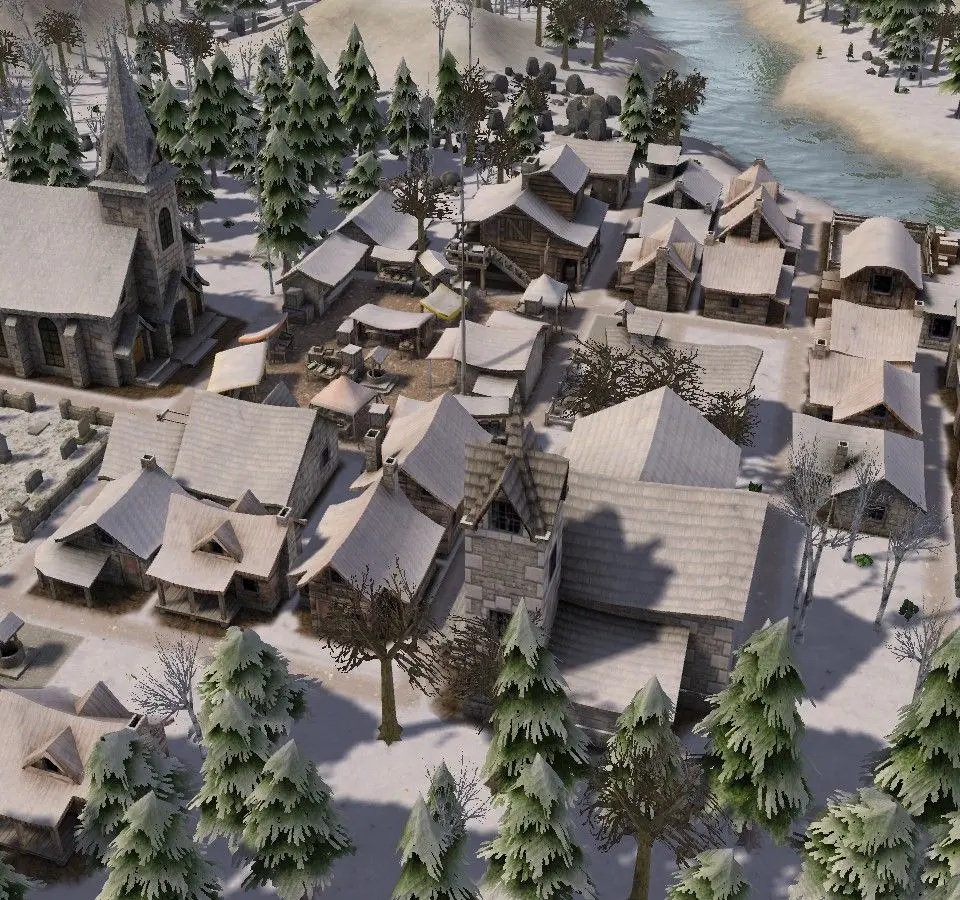
- Strategy: If you are running low on natural resources like Stone, Iron, or Coal, you will need to rely heavily on trade. Establish multiple Trading Posts if necessary to handle the volume of goods being imported and exported, especially in very large colonies. Place them along major waterways for easy access by trade boats. Ensure they are well-connected to your road network for efficient internal transport of goods.
- Trade Goods: Focus on producing high-value goods like Ale, Steel Tools, and various types of Clothing for export. These items fetch good prices and allow you to import more raw materials. Conversely, import raw materials like Iron, Coal, or even Stone if your local quarries are exhausted. Always keep an eye on merchant inventories and prices to maximize profit.
- Staffing: Ensure your Trading Posts are fully staffed with Merchants to maximize trade efficiency and inventory management. Merchants will automatically move goods from storage to the Trading Post, preparing for incoming ships.
- Order Management: Use the "Order" tab within the Trading Post interface to pre-order specific goods. This ensures that when a merchant arrives with those items, your merchants will automatically purchase them, provided you have enough trade goods or gold.
- Quarries & Mines:
- Purpose: Provide Stone, Iron Ore, and Coal. These are essential raw materials for construction, tool production, and heating.
- Strategy: While initially productive, these finite resources will eventually deplete. Plan for their eventual exhaustion by either stockpiling massive quantities early on, relying on trade, or expanding to new map areas if possible (though Banished maps are generally fixed). It's wise to build these structures only when absolutely necessary to conserve their finite nature.
- Efficiency: Place Storage Barns and Stockpiles close to Quarries and Mines to minimize travel time for workers. Long travel distances to and from these sites significantly reduce output. Consider building temporary housing nearby if the mining operation is far from your main settlement.
- Depletion: Once a Quarry or Mine is depleted, it cannot be used again. You can demolish it to reclaim the land.
- Forester & Gatherer Combination:
- Purpose: Provides a sustainable source of Wood, Logs, and various wild foods (Berries, Onions, Mushrooms, Nuts).
- Strategy: Designate large areas of forest for sustainable resource gathering. A Forester's Lodge, combined with a Gatherer's Hut, Hunter's Cabin, and Herbalist, creates a highly efficient and self-sustaining food and wood production zone. The Forester will replant trees, ensuring a continuous supply of logs.
- Placement: Place these buildings centrally within a large, untouched forest. Ensure there's a Storage Barn nearby to minimize travel time for workers.
Land Management & Future Planning
Proactive land management ensures your colony has room to grow and resources to sustain that growth.
- Forest Clearing:
- Strategy: Plan for future expansion by clearing large areas of forest. This provides immediate wood resources and opens up land for new farms, pastures, or residential zones. Use Foresters to manage sustainable wood production in designated areas, while Laborers clear new plots.
- Considerations: Balance clearing with maintaining some forest for natural beauty and potential future resource needs. Forests also provide a source of wild food and herbs, so don't clear everything. Designate specific areas for clearing and specific areas for sustainable forestry.
- Process: Use the "Remove Resources" tool (under the "Tools" tab) to designate areas for tree felling. Laborers will then chop down the trees and collect the logs.
- Terraforming:
- Purpose: Using Laborers to flatten or level uneven terrain. This is crucial for efficient placement of large structures like Farms, Pastures, and dense residential blocks, as buildings cannot be placed on steep slopes.
- Strategy: Large-scale terraforming can be considered for optimal building placement, especially for large structures like Farms, Pastures, or dense residential blocks. While time-consuming and resource-intensive (in terms of labor), a flat, organized layout significantly improves efficiency and aesthetics. Prioritize flattening areas for your primary food production and residential zones.
- Process: Designate areas for flattening using the "Remove Resources" tool (specifically the "Level Terrain" option, if available in your version/mods, or by repeatedly removing and placing small sections of road/building blueprints to force leveling) focusing on sections where you plan significant construction. Assign a sufficient number of Laborers to this task. Be aware that terraforming can take a very long time with a small labor force.
- Residential Zoning:
- Strategy: As your population grows, ensure you have sufficient housing. Plan dedicated residential zones with easy access to markets, schools, hospitals, and workplaces. Consider building multiple small clusters of houses rather than one massive block to distribute services more effectively and reduce travel times for citizens.
- Housing Types: Prioritize Stone Houses over Wooden Houses as they are more durable, require less maintenance (no firewood for heating if built with stone walls), and are less prone to fire (though fire is not a mechanic in vanilla Banished, it's a common mod feature). Stone houses also provide more happiness.
- Layout: Build houses close to roads to minimize travel time. Consider building them in rows or blocks with small gaps for gardens or pathways.
Common Pitfalls to Avoid
- Resource Bottlenecks: Failing to anticipate the depletion of local resources like Stone or Iron. Always have a backup plan, whether it's trade or exploring new areas. Monitor your resource graphs regularly.
- Traffic Congestion: Neglecting road upgrades can lead to slow movement of goods and citizens, severely impacting productivity. A slow supply chain can cause starvation or lack of tools.
- Unbalanced Production: Over-specializing in one good without considering the needs of your population or trade demands. Ensure a diverse economy that can adapt to changing needs and merchant inventories.
- Lack of Planning: Building haphazardly without a long-term vision can lead to inefficient layouts, wasted resources, and difficult expansion later on. Always plan your expansion in stages, leaving room for future buildings and infrastructure.
- Ignoring Happiness: While survival is key, a happy populace is a productive populace. Don't neglect luxury goods like Ale or sufficient housing and services (Markets, Hospitals, Schools) as these directly impact citizen productivity and birth rates.
- Over-reliance on Laborers: While essential for construction and clearing, having too many Laborers can starve your production industries. Balance your workforce carefully, ensuring enough workers for all critical tasks.
By strategically implementing these large-scale infrastructure improvements, your Banished colony will be well-equipped to handle exponential growth, overcome resource challenges, and evolve into a truly self-sufficient and prosperous settlement.