
Expanding Housing & Services
As your fledgling settlement flourishes and your population steadily climbs, the demand for both shelter and essential services will escalate dramatically. Neglecting these crucial aspects can lead to widespread unhappiness, reduced productivity, and even the collapse of your community. This section provides comprehensive strategies for expanding your housing infrastructure and strategically implementing vital services to ensure the long-term prosperity and well-being of your Banished citizens.
Optimizing Residential Districts
Efficient housing placement is foundational to a thriving town. Beyond simply building more homes, consider the following:
- Proximity to Workplaces: Aim to place houses within a reasonable walking distance of primary workplaces (e.g., Gatherer's Huts, Forester's Lodges, Mines, Quarries). Long commutes waste valuable time that could be spent working, gathering resources, or fulfilling personal needs.
- Resource Access: Ensure residential areas have easy access to essential resources like firewood and food. While Markets mitigate this, initial planning should still consider resource flow.
- Density vs. Sprawl: While tightly packed housing can maximize Market coverage, remember that Banished citizens appreciate a bit of space. Balance density with aesthetic appeal and future expansion plans. Avoid creating isolated pockets of housing that are difficult to service.
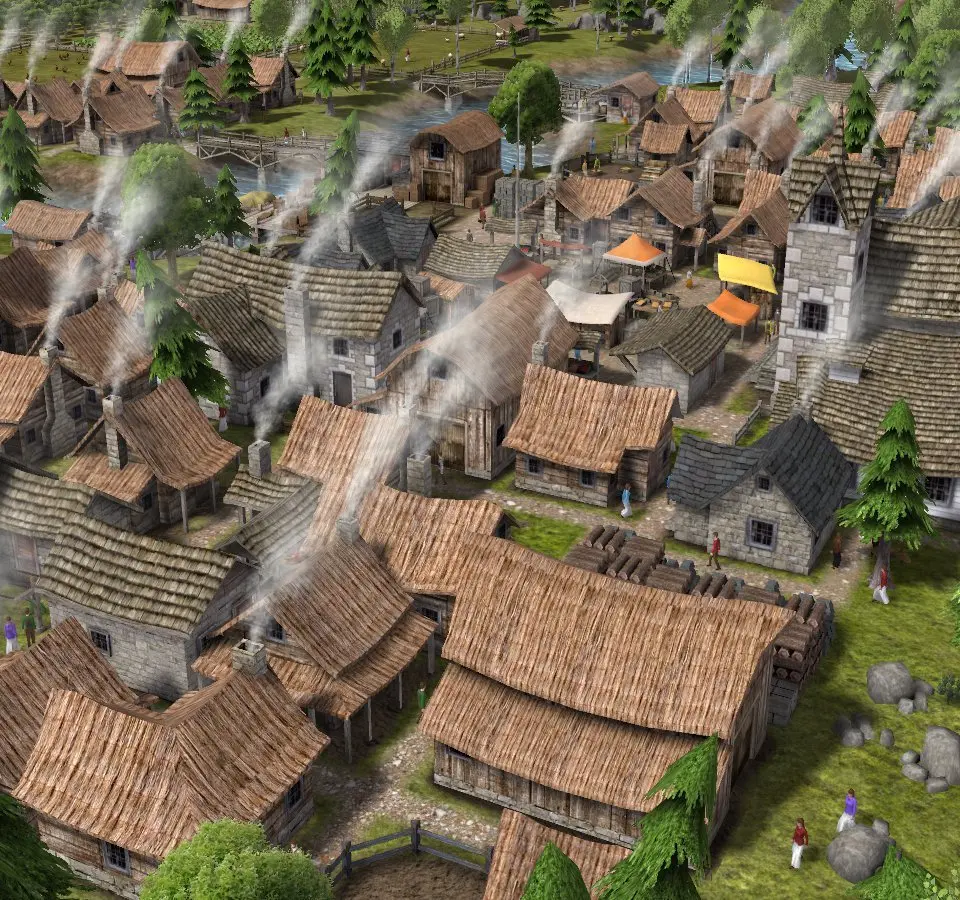
The Market: Your Distribution Hub
The Market is arguably one of the most impactful service buildings in Banished, drastically improving resource distribution and citizen efficiency. It acts as a central hub where vendors collect food, firewood, and tools from storage barns and stockpiles, then distribute them to nearby homes. This eliminates the need for individual citizens to trek across the map for basic necessities, freeing them up for more productive tasks.
Optimal Market Placement & Coverage:
- Central Location: Place your Market in the heart of your densest residential areas. Its primary purpose is to serve homes.
- Radius of Influence: A Market has a significant circular radius of influence. Aim to cover as many houses as possible within this circle. A single Market can effectively serve approximately 50-70 houses, depending on their density and layout. You can visualize the coverage radius during placement.
- Proximity to Storage: While not strictly necessary due to vendors, placing a Market reasonably close to your main storage barns and stockpiles can slightly reduce vendor travel time, leading to quicker replenishment.
- Multiple Markets: As your town expands, you will inevitably need multiple Markets. Plan your town layout to accommodate several Market zones, each serving a distinct residential cluster.
- Staffing: Ensure your Market is fully staffed with vendors. Understaffed Markets will struggle to keep up with demand, negating their benefits.
Boosting Morale: Chapels and Taverns
Happiness is a critical, though often overlooked, metric in Banished. Unhappy citizens are less productive, more prone to illness, and can even lead to a decline in birth rates. Chapels and Taverns are your primary tools for boosting citizen morale.
The Chapel: Spiritual Well-being
- Happiness Boost: A Chapel provides a significant and consistent happiness boost to all citizens within its considerable radius. This boost is passive and does not require active interaction from citizens.
- Placement: Due to its large radius, a single Chapel can cover a substantial portion of your town. Place it centrally to maximize its reach. You will likely only need one or two Chapels in a large town.
- Early Game Priority: Consider building a Chapel relatively early, once your basic food and shelter needs are stable, to ensure a happy and productive workforce from the outset.
The Tavern: Social & Economic Hub
- Happiness Boost: Taverns provide a more direct and interactive happiness boost. Citizens will visit Taverns to consume Ale, which directly increases their happiness.
- Ale Production: Taverns require a constant supply of Ale, which is brewed from either Wheat or Berries. You'll need to establish farms or gatherer's huts dedicated to producing these ingredients.
- Wheat: Requires farming, which is more labor-intensive but provides a consistent, high yield.
- Berries: Can be gathered from Gatherer's Huts, a less labor-intensive option but potentially less consistent.
- Trade Good: Ale can also be a valuable trade good. If you produce a surplus, consider trading it at a Trading Post for other essential resources.
- Placement: Place Taverns in residential areas, similar to Markets, to ensure easy access for citizens. They have a smaller happiness radius than Chapels, so you may need several in a large town.
- Staffing: Ensure your Tavern is fully staffed to keep the Ale flowing and the citizens happy.
Happiness Boost Summary:
| Building | Primary Benefit | Resource Requirement | Placement Strategy |
|---|---|---|---|
| Chapel | Passive, wide-area happiness boost | None (requires construction materials) | Central, to cover maximum homes |
| Tavern | Direct happiness boost from Ale consumption, trade good | Wheat or Berries (for Ale production) | Within residential areas, near homes |
The Hospital: Battling Disease and Injury
As your population grows, so does the risk of disease outbreaks and injuries. A Hospital is an indispensable building for maintaining public health and preventing catastrophic population losses.
When to Build a Hospital:
- Population Threshold: A good rule of thumb is to build your first Hospital when your population reaches around 150-200 citizens. At this point, the risk of disease spreading rapidly becomes a significant threat.
- After Disease Outbreaks: If you experience even a minor disease outbreak (e.g., from uneducated workers, poor sanitation, or aging citizens), prioritize building a Hospital immediately.
- Availability of Herbs: Crucially, a Hospital requires a constant supply of Herbs to function. Do not build a Hospital until you have established a reliable source of Herbs via an Herbalist.
- Early Game Considerations: While not a first-tier building, planning for an Herbalist early on (perhaps after your first Gatherer's Hut) can ensure you have a stock of Herbs ready when the Hospital becomes necessary.
Hospital Operations:
- Herbalist Synergy: The Hospital and Herbalist work hand-in-hand. The Herbalist gathers herbs from forests, and these herbs are then used by the Hospital to treat the sick. Ensure your Herbalist's Hut is placed in a dense forest area for optimal yield.
- Staffing: A Hospital requires a Doctor to operate. Ensure it is fully staffed.
- Disease Prevention: While the Hospital treats disease, good town planning can prevent it. Ensure citizens have adequate food variety, warm homes (firewood), and access to education (educated workers are less prone to accidents and illness).
By strategically expanding your housing, establishing efficient Markets, nurturing citizen happiness with Chapels and Taverns, and safeguarding public health with Hospitals, you will lay the groundwork for a resilient and prosperous Banished settlement.