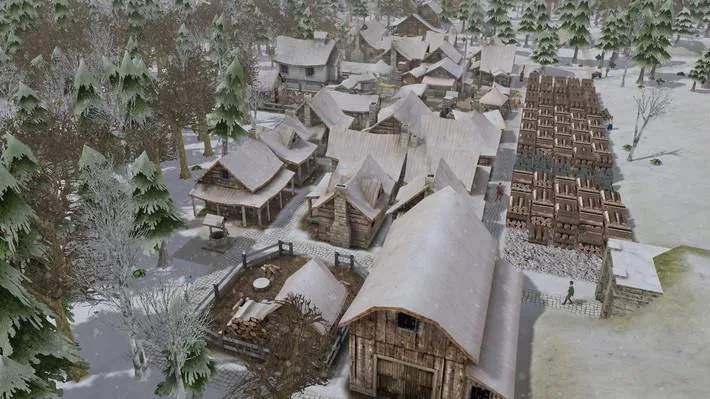
Expanding Trade Networks
While a single Trading Post is essential for basic resource acquisition, truly mastering Banished's economy means expanding your trade network. This isn't just about building more structures; it's about strategic placement, efficient production, and shrewd negotiation to transform your settlement into a thriving economic powerhouse. A robust trade network allows you to overcome resource scarcity, diversify your food and material supplies, and even specialize your production for maximum profit, ensuring your citizens remain fed, clothed, and housed through all seasons.
The Strategic Placement of Trading Posts
Building multiple Trading Posts is the cornerstone of an expanded network. Each Trading Post operates independently, allowing different merchants to arrive simultaneously, significantly increasing your trading capacity and reducing bottlenecks in resource acquisition or surplus export.
- Location, Location, Location: Trading Posts must be built on the banks of a navigable river or lake. Prioritize locations that are easily accessible by your laborers and close to your storage barns or stockpiles to minimize travel time for goods. A well-placed Trading Post can shave precious minutes off transport, freeing up laborers for other vital tasks. Consider placing them near major population centers or industrial zones.
- Resource Proximity: Consider placing Trading Posts near areas where you produce high-value trade goods (e.g., a brewery for Ale, a tailor for Wool Coats, a blacksmith for Steel Tools) or where you need to import large quantities of raw materials (e.g., iron mines, coal mines). This reduces internal transportation costs and speeds up the loading/unloading process. For instance, a Trading Post adjacent to a large orchard or farm can efficiently export surplus food.
- Early Game vs. Late Game: In the early game, one well-placed Trading Post is sufficient to acquire essential seeds and livestock. As your population grows and your production capabilities increase, aim for 2-4 Trading Posts to handle increased trade volume. For very large, specialized settlements, 5-8 or even more can be beneficial, especially if you're importing massive amounts of raw materials for advanced production chains or exporting vast surpluses of manufactured goods. Remember, each Trading Post requires a dedicated trader and laborers, so balance expansion with your available workforce.
Optimizing Your Trade Goods
Not all goods are created equal in the eyes of a merchant. Identifying and consistently producing high-value trade goods is crucial for maximizing your profits and acquiring essential resources. Understanding the value hierarchy of goods is key to a prosperous economy.
High-Value Export Goods:
These items typically fetch the best prices and require more advanced production chains, making them ideal for generating significant trade value.
- Ale:
- Production Chain: Requires a Brewery, which consumes Wheat or Corn (from fields) and Water (from wells or rivers).
- Value: Very high. Ale is one of the most profitable trade goods in Banished due to its multi-step production process and high demand from merchants.
- Strategy: Establish large fields for Wheat/Corn and ensure a steady water supply. Build multiple Breweries as your population grows and trade capacity increases. Prioritize educated workers for Breweries to maximize output.
- Pitfall: Over-reliance on a single crop for Ale can lead to food shortages if harvests fail. Diversify your food production.
- Wool Coats/Hide Coats:
- Production Chain: Requires a Tailor, which consumes Wool (from Sheep Pastures) or Hides (from Cattle Pastures or Hunters).
- Value: High. Wool Coats are generally more valuable than Hide Coats due to the renewable nature of wool and the dedicated production chain.
- Strategy: Establish large Sheep Pastures early. Once you have a stable wool supply, build Tailors. Ensure you have enough laborers to shear sheep and work the Tailor.
- Pitfall: Insufficient pasture space or over-shearing can lead to animal starvation or low wool output. Maintain a healthy animal population.
- Steel Tools:
- Production Chain: Requires a Blacksmith, which consumes Iron (from Mines or imported) and Coal (from Mines or imported).
- Value: High. While essential for your own population, surplus Steel Tools fetch an excellent price.
- Strategy: Once your Iron and Coal production (or import) is stable, build a Blacksmith. Produce enough for your town's needs first, then export the surplus. Educated blacksmiths produce tools faster.
- Pitfall: Trading away too many tools can cripple your town's productivity as tools are consumed by almost every profession. Always maintain a significant reserve.
- Venison (Processed):
- Production Chain: Requires a Hunter's Lodge for raw Venison, then can be traded directly or processed. While raw food isn't ideal for trade due to its lower value and spoilage, excess Venison can be traded, especially if you have a large hunting economy and are struggling to convert it into higher-value goods. However, for better value, consider converting it into Smoked Meat if you have a Smokehouse mod, or simply trading it as a bulk food item when merchants offer good rates.
- Value: Moderate for raw Venison, higher if processed via mods. It's a good option for early-game surplus or when other high-value goods aren't yet available.
- Strategy: Establish multiple Hunter's Lodges in dense forest areas. Ensure efficient storage and transport to the Trading Post. Only trade surplus that exceeds your town's food needs.
- Pitfall: Trading too much food can lead to starvation during harsh winters or unexpected population growth. Always prioritize your citizens' food security.
- Firewood/Logs:
- Production Chain: Firewood from a Wood Cutter, Logs from a Forester or imported.
- Value: Low. These are basic commodities.
- Strategy: Useful for balancing small trades, especially in the early game, or when you have a massive, easily renewable surplus. Don't rely on these for significant profits.
- Pitfall: Over-cutting forests can lead to deforestation and resource depletion. Balance logging with replanting by Foresters.
Essential Import Goods:
These are resources you likely cannot produce yourself or need in greater quantities than your local supply. Prioritize these imports to ensure your town's growth and stability.
- Seeds: Absolutely critical for diversifying your crops (e.g., Wheat, Corn, Squash, Beans, Cabbage, Potatoes, Peppers, Pumpkins, Onions). Always prioritize acquiring new seeds from Seed Merchants to improve food variety and resilience against crop blights. Aim to acquire all available seed types.
- Livestock: Sheep, Cattle, Chickens. Essential for wool, hides, meat, and eggs. Acquire these as soon as possible from Livestock Merchants to establish animal husbandry, which provides renewable resources and food. Start with at least two of each animal type to ensure breeding.
- Iron: If your map lacks iron mines, this is a vital import for tools, advanced construction, and later-game industries. Without iron, your Blacksmiths cannot function.
- Coal: Similar to iron, if local supplies are scarce, coal is needed for blacksmiths (to make tools) and for heating homes in colder climates (though firewood is more common for heating).
- Stone: For large construction projects (e.g., stone houses, bridges, advanced buildings), importing stone can save significant labor and time if local quarries are depleted or non-existent.
- Herbs: If your herbalist isn't keeping up with demand, or if your forests lack diverse plant life, herbs can be a useful import for maintaining citizen health and preventing epidemics.
Managing Your Trade Inventory and Merchant Arrivals
Effective trade requires foresight and careful inventory management. A well-organized Trading Post ensures you're always ready for a merchant and can quickly fulfill orders.
- Dedicated Storage: Designate specific Storage Barns or Stockpiles near your Trading Posts for trade goods. This prevents your laborers from having to haul goods from across the map, significantly increasing efficiency. Ideally, these storage facilities should be directly adjacent to the Trading Post.
- Trade Limits: Use the Trading Post's interface to set "Desired Stock" limits for goods you want to keep for your town's consumption and "Trade" limits for goods you want to sell. For example, you might set a Desired Stock of 200 Steel Tools for your town and set any surplus above that to be traded. This automation is crucial for hands-off trade management.
- Anticipating Merchants: Merchants arrive periodically, but their exact timing and inventory are somewhat random. Keep an eye on the "Next Merchant" timer at your Trading Post. This allows you to prepare specific goods if you're waiting for a particular merchant type.
- Merchant Types: Different merchants specialize in different goods. Understanding their focus helps you prepare.
- General Goods Merchant: Carries a mix of food, materials, and sometimes seeds/livestock. Good for general needs.
- Food Merchant: Primarily carries various food items and sometimes seeds. Essential for diversifying your food supply or recovering from famine.
- Resource Merchant: Focuses on raw materials like iron, coal, stone, and logs. Crucial for towns lacking specific natural resources.
- Livestock Merchant: Carries various animals (Sheep, Cattle, Chickens). Your primary source for establishing animal husbandry.
- Seed Merchant: Carries a selection of crop seeds. Absolutely vital for crop diversification and resilience.
- Prioritize Needs: Always prioritize acquiring seeds and livestock first. These investments pay dividends quickly by diversifying your production, increasing food security, and providing raw materials for higher-value goods.
Step-by-Step Trade Strategy
Follow these steps to systematically build and expand a robust trade network in your Banished settlement.
- Establish Basic Production (Years 1-5):
- Ensure you have a stable food supply (Hunter, Gatherer, Fisherman, small Farm), consistent firewood production (Wood Cutter), and basic tools (Blacksmith with local Iron/Coal or imported).
- Focus on survival and population growth before heavily investing in trade.
- Build Your First Trading Post (Year 3-7):
- Place it strategically on a river, accessible to your population and near your main storage.
- Assign 1-2 laborers to it.
- Identify Early Trade Surpluses (Year 4-8):
- Initially, you might trade excess Firewood, Stone, or even raw Food (like Fish or Berries) if your storage is overflowing and your population is well-fed.
- Set low trade limits to ensure you don't deplete your own supplies.
- Acquire Seeds and Livestock (Year 5-10):
- This is your absolute top priority. Trade whatever you can for new crop seeds (aim for at least 3-4 types) and breeding pairs of animals (Sheep, Cattle, Chickens).
- Be patient; you might need to wait for the right merchant.
- Develop Specialized Production (Year 10+):
- Once you have a stable base, diversified food, and a growing population, start building facilities for high-value goods:
- Build a Pasture for Sheep (for Wool) and/or Cattle (for Hides).
- Construct a Tailor to turn Wool/Hides into Wool Coats/Hide Coats.
- Build Fields for Wheat/Corn and a Brewery for Ale.
- If you have Iron and Coal (or can reliably import them), build a Blacksmith for Steel Tools.
- Focus on one or two high-value goods initially to streamline production.
- Once you have a stable base, diversified food, and a growing population, start building facilities for high-value goods:
- Expand Trading Posts (Year 15+):
- As your production grows and you generate significant surpluses, build additional Trading Posts (2-4 total is a good mid-game target).
- This allows for simultaneous merchant visits and increases your overall trade capacity.
- Set Advanced Trade Limits (Ongoing):
- Configure each Trading Post to automatically prepare goods for trade, ensuring you always have a stock ready for merchants.
- Regularly review and adjust these limits based on your town's needs and production rates.
- Monitor and Adjust (Ongoing):
- Continuously monitor your town's needs, your trade good production, and merchant offerings.
- Adjust your trade strategy based on current surpluses/deficits, population growth, and resource availability. For example, if you're low on tools, prioritize importing iron/coal or tools themselves.
Common Pitfalls and Pro-Tips
Avoid these common mistakes and implement these tips to ensure your trade network thrives.
- Don't Over-Trade Essentials: Never trade away your last seeds, breeding animals, or critical tools. Always maintain a healthy reserve (e.g., at least 50-100 of each seed, 5-10 breeding pairs of each animal, and enough tools for 1-2 years of consumption). Trading away your last vital resource can lead to an unrecoverable spiral.
- Labor Allocation: Remember that laborers assigned to Trading Posts spend their time hauling goods to and from the post. Ensure you have enough available labor to manage trade without neglecting other vital tasks like farming, building, or resource gathering. An understaffed Trading Post is inefficient.
- Storage Capacity: Ensure you have ample storage (Barns and Stockpiles) near your Trading Posts to hold both incoming and outgoing goods. A lack of storage can lead to goods spoiling or being left exposed to the elements.
- Roads: Build well-maintained stone roads leading to your Trading Posts from your production centers and storage facilities. Roads significantly speed up the movement of goods, making your trade operations much more efficient.
- Diversify: Don't put all your eggs in one basket. Relying on a single trade good (e.g., only Ale) can be risky if demand drops, your production chain falters, or a critical resource becomes scarce. Diversify your high-value exports.
- Education Matters: Educated laborers are more efficient in all professions, including those working at Trading Posts. They load and unload goods faster. Invest in schools early to boost your overall productivity.
- Balance Imports and Exports: Aim for a healthy balance. While exporting goods generates trade value, import critical resources you lack or cannot produce efficiently. A healthy trade balance ensures long-term sustainability.
- Consider Trade Value vs. Labor Cost: Always weigh the trade value of an item against the labor and resources required to produce it. Sometimes, a simpler, lower-value item produced in massive quantities can be more profitable than a complex, high-value item with a bottlenecked production chain.
By following these strategies, you can transform your isolated settlement into a bustling trade hub, ensuring long-term prosperity and resilience against the unpredictable challenges of Banished. A well-managed trade network is the backbone of any successful and enduring town.