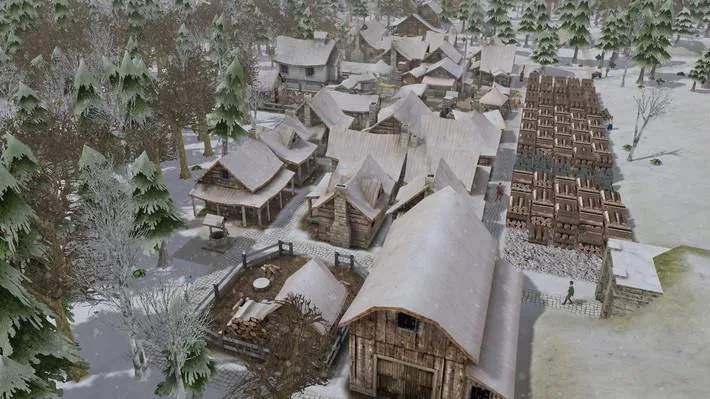
Advanced Production Chains
As your settlement grows beyond the initial survival phase, optimizing your production chains becomes paramount for sustained prosperity and population growth. Moving beyond basic resource gathering, these advanced strategies focus on efficiency, specialized goods, and maximizing output from limited resources.
1. Optimized Food Production: The Flour & Bread Loop
Reliable and varied food sources are the backbone of any thriving Banished community. The Flour & Bread loop is a highly efficient way to feed a large population with minimal land footprint once established.
- Step 1: Establish Grain Farms. Construct several Farm buildings. Prioritize planting Wheat or Corn as your primary grain crops. Ensure these farms are staffed and have sufficient storage nearby (e.g., a Barn). A good starting ratio is 2-3 Wheat Farms for every 1-2 Windmills.
- Step 2: Build Windmills. Place Windmills strategically near your grain farms and a central storage area. Windmills convert raw Wheat or Corn into Flour. Each Windmill requires 1-2 laborers.
- Step 3: Construct Bakeries. Erect Bakeries close to your Windmills and residential areas. Bakeries take Flour and Firewood (or Coal if available) to produce Bread. Bread is a highly nutritious food item that significantly boosts citizen happiness and health. A ratio of 1 Bakery per 1-2 Windmills is often effective, depending on your population size.
- Strategy Tip: Consider building a Market nearby to distribute the Bread efficiently to your citizens, reducing travel time for individual households. Monitor your grain, flour, and bread stockpiles closely to adjust farm and production building numbers.
2. Advanced Tool Manufacturing: Iron Tools & Steel Tools
High-quality tools are essential for all professions, increasing efficiency and reducing wear. Moving beyond basic Stone Tools requires a more complex industrial chain.
- Step 1: Secure Iron Ore. Locate and construct Iron Mines on deposits of Iron Ore. These are finite resources, so plan their placement carefully. Alternatively, if no mines are available, trade for Iron Ore at a Trading Post.
- Step 2: Produce Iron. Build a Smelter (also known as a Blacksmith in some versions) near your Iron Mines or Trading Post. Smelters convert Iron Ore and Firewood (or Coal) into Iron ingots.
- Step 3: Craft Iron Tools. Utilize a Tool Smith building. This structure takes Iron and Wood to produce Iron Tools. Iron Tools last longer and provide a greater efficiency bonus than Stone Tools.
- Step 4 (Optional, but Recommended): Steel Tools. For the ultimate in tool durability and efficiency, you'll need Coal.
- Acquire Coal: Build Coal Mines on Coal deposits, or trade for Coal at a Trading Post.
- Produce Steel: A Steel Smelter (an upgraded version of the basic Smelter or a separate building, depending on mods/versions) is required. This building combines Iron and Coal to produce Steel.
- Craft Steel Tools: The Tool Smith can then use Steel and Wood to create Steel Tools, which are the most durable and efficient tools in the game.
- Strategy Tip: Centralize your mining, smelting, and tool production to minimize transport distances. Ensure a steady supply of Firewood or Coal for your smelters.
3. Textile & Clothing Production: Wool to Warmth
Clothing is vital for citizen happiness and survival, especially in colder climates. Moving beyond basic Hide Coats requires a dedicated textile industry.
- Step 1: Establish Sheep Farms. Construct Pastures and assign Sheep to them. Sheep will produce Wool over time. Ensure pastures are adequately sized and staffed. A healthy sheep population is key.
- Step 2: Build a Tailor. Erect a Tailor building. This structure requires Wool and Leather (from Hunters or Cattle Pastures) to produce Wool Coats or Leather Coats. For more advanced clothing, you'll focus on Wool.
- Step 3 (Advanced Clothing): Dyers and Weavers (Mod Dependent). If playing with certain mods (e.g., Colonial Charter, North), you can unlock more complex clothing chains:
- Grow Flax: Establish Farms dedicated to Flax production.
- Process Flax: Build a Loom or Weaver to convert Flax into Linen or Thread.
- Dyeing: A Dyer building (often requiring specific plant resources like Indigo or Madder from Herbalists or specialized farms) can dye Wool or Linen into colored fabrics.
- Advanced Tailoring: More advanced Tailor buildings or specialized Clothing Workshops can then combine dyed fabrics, Leather, and sometimes Furs (from Trappers) to create high-value clothing like Warm Coats or Fine Clothes, significantly boosting citizen happiness and trade value.
- Strategy Tip: Monitor your clothing stockpiles, especially before winter. A shortage can lead to widespread illness and unhappiness. Consider dedicating specific pastures to sheep solely for wool production, and others for cattle for leather and meat.