Vehicle Combat Basics
In the brutal landscapes of World War I, vehicles in Battlefield 1 are not merely transportation; they are mobile fortresses, aerial predators, and devastating engines of war. Mastering vehicle combat is paramount to securing victory, as these assets can turn the tide of battle, break stalemates, and provide crucial support to infantry. Understanding their unique roles, strengths, and vulnerabilities is the first step toward becoming a formidable force on the battlefield.
Every vehicle in Battlefield 1 is designed with a specific purpose, offering distinct advantages and requiring different tactical approaches. From the lumbering might of a Heavy Tank to the agile precision of a Fighter Plane, each class demands a nuanced understanding of its mechanics and effective deployment strategies. Furthermore, the ability to customize your vehicle's loadout allows for even greater specialization, enabling you to adapt to various combat scenarios and team compositions.
Types of Vehicles and Their Roles
The diverse array of vehicles in Battlefield 1 can be broadly categorized into several key types, each with unique characteristics and combat applications:
Tanks
Tanks are the armored backbone of any ground assault, capable of absorbing significant damage and dishing out devastating firepower. However, their slow speed and vulnerability to specialized anti-tank weaponry necessitate careful positioning and teamwork.
- Light Tanks: Agile and fast, Light Tanks are excellent for flanking maneuvers, harassing enemy infantry, and quickly capturing objectives. They often feature rapid-fire cannons or machine guns, making them deadly against unarmored targets. While they lack the raw durability of heavier tanks, their speed allows them to escape dangerous situations or reposition quickly.
- Heavy Tanks: The quintessential armored behemoths, Heavy Tanks are designed to lead the charge, soak up damage, and obliterate enemy fortifications and vehicles. Equipped with powerful main cannons and often multiple machine gun turrets, they are a nightmare for infantry and can withstand sustained fire. Their primary weakness is their slow speed, making them susceptible to coordinated anti-tank attacks and flanking maneuvers.
- Artillery Tanks: These specialized tanks prioritize long-range bombardment over direct engagement. Featuring powerful artillery pieces, they can shell enemy positions from a distance, suppressing infantry, destroying fortifications, and disrupting enemy advances. Their effectiveness relies on accurate targeting and maintaining a safe distance from the front lines, as they are often less armored than Heavy Tanks and vulnerable in close quarters.
Planes
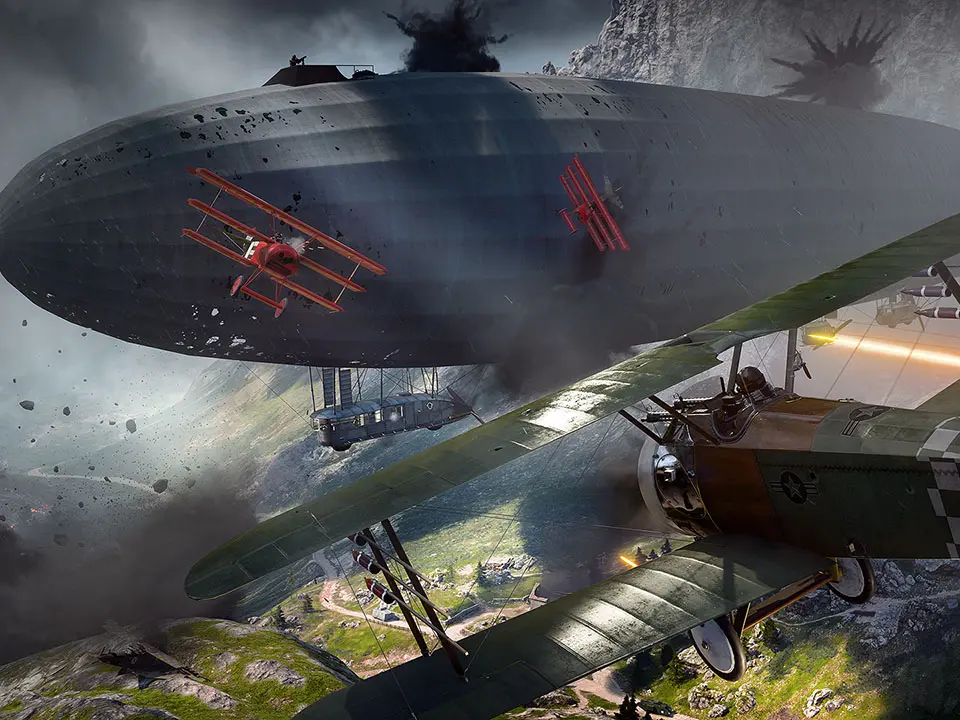
Dominating the skies above the battlefield, planes offer unparalleled mobility and unique combat roles, from dogfighting enemy aircraft to strafing ground targets.
- Fighter Planes: Built for speed and agility, Fighter Planes are the undisputed kings of air superiority. Their primary role is to engage and destroy enemy aircraft, protecting friendly bombers and attack planes while denying the enemy air support. They excel in dogfights, requiring precise piloting and quick reflexes.
- Attack Planes: Designed for ground attack, Attack Planes are equipped with cannons, rockets, or bombs to decimate infantry, light vehicles, and even damage tanks. They are slower and less maneuverable than Fighters but pack a significant punch against ground targets. Effective use involves making low passes to deliver ordnance before retreating to re-engage.
- Bomber Planes: The heavy hitters of the sky, Bomber Planes carry large payloads of bombs capable of wiping out entire enemy positions, fortifications, and even heavily armored vehicles. They are slow, heavily armored, and often require a gunner to defend against enemy fighters. Their impact on the battlefield can be immense, but their vulnerability makes them prime targets for enemy anti-air and fighter planes.
Cavalry
The iconic horse-mounted units of World War I, Cavalry combine speed, maneuverability, and surprising combat effectiveness in close-quarters engagements.
- Cavalry Units: Mounted on horseback, these units are incredibly fast, allowing for rapid flanking, objective captures, and hit-and-run tactics. Armed with a saber for devastating melee attacks and a rifle for ranged engagements, Cavalry can be a terror to unexpecting infantry. However, they are vulnerable to concentrated fire and anti-cavalry measures.
The Importance of Vehicle Loadouts and Customization
Beyond their base types, each vehicle in Battlefield 1 offers a range of customizable loadouts, allowing players to tailor their vehicle to specific playstyles and combat situations. These loadouts often include different primary weapons, secondary armaments, and special abilities or gadgets. For instance, a Heavy Tank might have options for an anti-infantry cannon, an anti-tank cannon, or a flamethrower variant, each dramatically altering its battlefield role.
- Adapting to the Battlefield: Before deploying a vehicle, consider the current objective, enemy composition, and terrain. Is the enemy heavily entrenched? A Bomber or Artillery Tank might be ideal. Are enemy planes dominating the skies? A Fighter Plane is your best bet.
- Team Synergy: Coordinate with your squad and team. A Heavy Tank pushing an objective will benefit immensely from infantry support to deal with Assault players, while a Fighter Plane can clear the skies for friendly Attack Planes.
- Repairing and Maintenance: Vehicles are powerful but not invincible. Always be aware of your vehicle's health and utilize repair tools when safe to do so. A damaged vehicle is a liability; a repaired one can continue to dominate.
Understanding these fundamental aspects of vehicle combat will lay a strong foundation for success in Battlefield 1. The following sections will delve deeper into specific vehicle types, offering detailed strategies, loadout recommendations, and advanced tactics to help you master every armored beast and aerial predator the game has to offer.