Archives: Mastering Kivotos' Combat & Progression
Welcome, Sensei, to the Archives! This section is your comprehensive, reference-quality guide to understanding the fundamental mechanics of combat and strategic progression in Blue Archive. Whether you're a fresh recruit navigating the initial challenges or a seasoned veteran aiming to optimize your strategies, the detailed information and actionable advice here will equip you to conquer the toughest encounters Kivotos has to offer.
Combat Fundamentals: Strategic Engagement & Unit Synergy
Success in Blue Archive's tactical battles hinges on more than just powerful students; it demands a deep understanding of core combat mechanics, strategic EX Skill management, and synergistic team composition. Auto-battling can carry you through early stages, but true mastery requires deliberate planning and execution.
EX Skill Cost Management: The Flow of Battle
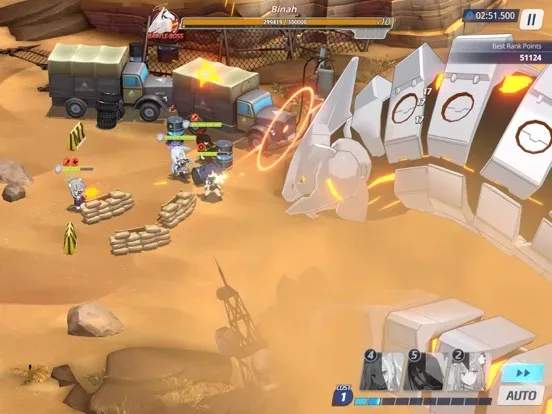
The strategic management of your EX Skill Cost (often referred to as "Cost" or "Energy") is arguably the most critical element in Blue Archive's combat system. This shared resource dictates the tempo of your offensive and defensive maneuvers. Mastering its generation, expenditure, and timing is paramount for victory in challenging content like Raids, Joint Firing Drills, and high-difficulty Story missions.
- Cost Generation Mechanics:
- Passive Regeneration: Cost regenerates automatically over time during combat. The base rate is consistent, but can be influenced by certain student skills.
- Active Generation (Cost Boosters): Specific students possess skills (typically Basic Skills or Sub Skills) that actively accelerate Cost generation. Examples include:
- Serina (Casual): Her Basic Skill, "Emergency Treatment," not only heals but also generates a small amount of Cost.
- Ako (Swimsuit): While primarily a critical damage buffer, her Sub Skill, "Tactical Command," can indirectly contribute to faster Cost cycling by enabling quicker clears.
- Himari (Support): Her EX Skill, "Inspirational Message," provides a significant Cost recovery boost to an ally, effectively refunding Cost.
- Kotama (Support): Her Basic Skill, "Tactical Support," also generates Cost for the team.
- Skill Prioritization & Cost Efficiency:
- Identify Key Skills: Before each encounter, especially boss fights, review your students' EX Skills. Determine which skills are absolutely critical for success (e.g., primary damage dealer's burst, essential healer's EX, tank's taunt/shield).
- Cost-to-Impact Ratio: Evaluate the effectiveness of an EX Skill relative to its cost. A 2-cost skill that clears a wave might be more efficient than a 5-cost skill that overkills a single enemy.
- Skill Rotation Planning: For challenging content, plan a rough "skill rotation." For instance, a common rotation might involve a DEF-shredder (e.g., Iori's Basic Skill, Haruna's EX Skill) followed by a high-damage single-target EX Skill (e.g., Hoshino's EX Skill).
- Critical Timing & Situational Awareness:
- Avoid Overkill/Under-utilization: Using a powerful Area-of-Effect (AoE) skill when only one weak enemy remains is wasteful. Conversely, holding onto a critical healing skill when your main tank is at 10% HP is a recipe for disaster.
- Interrupting Enemy Abilities: Some enemy units have dangerous charge-up attacks or special abilities. Timing a Stun, Fear, or Knockback EX Skill (e.g., Hoshino's EX, Izuna's EX) to interrupt these can prevent significant damage or status effects.
- Buff/Debuff Windows: Maximize damage by applying DEF Down debuffs (e.g., Mutsuki's Basic Skill, Haruna's EX) just before unleashing your main damage dealer's EX Skill. Similarly, apply ATK Up buffs (e.g., Ako's EX, Himari's EX) right before a major offensive push.
- Cost Reduction & Refund Mechanics:
- Student Skills: A select few students have skills that directly reduce the cost of their own or an ally's EX Skill. For example, Shun (Small) has a Sub Skill that can reduce the cost of the next EX Skill used by an ally.
- Gear Set Bonuses: While rare, certain unique equipment pieces or set bonuses might offer minor cost reduction. Always check the detailed stats of your gear.
- Refunds: Some EX Skills, particularly those with a chance to refund a portion of their cost on kill or critical hit, can significantly improve your Cost economy.
Advanced Strategy: Cost Dumping & Burst Phases
In longer boss fights, it's often beneficial to have "burst phases" where you rapidly deploy multiple high-cost EX Skills to inflict massive damage. This requires careful Cost management leading up to the burst, potentially by holding onto generated Cost or using Cost-generating students. Conversely, in phases where the boss is invulnerable or performing a non-damaging animation, "cost dumping" with lower-cost utility skills can help cycle your hand and prepare for the next damage phase.
Cover System & Terrain Advantage: Environmental Mastery
Blue Archive's combat environments are not merely backdrops; they are interactive elements that profoundly influence battle outcomes. Ignoring the dynamic cover system and terrain affinities is a common pitfall that can lead to unnecessary student casualties.
- Cover Mechanics Explained:
- Automatic Engagement: Students will automatically seek the nearest available cover when moving into position or when their current cover is destroyed. This is a fundamental defensive mechanic.
- Types of Cover:
- Light Cover (e.g., wooden crates, small walls): Provides a moderate percentage-based damage reduction (typically 25-35%). Light cover has a limited HP pool and can be destroyed by sustained enemy fire, leaving students exposed.
- Heavy Cover (e.g., concrete barriers, fortified positions): Offers a significant percentage-based damage reduction (typically 50-65%). Heavy cover is much more durable and often requires specific, powerful enemy attacks or a prolonged assault to be destroyed.
- Cover Status Indicators: Pay attention to the icons above your students. A shield icon indicates they are in cover. The color and integrity of the shield can sometimes indicate the cover's remaining durability.
- Cover Destruction: When cover is destroyed, students become exposed, taking full damage until they can relocate to new cover. This is a critical moment for healing or defensive EX Skills.
- Terrain Types & Affinity System:
- Mission-Specific Terrain: Every mission (Story, Free, Event, Bounty, Raid) has a designated terrain type. This is indicated on the mission selection screen. Common types include:
- Urban: Cityscapes, streets.
- Outdoor: Fields, forests, open areas.
- Indoor: Buildings, facilities.
- Desert: Arid, sandy environments.
- Snow: Icy, cold landscapes.
- Special (e.g., Volcano, Beach): Unique event-specific terrains.
- Student Terrain Affinity: Each student possesses a specific affinity rating (S, A, B, C, D) for each terrain type. This affinity directly impacts their core stats (Attack, Defense, HP) during that mission:
- S-Rank: Significant stat boost (e.g., +20-25% to ATK, DEF, HP).
- A-Rank: Moderate stat boost (e.g., +10-15% to ATK, DEF, HP).
- B-Rank: No change to stats (base performance).
- C-Rank: Moderate stat reduction (e.g., -10-15% to ATK, DEF, HP).
- D-Rank: Significant stat reduction (e.g., -20-25% to ATK, DEF, HP).
- Team Composition Strategy: Always check the mission's terrain type and prioritize students with S or A-rank affinities. Using students with C or D-rank affinities can severely cripple your team's effectiveness, making even easy missions difficult.
- Mission-Specific Terrain: Every mission (Story, Free, Event, Bounty, Raid) has a designated terrain type. This is indicated on the mission selection screen. Common types include:
- Strategic Repositioning & Cover Manipulation:
- Repositioning EX Skills: A select few students have EX Skills that allow you to manually reposition them. Examples include:
- Haruna (Gehenna): Her EX Skill, "Explosive Shot," allows her to move to a new position before firing, often into better cover or a more advantageous firing angle.
- Hoshino (Swimsuit): Her EX Skill, "Let's Go Play!", repositions her while also providing a stun.
- Enemy Cover Destruction: Some enemies have skills specifically designed to destroy cover. Be aware of these enemy types and prepare to heal or reposition your students when their cover is compromised.
- Utilizing Obstacles: Sometimes, even non-cover obstacles can block enemy projectiles or line-of-sight, providing a temporary reprieve.
- Repositioning EX Skills: A select few students have EX Skills that allow you to manually reposition them. Examples include:
Actionable Tip: Pre-Mission Checklist
Before attempting any challenging mission, always perform this quick check:
- Mission Terrain: Identify the terrain type (e.g., Urban, Indoor).
- Student Affinity: Select students with S or A-rank affinity for that terrain. Avoid C/D ranks unless absolutely necessary.
- Enemy Types: Note the primary enemy types (Light, Heavy, Special Armor) to select appropriate damage types (Explosive, Piercing, Mystic).
- Cover Availability: Briefly observe the map layout for heavy/light cover positions.
Student Skill Interactions & Synergies: Building the Perfect Team
The true depth of Blue Archive's combat system lies in the intricate interplay between different student skills. Building a synergistic team, where individual abilities complement and amplify each other, is the key to overcoming seemingly impossible challenges. A well-constructed team can often outperform a collection of individually powerful but uncoordinated students.
- Buffs & Debuffs: The Force Multipliers:
- Buffs (Positive Effects on Allies):
- ATK Up: Increases an ally's Attack stat (e.g., Ako's EX, Himari's EX, Kotama's EX). Crucial for burst damage.
- Crit Rate/Damage Up: Increases the chance or damage of critical hits (e.g., Ako's EX, Iori's Sub Skill).
- DEF Up/Damage Reduction: Increases an ally's Defense or reduces incoming damage (e.g., Tsubaki's EX, Hoshino's EX). Essential for survivability.
- Healing Over Time (HoT): Gradually restores HP (e.g., Serina's EX, Hanae's EX).
- Debuffs (Negative Effects on Enemies):
- DEF Down: Reduces an enemy's Defense, significantly increasing incoming damage (e.g., Mutsuki's Basic Skill, Haruna's EX, Saya's EX). This is one of the most powerful debuffs in the game, especially when paired with high-damage EX Skills.
- ATK Down: Reduces an enemy's Attack, mitigating their damage output (e.g., Hoshino's Basic Skill).
- Status Effects (DoT): Burn, Poison, Bleed inflict damage over time (e.g., Aris's Basic Skill, Hina's EX).
- Slow/Movement Speed Down: Reduces enemy movement speed, useful for kiting or controlling engagement range.
- Stacking & Timing: The power of buffs and debuffs often comes from stacking them or timing them precisely. For example, applying a DEF Down debuff just before a powerful ATK Up buffed EX Skill can result in exponential damage.
- Buffs (Positive Effects on Allies):
- Crowd Control (CC): Interrupting & Disabling:
- Stun: Prevents enemies from acting for a short duration (e.g., Hoshino's EX, Izuna's EX, Shun's EX). Invaluable for interrupting dangerous enemy charge-up attacks or providing a window for your team to recover.
- Fear: Causes enemies to flee in a random direction, often grouping them together or pulling them out of cover (e.g., Hina's EX).
- Knockback/Pull: Repositions enemies, useful for grouping them for AoE attacks or pushing them away from your backline (e.g., Kayoko's EX, Hibiki's EX).
- Freeze: Immobilizes and often applies additional effects (e.g., Haruna (New Year)'s EX).
- Utility: CC skills are crucial for managing large groups of enemies, protecting vulnerable students, and controlling the flow of battle.
- Healing & Shielding: Survivability Essentials:
- Healers: Students dedicated to restoring HP.
- Single-Target Healers: Focus on restoring a large amount of HP to one ally (e.g., Koharu's EX, Serina's EX). Ideal for keeping tanks alive.
- AoE Healers: Restore HP to multiple allies (e.g., Hanae's EX, Chinatsu's EX). Good for mitigating widespread damage.
- Shielders: Students who provide temporary HP shields, absorbing damage before it affects the student's actual HP (e.g., Tsubaki's EX, Hoshino's EX). Excellent for mitigating burst damage or protecting against status effects.
- Damage Mitigation: Healing and shielding are not just about recovering from damage; they are proactive tools to prevent wipes and sustain your team through prolonged engagements.
- Healers: Students dedicated to restoring HP.
- Damage Types: AoE vs. Single Target:
- Area-of-Effect (AoE): Skills that hit multiple enemies within a designated area (e.g., Hina's EX, Hibiki's EX, Mutsuki's EX). Essential for clearing waves of weaker enemies quickly.
- Single Target (ST): Skills that focus all their damage on one enemy (e.g., Iori's EX, Haruna's EX, Hoshino's EX). Crucial for taking down high-HP bosses or priority targets.
- Balanced Composition: A well-rounded team usually includes a mix of AoE and ST damage dealers to handle various combat scenarios. For boss fights, prioritize ST damage. For wave-based missions, prioritize AoE.
Synergy Example: The "DEF Down + Burst" Combo
One of the most universally powerful synergies involves applying a significant DEF Down debuff to an enemy, immediately followed by a high-damage single-target EX Skill. For instance:
- Mutsuki (Basic Skill) or Haruna (EX Skill): Applies DEF Down to a target.
- Iori (EX Skill) or Hoshino (EX Skill): Unleashes a high-damage single-target attack on the now-vulnerable enemy.
This combination can drastically shorten boss fights and is a cornerstone of many high-score raid teams. Experiment with your roster to discover similar powerful interactions!
Progression & Resource Management: The Path to Power
Beyond the battlefield, astute progression and efficient resource management are the bedrock of long-term success in Blue Archive. Neglecting these aspects can lead to frustrating roadblocks and slower overall growth.
Skill Point Allocation: Strategic Investment for Optimal Performance
It's tempting to upgrade every skill you unlock, but Skill Points and the associated materials are finite and precious resources. A cautious, strategic approach to skill allocation is crucial, especially for beginners, to maximize your team's effectiveness without wasting valuable resources.
- Understanding the Skill System:
- Four Skill Types: Each student has four skills:
- EX Skill: The active, cost-consuming skill. Often the most impactful.
- Basic Skill: A passive skill that activates periodically during combat.
- Enhanced Skill: A passive skill that boosts a specific stat (e.g., ATK, DEF, HP).
- Sub Skill: A passive skill that provides utility or buffs/debuffs (e.g., Cost generation, damage boost to specific targets).
- Leveling Costs: Each skill level requires Skill Points and specific materials (Tactical Training Blu-rays, Technical Notes, Artifacts). Higher levels demand rarer, higher-tier materials.
- Four Skill Types: Each student has four skills:
- Prioritization Strategy: Focus on Core Units:
- Main Damage Dealers (DPS): Prioritize their EX Skill (for burst damage) and Basic Skill (for consistent damage or utility). Their Enhanced Skill (often ATK%) is also a high priority.
- Main Tanks: Prioritize their EX Skill (for taunts, shields, or self-healing) and Enhanced Skill (often HP% or DEF%). Their Basic Skill can also be important for sustain.
- Key Healers/Supports: Prioritize their EX Skill (for healing or critical buffs) and Sub Skill (for Cost generation or other team-wide benefits).
- Avoid Spreading Too Thin: It's far more effective to have a few students with highly upgraded, impactful skills than many students with mediocre, low-level skills. Focus your resources on your primary raid/story clear teams first.
- Skill Level Breakpoints & Material Management:
- Significant Breakpoints: Many skills gain significant power spikes at specific levels (e.g., Level 3, 5, 7, 10). For instance, a healing skill might gain an additional target at Level 3, or a damage skill might gain a substantial multiplier at Level 5. Research these breakpoints for your key students.
- Material Tiers: Skill materials come in different tiers (e.g., Tier 1 Blu-ray, Tier 2 Blu-ray). Upgrading skills past certain thresholds (e.g., Level 4, 7) will require higher-tier materials, which are scarcer. Plan your farming accordingly.
- Resource Scarcity: Tactical Training Blu-rays and Technical Notes are often the biggest bottlenecks. Be judicious with their use.
- Early Game Recommendations:
- Healers: Get your primary healer's (e.g., Serina, Koharu) EX Skill to at least Level 3-4 for increased survivability.
- Tanks: Upgrade your main tank's (e.g., Tsubaki, Hoshino) EX Skill to Level 3-4 for better taunt duration or shield strength.
- Damage Dealers: Focus on your strongest damage dealer's EX Skill to Level 3-5.
Strategic Tip: Use Online Resources
Consult community-made guides and databases (e.g., Blue Archive Global Wiki, Prydwen.gg) for recommended skill priority and breakpoints for specific students. This can save you from wasting precious resources on suboptimal upgrades.
Farming for Equipment & Levels: Efficient Resource Acquisition
Hitting a progression wall is inevitable. The key is to "grind smart, not hard" by efficiently farming the resources you need most. Understanding where and how to acquire experience, equipment, and upgrade materials is crucial for continuous growth.
- Experience & Student Leveling:
- Lessons: Send students on Lessons from the Cafe. This is a passive source of student XP and relationship points. Prioritize students you actively use.
- Activity Reports: These items (Basic, Normal, Advanced) provide direct student XP. Use them to quickly level up new students or bring your main team up to par. Farmed in Commissions.
- Main Story & Free Missions: Clearing these missions grants student XP.
- Equipment Acquisition & Enhancement:
- Free Missions: The primary source for specific equipment pieces (e.g., Bags, Watches, Hairpins). Each Free Mission lists its potential drops. If your tank needs a better Bag, target the Free Missions that drop Bags. Always aim for the highest difficulty you can comfortably clear for better drop rates.
- Equipment Tiers (T1, T2, T3...): Equipment comes in increasing tiers, with higher tiers offering significantly better base stats and sub-stats. As you progress, always aim to equip your students with the highest tier equipment available.
- Crafting Chamber: Use the Crafting Chamber to synthesize higher-tier equipment from lower-tier materials. This is crucial for obtaining T4+ gear. You'll need various materials (e.g., Component Material, Artifact Fragments) from Free Missions and Events.
- Equipment Enhancement: Use Enhancement Stones (farmed in Commissions) and Credits to enhance equipment. Prioritize enhancing the equipment of your main damage dealers and tanks first.
- Sub-Stats: Higher-tier equipment often comes with random sub-stats. While not as impactful as main stats, good sub-stats (e.g., Crit Damage, ATK) can provide a noticeable boost.
- Skill Material Farming:
- Bounty: The dedicated source for Tactical Training Blu-rays and Technical Notes. These are daily/weekly limited attempts. Prioritize clearing the highest difficulty available to you. Bounty rewards are specific to schools (e.g., Gehenna Blu-rays, Millennium Blu-rays).
- Events: Many limited-time events offer significant quantities of skill materials as rewards from event shops or mission drops. Always prioritize farming these during events.
- Credit Points (Money) & Eligma:
- Scrimmage: A daily/weekly activity that provides a substantial amount of Credit Points and Eligma. Essential for all forms of upgrades.
- Cafe: Your Cafe generates Credits passively. Upgrade its comfort level to increase its hourly generation.
- Commissions: Provides Credits and Enhancement Stones.
- Events: Event shops often sell large bundles of Credits.
- Uses: Credits are used for almost everything: leveling students, enhancing equipment, upgrading skills, crafting. Eligma is used to purchase items from the Eligma Shop, including student shards.
- AP (Action Points) Management: Your Most Valuable Resource:
- Always Spend AP: AP is your primary gating resource. Always try to spend all your AP before it caps out to avoid wasting regeneration.
- Prioritize Needs: Use AP to farm materials you desperately need (e.g., specific equipment for a new student, skill materials for an upcoming raid).
- Double Drop Campaigns: During special events, certain missions will have double drop rates. Prioritize farming these missions heavily to maximize your AP efficiency.
- Cafe AP: Collect AP from your Cafe regularly.
Farming Strategy Table:
| Resource | Primary Farming Location(s) | Priority/Notes |
|---|---|---|
| Student XP (Activity Reports) | Commissions | Daily farm. Use to level up new students quickly. |
| Credits | Scrimmage, Cafe, Commissions, Events | High demand for all upgrades. Upgrade Cafe comfort. |
| Equipment (Specific pieces) | Free Missions | Target specific missions for needed gear. Aim for highest tier. |
| Equipment (Enhancement Stones) | Commissions | Daily farm. Essential for enhancing gear. |
| Skill Materials (Blu-rays, Notes) | Bounty, Events | Daily/weekly farm. High priority. School-specific drops. |
| Crafting Materials | Free Missions, Events | For higher-tier equipment in Crafting Chamber. |
| Eligma | Scrimmage, Total Assault (Raid) | Used in Eligma Shop for student shards, etc. |
Common Pitfalls & Missables: Avoiding Costly Mistakes
Even experienced Sensei can fall into common traps. Being aware of these pitfalls can save you time, resources, and frustration on your journey through Kivotos.
- Neglecting Relationship Levels:
- Benefit: Increasing a student's relationship level unlocks their unique story episodes (Momotalks) and provides permanent bonus stats (ATK, DEF, HP) to that student.
- How to Increase: Interact with students in the Cafe, send them on Lessons, and give them gifts.
- Pitfall: Ignoring this passive growth means missing out on free stats and valuable Pyroxene from story episodes.
- Underutilizing the Crafting Chamber:
- Benefit: The Crafting Chamber is essential for obtaining higher-tier equipment (T4 and above) and unique gifts for students (which boost relationship levels significantly).
- Pitfall: Letting crafting materials pile up. Regularly check the Crafting Chamber for available recipes and synthesize needed gear or gifts.
- Ignoring Basic, Enhanced, and Sub-Skills:
- Benefit: While EX Skills are flashy, a student's passive skills (Basic, Enhanced, Sub) often provide crucial buffs, debuffs, utility, or significant stat boosts that are active throughout the entire battle.
- Pitfall: Only focusing on EX Skill upgrades. Many students' power comes from their passive abilities. For instance, Iori's Sub Skill (Crit Damage boost) is incredibly important for her damage output.
- Inefficient AP Spending:
- Benefit: AP is your most valuable resource. Efficient spending ensures continuous progression.
- Pitfall: Letting AP cap out, not farming during double drop campaigns, or farming missions that don't provide what you currently need. Always have a plan for your AP.
- Skipping the Main Story:
- Benefit: The main story provides valuable context, lore, unlocks new features (e.g., new students, game modes), and is a significant source of Pyroxene.
- Pitfall: Rushing through or skipping story segments means missing out on Pyroxene and understanding the world of Kivotos.
- Over-investing in Too Many Students:
- Benefit: Focusing resources on a core team of 6-10 students (for raids, main story, etc.) allows them to become powerful quickly.
- Pitfall: Spreading your limited resources (Credits, Skill Materials, Activity Reports) across too many students. This results in many mediocre students rather than a few strong ones, making challenging content much harder. Prioritize your main teams first.
- Neglecting Tactical Training (Bounty):
- Benefit: Bounty is the primary source of Skill Blu-rays and Notes.
- Pitfall: Forgetting to clear your daily/weekly Bounty attempts. These materials are a constant bottleneck for skill upgrades.
- Not Checking Event Shops:
- Benefit: Event shops often offer incredible value for resources, including large quantities of Credits, Skill Materials, Activity Reports, and unique event items.
- Pitfall: Missing out on limited-time, highly efficient farming opportunities. Always prioritize clearing out valuable items from event shops.
By diligently applying these combat fundamentals and strategic progression tips, Sensei, you will be well-equipped to guide your students to victory and uncover all the mysteries of Kivotos!