Historical Context & Accuracy
Call of Duty 2, released in 2005, aimed to immerse players in the harrowing realities of World War II. While it delivers an intense and cinematic experience, it's important to understand where the game prioritizes dramatic effect over strict historical accuracy. This section will guide you through key historical touchstones within the game and highlight areas where gameplay diverges from reality, offering strategies to appreciate both the historical nods and the engaging gameplay.
Campaign Overview & Historical Parallels
The game's campaign is divided into three distinct narratives, each following a different Allied soldier:
- Soviet Campaign: You play as Private Vasili Koslov, fighting on the Eastern Front. This campaign primarily focuses on the brutal urban warfare of the Battle of Stalingrad (1942-1943) and the subsequent Soviet push westward.
- British Campaign: As Sergeant John Davis, you participate in the North African Campaign (1942-1943), including the defense of El Alamein, and later the Normandy landings (D-Day, 1944) and the crossing of the Rhine.
- American Campaign: Playing as Corporal Bill Taylor, your missions are centered around the D-Day landings (Pointe du Hoc, 1944) and the subsequent push through France and into Germany, including the Battle of the Bulge (1944-1945).
These campaigns generally follow the chronological progression of the war, offering a broad overview of significant Allied engagements.
Weaponry and Equipment: A Mixed Bag
The game features a wide array of period-appropriate weaponry, which adds significantly to the immersion. However, some liberties are taken for gameplay balance and variety.
- Authentic Weapons: You'll encounter iconic firearms such as the Soviet PPSh-41 submachine gun, the British Lee-Enfield rifle, the American M1 Garand, and the German Kar98k. The distinct sounds and firing characteristics of these weapons are generally well-represented.
- Grenades: Both Frag Grenades and Smoke Grenades are available and function as expected. Historically, smoke grenades were crucial for obscuring enemy lines during advances, and the game effectively uses them for tactical cover.
- Weapon Availability: While most weapons are accurate to the era, their widespread availability across all fronts might be slightly exaggerated for gameplay. For instance, finding a German MP40 in the North African campaign is plausible, but its prevalence might be higher than historical records suggest.
- Reload Animations: Pay attention to the reload animations for weapons like the M1 Garand. The distinctive "ping" of the en bloc clip ejecting is a historically accurate detail that adds to the game's authenticity.
Tactical Accuracy vs. Gameplay Flow
Call of Duty 2 excels at creating intense, fast-paced combat, which sometimes necessitates deviations from strict historical military tactics.
- Lone Wolf Heroics: While you are part of a squad, the game often places you in situations where your individual actions are disproportionately impactful. Historically, infantry combat was far more reliant on coordinated unit movements and overwhelming force.
- Health Regeneration: The game's regenerating health system, a staple of the series, is a significant departure from the realities of WWII combat, where injuries were often debilitating or fatal without immediate medical attention. This mechanic allows for more aggressive gameplay.
- Objective Markers: Clear objective markers and constant communication from your AI squadmates streamline the experience, guiding you through complex battlefields. Real-world communication in the chaos of war was far more challenging and prone to error.
- Enemy AI: While the enemy AI provides a challenging experience, their tactical sophistication is simplified for gameplay. Expect them to prioritize flanking and suppressing fire, but don't anticipate complex, coordinated maneuvers that would be characteristic of a real military force.
Specific Mission Insights
- Stalingrad (Soviet Campaign): The urban environments, the emphasis on close-quarters combat, and the sheer scale of the fighting accurately reflect the brutal nature of the Battle of Stalingrad. The mission where you must defend a building, often referred to as "Pavlov's House," is a direct reference to a famous historical stand.
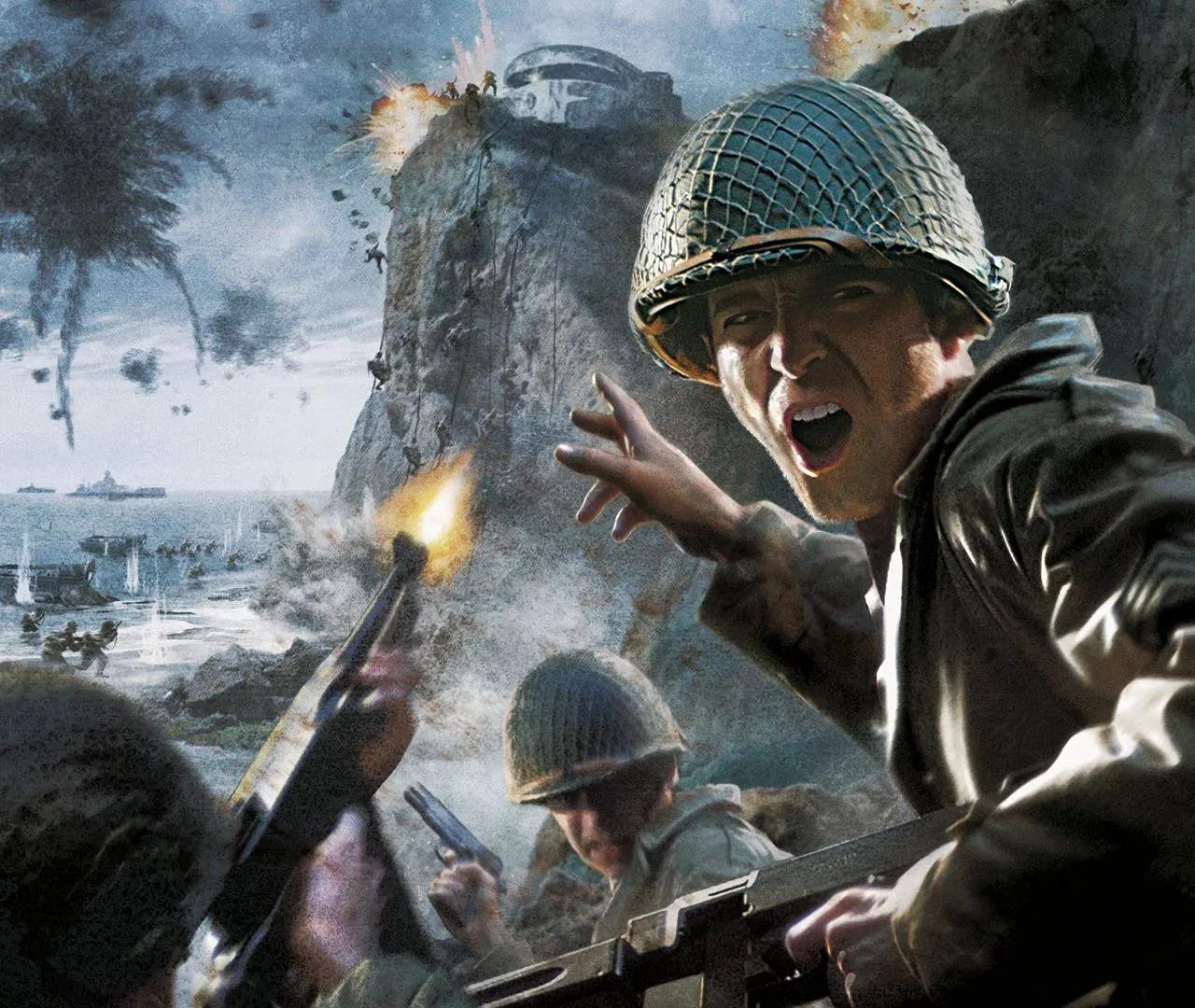
- Pointe du Hoc (American Campaign): The perilous climb up the cliffs of Pointe du Hoc on D-Day is a well-known historical event. The game captures the difficulty and danger of this assault, though the number of German defenders and the ease of scaling the ropes are somewhat adjusted for gameplay.
- El Alamein (British Campaign): The desert landscapes and tank battles are evocative of the North African Campaign. The game highlights the importance of combined arms tactics, with infantry supporting tanks and vice versa.
Strategies for a Historically-Minded Player
Even with the gameplay concessions, you can enhance your experience by considering the historical context:
- Observe the Environment: Take a moment to appreciate the meticulously crafted environments, from the bombed-out buildings of Stalingrad to the hedgerows of Normandy. These details, while sometimes stylized, often draw from historical photographs and accounts.
- Weapon Familiarity: Experiment with different faction-specific weapons. Understanding the strengths and weaknesses of a Thompson versus an MP40 can deepen your appreciation for the logistical and tactical challenges faced by soldiers.
- Tactical Restraint: On higher difficulties, try to adopt more historically accurate tactics. Use Smoke Grenades for cover, advance cautiously, and prioritize suppressing enemy positions before pushing forward, rather than relying solely on regenerating health.
- Listen to Dialogue: Pay attention to the dialogue from your squadmates and mission briefings. While fictionalized, they often provide glimpses into the morale, objectives, and general atmosphere of the real conflicts.
By understanding the balance between historical inspiration and gameplay design, you can fully appreciate Call of Duty 2 as both an engaging shooter and a powerful, albeit dramatized, window into World War II.