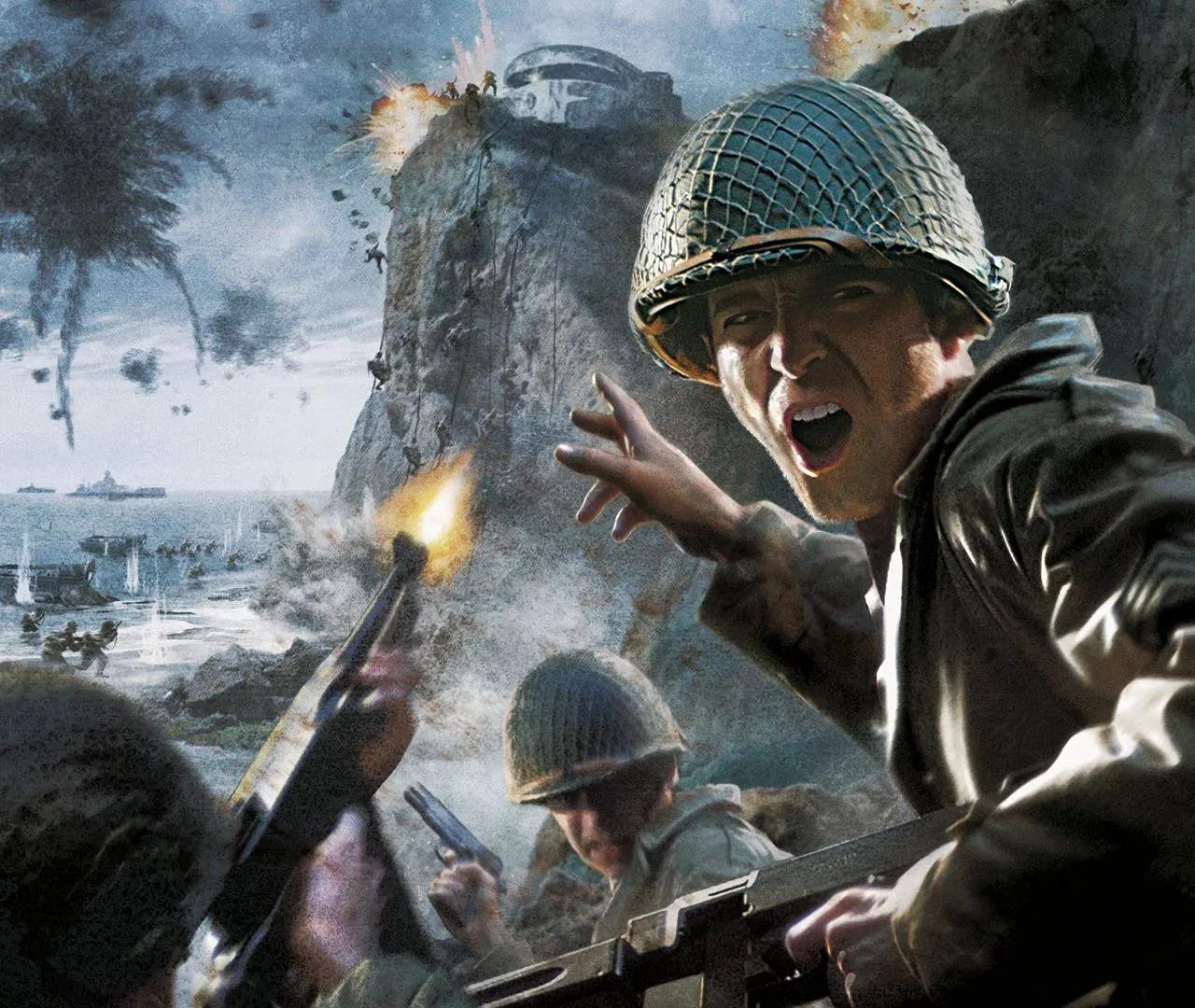
Weapon Attachments & Upgrades
While Call of Duty 2, as a historical shooter, doesn't feature the extensive, modular weapon attachment system seen in later installments like Black Ops II or Modern Warfare II, there are still crucial ways to enhance your combat effectiveness through strategic weapon choices, battlefield pickups, and understanding weapon characteristics. This guide will detail how to maximize your firepower and adapt your loadout for various combat scenarios.
Understanding Weapon Types & Their Roles
Unlike modern CoD titles where attachments modify a weapon's base stats, in CoD2, each weapon comes with fixed characteristics. Your "upgrade" comes from selecting the right tool for the job and mastering its unique properties. Think of each weapon as having its own inherent "attachments" – its rate of fire, accuracy, and stopping power.
- Rifles (e.g., M1 Garand, Kar98k, Lee-Enfield): These are your primary long-range and medium-range workhorses.
- M1 Garand (US): Excellent semi-automatic fire rate, good accuracy. Its distinctive "ping" when reloading after the last round is a tell-tale sign, so be mindful in close quarters.
- Kar98k (German): Powerful bolt-action rifle. Slower rate of fire but high damage. Ideal for precise shots and picking off enemies from a distance. Can be equipped with a scope for designated marksman roles.
- Lee-Enfield (British): Bolt-action, similar to the Kar98k but often with a slightly faster bolt-cycling animation. Reliable and accurate.
- Mosin-Nagant (Soviet): Another powerful bolt-action rifle. Similar performance to the Kar98k.
Strategy: For rifles, your "upgrade" is often a steady hand and good cover. Master the iron sights. When engaging at longer distances, consider finding a stable position to minimize sway.
- Submachine Guns (SMGs) (e.g., Thompson, MP40, PPSH-41): Designed for close-quarters combat. High rate of fire, less accurate at range.
- Thompson (US): Iconic SMG with a decent rate of fire and stopping power. Effective in tight spaces.
- MP40 (German): Reliable and controllable SMG. Excellent for clearing buildings and trenches.
- PPSH-41 (Soviet): Extremely high rate of fire, often found with a drum magazine for extended engagements. Devastating up close.
Strategy: SMGs excel when you need to clear rooms or suppress multiple enemies quickly. Don't try to engage snipers with these; close the distance first.
- Machine Guns (e.g., BAR, MG42, Bren): Heavy weapons for sustained fire and suppressing large groups.
- BAR (US): A heavy automatic rifle, offering a good balance of power and rate of fire. Can be used on the move, but benefits from being deployed.
- MG42 (German): Known as "Hitler's Buzzsaw" for a reason. Extremely high rate of fire, devastating when deployed. Immobile when firing from a bipod.
- Bren (British): A reliable light machine gun with a distinctive top-mounted magazine. Good for sustained fire.
Strategy: Machine guns are best used from a deployed position (using the bipod) to maximize accuracy and control. They are excellent for holding choke points or providing covering fire for advancing teammates. Be aware of your limited mobility when deployed.
- Shotguns (e.g., M1897 Trench Gun): Ultimate close-range devastation.
- M1897 Trench Gun (US): Found in specific missions. Absolutely lethal at very close range.
Strategy: Use the shotgun when you know you'll be fighting in extremely tight corridors or rooms. Aim for center mass for maximum impact.
- Pistols (e.g., Colt .45, Luger, TT-33): Sidearms for emergencies.
- Colt .45 (US): Reliable sidearm.
- Luger (German): Distinctive pistol.
- TT-33 (Soviet): Standard Soviet sidearm.
Strategy: Only draw your pistol if your primary weapon is out of ammo and you need to finish off a single enemy, or if you're in a dire situation and need to reload your main weapon quickly.
Battlefield Pickups: Your "Temporary Upgrades"
The most direct form of "attachment" or "upgrade" in CoD2 comes from picking up weapons from fallen enemies or friendly soldiers. This allows you to adapt your loadout on the fly to suit the immediate combat situation.
- Scavenging for Ammo: If you're running low on ammunition for your primary weapon, picking up an identical weapon from a fallen soldier will replenish your ammo supply. This is crucial for sustained engagements.
- Adapting to the Environment:
- Close Quarters: If you find yourself in a building with your bolt-action rifle, look for an MP40 or Thompson from a fallen enemy. The increased rate of fire will be far more effective.
- Open Fields: If you're carrying an SMG in an open area, consider swapping it for a Kar98k or M1 Garand to engage distant threats more effectively.
- Heavy Fire Zones: If you encounter a heavily fortified enemy position, look for an MG42 or BAR to provide suppressive fire.
- Grenades & Smoke Grenades: While not weapon attachments, these are vital "upgrades" to your tactical options.
- Frag Grenades: Excellent for clearing entrenched enemies, flushing out snipers, or creating an opening. Learn to "cook" grenades for precise timing.
- Smoke Grenades: Crucial for creating cover when crossing open ground, obscuring enemy lines of sight, or covering a retreat.
Weapon Proficiency & Mastering Recoil
While there are no "perks" or "proficiency upgrades" in the traditional sense, your personal skill in handling each weapon acts as its own upgrade. Each weapon has a unique recoil pattern and effective range.
- Burst Firing: For automatic weapons (SMGs, LMGs, BAR), firing in short bursts (2-4 rounds) significantly improves accuracy, especially at medium ranges. Avoid holding down the trigger for too long, as recoil will make your shots wildly inaccurate.
- Deploying LMGs: When using an MG42, BAR, or Bren, always try to deploy its bipod (usually by going prone or finding a suitable surface). This drastically reduces recoil and improves accuracy, turning it into a devastating static weapon.
- Leading Targets: For moving targets, especially at range, you'll need to "lead" your shots slightly, anticipating their movement. This comes with practice.
- Headshots: Always aim for the head. Headshots are instant kills for most enemies with most weapons, regardless of range. This is the ultimate "upgrade" to your damage output.
By understanding the strengths and weaknesses of each weapon, adapting your loadout through battlefield pickups, and mastering weapon handling, you effectively "upgrade" your combat capabilities in Call of Duty 2, turning you into a more versatile and deadly soldier on the front lines.