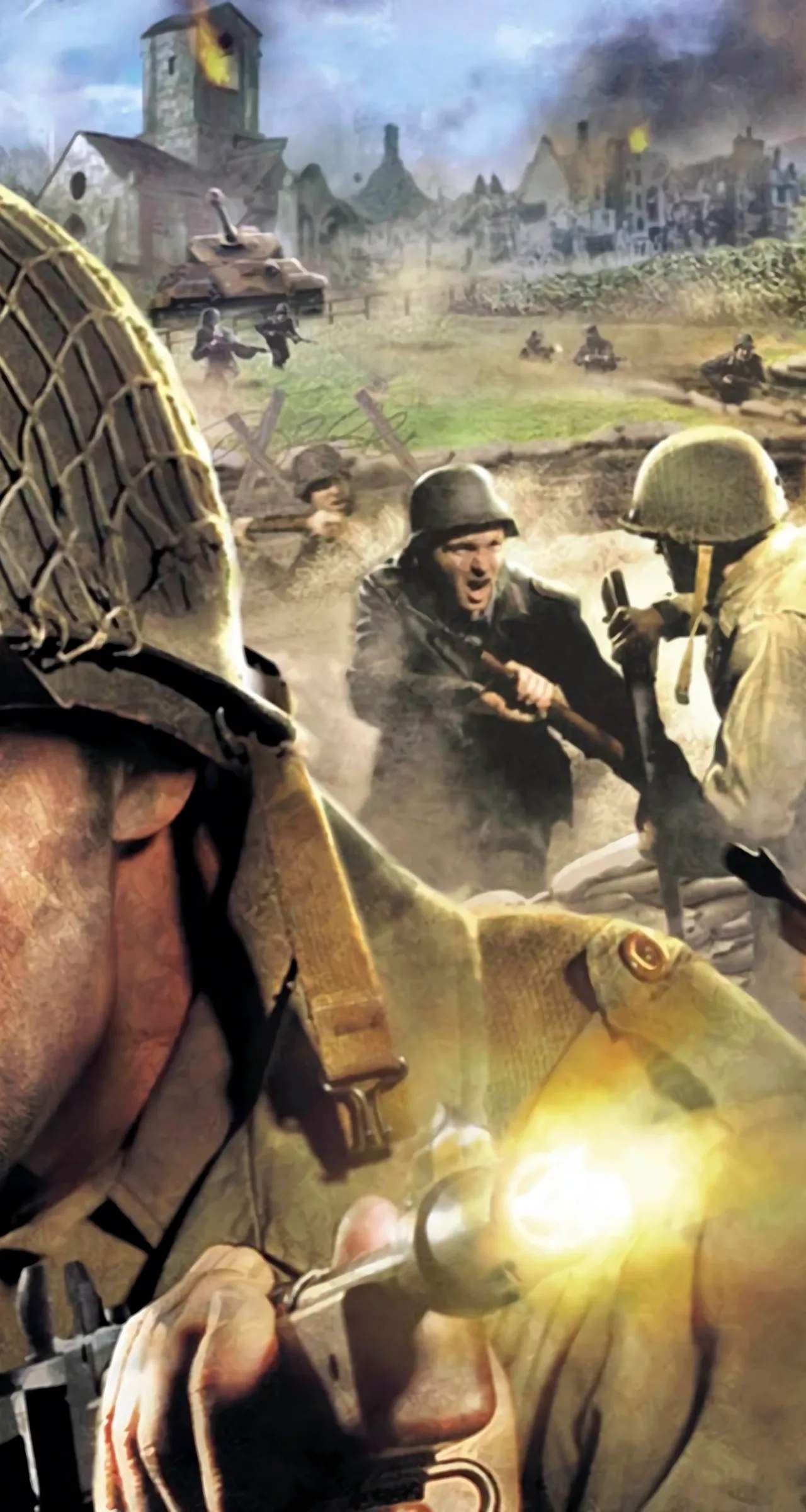
Historical Accuracy vs. Game Design
While Call of Duty 3 strives for an immersive World War II experience, it's important for players to understand where historical accuracy is prioritized and where game design takes precedence for the sake of gameplay. This section will highlight key examples and offer strategies to leverage or mitigate these design choices.
Weaponry and Equipment: Authenticity vs. Availability
The game features a robust arsenal of period-appropriate weapons, but their availability and performance often lean towards balancing gameplay rather than strict historical distribution.
- Commonplace Weapons: You'll frequently encounter the M1 Garand for American forces, the Lee-Enfield for British/Canadian troops, and the Kar98k for German soldiers. These are generally accurate. However, the sheer abundance of specific weapon types in certain areas might be exaggerated for consistent gameplay.
- Rare but Powerful: Weapons like the BAR (Browning Automatic Rifle) or the MP44 (StG 44) are incredibly effective in-game. While historically present, their drop rates or availability in specific missions might be increased to provide players with powerful options at critical junctures. For instance, during the "Foy" mission, finding an MP44 from a fallen enemy can significantly turn the tide against entrenched German positions, even if its historical prevalence in that exact engagement might have been lower.
- Unlimited Ammunition (Effectively): Historically, ammunition was a constant concern. In Call of Duty 3, you can often resupply from fallen enemies or designated ammo crates. This design choice ensures continuous action and reduces player frustration.
- Strategy: Always check fallen enemies for their primary weapon and ammunition. Even if you prefer your current weapon, picking up a full magazine from a similar type can be a lifesaver. Look for green ammo boxes, often found near objective points or in safe zones, to fully replenish your reserves.
Battle Scenarios and Mission Structure: Dramatic Effect vs. Reality
Many missions are based on real historical events, but the pacing, scale, and specific objectives are often condensed or altered for a more cinematic and engaging player experience.
- Condensed Timelines: Events that might have unfolded over days or weeks in reality are often compressed into a single mission or a few hours of gameplay. For example, the "Saint-Lô" mission captures the intensity of the breakout, but the actual battle was a prolonged, brutal affair.
- Heroic Feats: Your character often plays a pivotal role in turning the tide of battle, performing actions that would historically be attributed to entire platoons or companies. This is a common game design trope to make You feel impactful.
- Strategy: Embrace your role as the "hero." Don't hesitate to push forward and take initiative, even when your AI teammates are less aggressive. Your actions directly influence mission progression.
- Objective Markers and Clear Paths: Historical battles were chaotic and confusing. The game provides clear objective markers and often funnel-like level design to guide players. This prevents players from getting lost and ensures a smooth progression.
- Strategy: While the path might seem linear, always be aware of flanking routes or elevated positions. In missions like "The Crossroads," taking the high ground on the left side of the main road, even if not explicitly marked, can give you a significant tactical advantage against the German machine gun nests.
Health and Healing: Gameplay Convenience vs. Battlefield Realism
The game's health system is a prime example of prioritizing gameplay over strict historical accuracy.
- Regenerating Health: Unlike real combat where injuries are often debilitating, your character's health regenerates over time if you avoid damage. This allows for more aggressive play and reduces the need for medkits, which were historically crucial but could interrupt gameplay flow.
- Strategy: When critically wounded (screen turns red), immediately seek cover. Do not attempt to push forward. Wait for your vision to clear and your health to regenerate before re-engaging. This is crucial on Veteran difficulty.
- Limited First Aid: While some missions might feature a medic or a specific objective to retrieve medical supplies, the primary healing mechanic is regeneration. This contrasts with the historical reliance on field medics and limited medical resources.
Vehicle Combat: Simplified Controls vs. Complex Operations
Driving tanks or operating vehicle-mounted weapons is simplified for player accessibility.
- Tank Controls: Operating a Sherman tank in "The Black Baron" mission is far simpler than the real-world coordination required. You primarily control movement and firing, with AI handling most other complexities.
- Strategy: When in a tank, prioritize enemy anti-tank infantry (recognizable by their Panzerfausts) and then enemy tanks. Use the tank's heavy armor to your advantage, but be mindful of flanking attacks from infantry.
- Mounted Machine Guns: Operating a .50 Caliber machine gun on a jeep or a stationary emplacement is a point-and-shoot affair. There's no concern for overheating or complex reloading procedures beyond a simple animation.
- Strategy: When on a mounted gun, focus on suppressing enemy waves. Don't be afraid to lay down continuous fire, as ammo is effectively infinite for these emplacements. Target explosive barrels or vehicles for maximum impact.