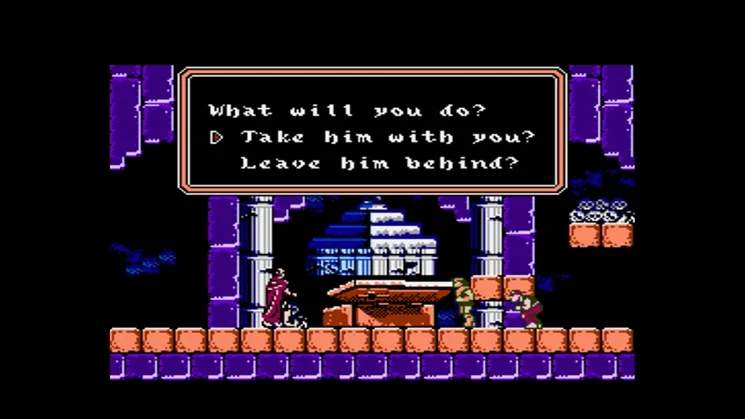
Version Differences (NES vs. Famicom)
While Castlevania III: Dracula's Curse is a beloved classic on both sides of the Pacific, there are significant differences between the Japanese Famicom version (Akumajou Densetsu) and the North American/European NES release. These aren't just cosmetic; they impact gameplay, difficulty, and even the soundtrack. Understanding these variations can greatly enhance your experience, especially if you're considering playing the original Japanese version.
Sound and Music
- Famicom (Akumajou Densetsu): The most striking difference is the Famicom's enhanced sound chip. The Famicom Disk System (FDS) and later Famicom cartridges could utilize Konami's VRC6 sound chip, which added three extra sound channels (two pulse waves and one sawtooth wave) to the Famicom's standard five. This results in a much richer, more complex, and often more atmospheric soundtrack. Tracks like "Beginning" and "Mad Forest" sound significantly more robust and layered.
- NES (Dracula's Curse): Due to hardware limitations and cost-cutting measures for the Western release, the NES version does not feature the VRC6 chip. All music and sound effects are rendered using the NES's standard five sound channels. While still iconic, the soundtrack is noticeably less full and intricate compared to its Famicom counterpart. This can make certain areas feel less intense or epic.
Difficulty Adjustments
The NES version is generally considered more difficult than the Famicom version, primarily due to several key changes:
- Enemy Damage: Many enemies in the NES version deal more damage per hit. For example, a common Skeleton in Stage 1 might deal 2 damage in the Famicom version but 4 damage in the NES version. This forces players to be more cautious and precise with their movements and attacks.
- Sub-Weapon Cost: Sub-weapons, crucial for boss battles and tricky platforming sections, consume more hearts in the NES version.
- Axe: 2 hearts (Famicom) vs. 3 hearts (NES)
- Holy Water: 1 heart (Famicom) vs. 2 hearts (NES)
- Boomerang (Cross): 2 hearts (Famicom) vs. 3 hearts (NES)
- Item Drop Rates: Anecdotal evidence and player experience suggest that heart and item drop rates are slightly lower in the NES version, further contributing to the increased difficulty. You might find yourself scrounging for hearts more often.
Graphical and Aesthetic Changes
While largely similar, some minor graphical differences exist:
- Character Palettes: Some character sprites, particularly the alternate characters, have slightly different color palettes in the NES version. For instance, Grant Danasty's sprite might have a different shade of green or blue.
- Title Screen: The title screen art and font are distinct between the two versions, reflecting regional branding.
- Localization: All in-game text, including character names (e.g., Ralph C. Belmont vs. Trevor C. Belmont, Grant Danasty vs. Grant DaNasty), enemy names, and story elements, are translated for the NES release.
Gameplay Mechanics
- Trevor's Whip Upgrade: In the Famicom version, Trevor's whip can be upgraded to a chain whip (mid-range) and then to a long chain whip (full-screen range) by collecting two whip upgrades. In the NES version, Trevor's whip can only be upgraded once to the chain whip, making his attack range shorter overall. This significantly impacts Trevor's effectiveness against certain enemies and bosses, requiring closer engagement.
- Sub-Weapon Switching: The Famicom version allows for slightly more fluid sub-weapon switching, though this is a subtle difference that most players won't notice without direct comparison.
For players seeking the ultimate challenge, the NES version delivers a more punishing experience. However, if you're interested in experiencing the game with its originally intended, richer soundtrack and a slightly more forgiving difficulty curve, the Famicom version is highly recommended. Many modern emulators and collections now offer the Famicom version, making it accessible to a wider audience.