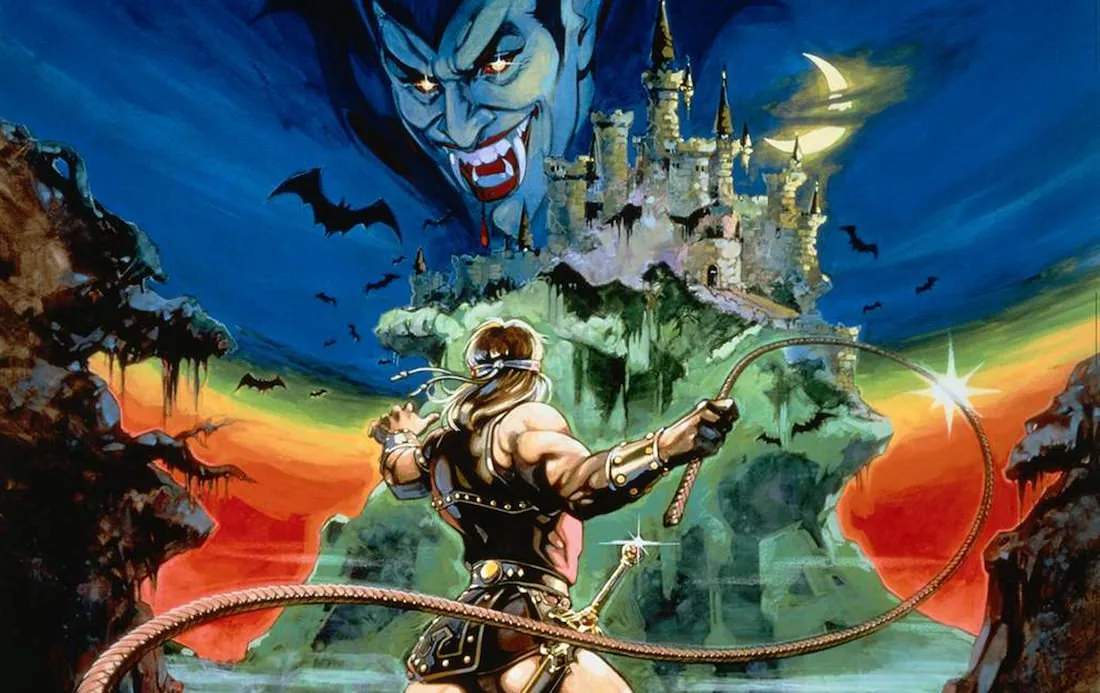
Game Over & Continue Mechanics: Castlevania (NES)
In the original Castlevania for the Nintendo Entertainment System (NES), death is a frequent companion on Simon Belmont's perilous journey through Dracula's Castle. Understanding the game's "Game Over" and "Continue" mechanics is crucial for efficient progress and minimizing frustration, as the game offers a stark, unforgiving system that demands precision and perseverance.
The Life System
Unlike later entries in the series, the NES Castlevania operates on a traditional life system. Simon begins each game with three lives. Each time Simon's HP (Health Points) is fully depleted, or he falls into a bottomless pit, he loses one life. The game does not feature an HP bar; instead, Simon's health is represented by a series of small white blocks at the top of the screen. Taking damage reduces these blocks until they are all gone, leading to a loss of life.
- Starting Lives: 3
- Gaining Lives: Extra lives are rare. They can occasionally be found as hidden items (e.g., in breakable blocks) or awarded for reaching high scores, though the latter is less common for casual play.
- Loss of Life: Occurs when Simon's HP reaches zero or he falls off-screen.
Game Over and Continue Options
When Simon loses his last life, the screen will fade to black, and the iconic "GAME OVER" text will appear, accompanied by a chilling sound effect. At this point, players are presented with a simple choice:
- Continue: Selecting "Continue" allows Simon to restart his quest from the beginning of the current stage he was attempting. He will be granted three new lives. This is the primary method for progressing through the game after a defeat.
- End: Choosing "End" will return You to the title screen. All progress made in the current playthrough will be lost, and a new game must be started from Stage 1. This option is typically chosen if a player wishes to take a break or restart completely.
It is important to note that the NES Castlevania does not feature any save points, inventory systems, consumable items, equipment, or relics in the manner of later, more RPG-centric Castlevania titles like Symphony of the Night. Therefore, there are no penalties related to losing such items upon continuing, as they simply do not exist in this game's mechanics.
Impact of Continuing
When you choose to "Continue" after a Game Over, the following occurs:
- Stage Restart: Simon is returned to the very beginning of the stage where he perished. For example, if you died in Stage 3-2, continuing will place you back at the start of Stage 3-1.
- Lives Reset: Simon's life count is reset to 3.
- Weapon & Heart Count: Simon's currently equipped sub-weapon (e.g., Axe, Holy Water) and his current heart count (used to power sub-weapons) are retained from when he died. This means if you had a powerful sub-weapon and a good stock of hearts, you won't lose them entirely upon continuing, which can be a small advantage.
- Score Reset: Your accumulated score is reset to zero.
- No Inventory/Equipment Loss: As there are no inventories or equipment slots in the NES game, there is no penalty for losing these items.
Strategies for Navigating Death and Continues
Given the unforgiving nature of Castlevania (NES), strategic use of the continue system and careful play are paramount:
1. Master Each Stage Segment
Since continuing restarts the entire stage, it's vital to learn the layout, enemy patterns, and item locations of each segment within a stage. Think of each stage as a series of mini-challenges. For instance, Stage 1 is broken into 1-1, 1-2, and 1-3 (the boss fight). Dying in 1-2 means restarting 1-1. This makes memorization and consistent execution key.
- Stage 1 (Outskirts of Castlevania):
- 1-1: Focus on mastering the basic Zombie and Bat enemy patterns. Learn to use the whip's range effectively. Collect the Leather Whip upgrade early if possible.
- 1-2: Introduces the Merman (Fishman) and Medusa Heads. The Merman's projectiles require precise jumping and whipping. Medusa Heads fly in a sine wave pattern; timing your jumps and attacks to avoid them is crucial.
- 1-3 (Boss: Vampire Bat): The boss fight is a test of pattern recognition. The bat flies in a predictable pattern. Use the Holy Water sub-weapon if you have it, as it can stun the boss, making it vulnerable.
- Stage 2 (Castle Courtyard & Clock Tower):
- 2-1: Features more Zombies and the introduction of the Fleaman (Frogman), small, agile enemies that are difficult to hit. The Axe sub-weapon can be effective against them if thrown upwards.
- 2-2: The Clock Tower segment is infamous for its Medusa Heads and narrow platforms. Patience and precise jumps are essential. The Stopwatch sub-weapon can briefly freeze Medusa Heads, providing a window to pass.
- 2-3 (Boss: Queen Medusa): A stationary boss that shoots projectiles. The Axe or Holy Water are good choices. Focus on dodging her snake projectiles while hitting her head.
2. Prioritize Sub-Weapons
While you don't lose your sub-weapon upon continuing, finding the right one for a specific stage or boss can make a huge difference. If you die repeatedly in a section, consider what sub-weapon might help you. For example:
- Holy Water: Excellent for stunning and damaging ground-based enemies and bosses. It creates a small flame pillar upon impact.
- Axe: Throws an axe in an arc, useful for hitting enemies above or below Simon, or for clearing groups.
- Cross (Boomerang): Throws a cross that returns to Simon, hitting enemies on its way out and back. Good for clearing paths.
- Stopwatch: Temporarily freezes all on-screen enemies. Incredibly useful for bypassing difficult enemy formations or Medusa Heads. Consumes a lot of hearts.
- Knife: A fast, straight-flying projectile. Less powerful than others but quick.
If you pick up a sub-weapon you don't want, you can often find another one shortly after to replace it. Strategically dying to reset a stage and hope for a better sub-weapon drop is not a viable strategy, as drops are often fixed or semi-fixed within specific blocks.
3. Conserve Hearts (for Sub-Weapons)
Hearts are not health in Castlevania (NES); they are ammunition for your sub-weapons. Large hearts grant 5 units, small hearts grant 1. Use your sub-weapons judiciously, especially the Stopwatch, which can drain your heart supply quickly. Knowing when to rely on your whip and when to deploy a sub-weapon is a key skill.
4. Learn Enemy Spawns and Patterns
Enemies in Castlevania (NES) often spawn at fixed locations or when Simon crosses certain invisible triggers. Learning these triggers allows you to anticipate threats and prepare your attacks. For example, knowing exactly when a Fleaman will jump out or a Medusa Head will appear can save you a life.
5. Practice Makes Perfect
There are no shortcuts or easy modes in the original Castlevania. The game is designed to be challenging and requires players to develop muscle memory, timing, and pattern recognition. Don't be discouraged by repeated Game Overs; each attempt is an opportunity to learn and refine your approach to Dracula's treacherous castle.
By understanding that each "Continue" is a chance to re-attempt an entire stage with a fresh set of lives, You can focus on mastering the segments, conserving resources, and ultimately conquering the forces of darkness that plague Transylvania.