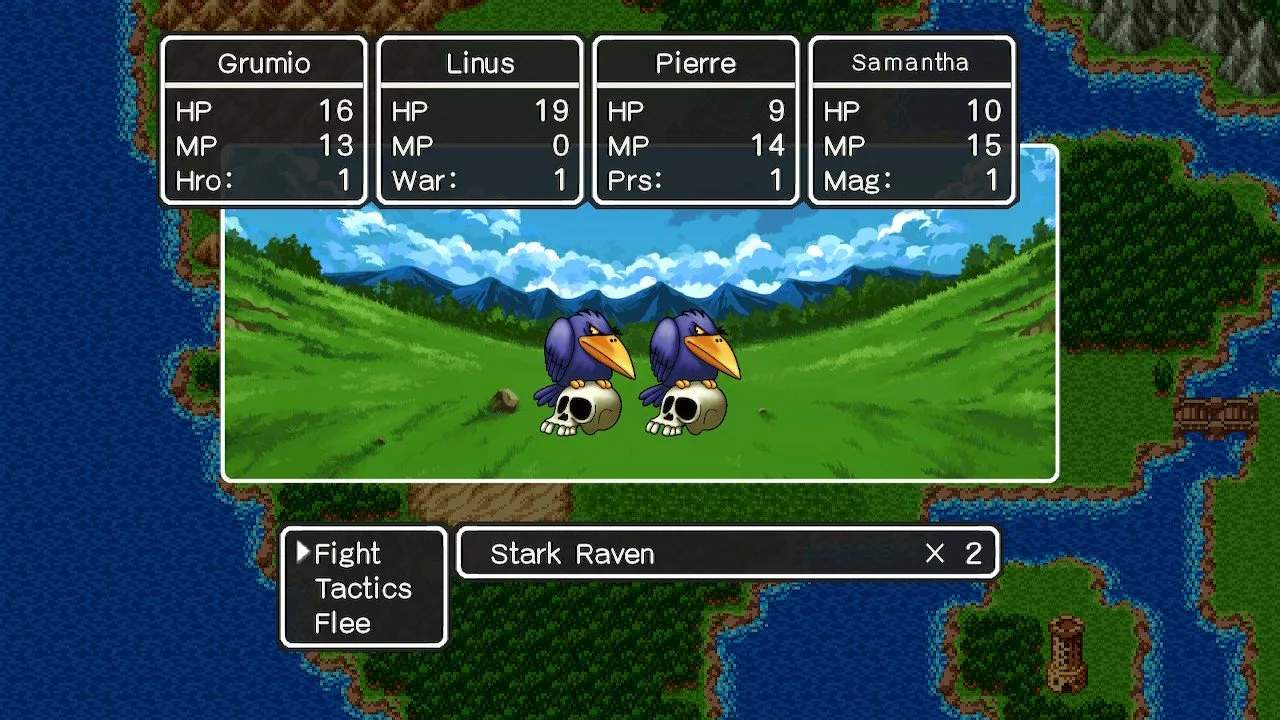
Spells and Abilities
Mastering the diverse array of spells and abilities in Dragon Quest III is crucial for overcoming the challenges ahead. This section will detail how to acquire and effectively use these powerful tools, from early-game essentials to late-game game-changers.
Learning Spells and Abilities
Spells are primarily learned by specific vocations as they level up. Each vocation has a unique spell list tailored to its role. Abilities, on the other hand, are often inherent to certain vocations or can be gained through special equipment or personality traits.
- Vocation-Specific Learning: The most common way to learn spells is by leveling up within a magical vocation. For instance, a Mage will naturally acquire offensive spells like Frizz and Woosh, while a Priest will learn healing and support spells such as Heal and Sap.
- Sage's Stone: This invaluable item, found later in the game, allows any character to cast Midheal without consuming MP. It's an excellent way to provide emergency healing to non-magic users. You'll typically find the Sage's Stone in a hidden chest within the Pyramid after acquiring the Magic Key.
- Personality Traits: Certain personality traits can influence a character's stats, which in turn can affect the potency of their spells or even grant them unique passive abilities. For example, a "Smart" personality might boost a character's Wisdom, making their spells more effective.
Key Early-Game Spells and Strategies
Focus on these spells early on to establish a strong foundation for your party:
- Heal (Priest): Your primary source of single-target healing. Prioritize leveling your Priest to gain access to Heal, Midheal, and eventually Fullheal.
- Frizz (Mage): A basic but reliable offensive spell for dealing damage to single enemies. Essential for Mages in the early game.
- Woosh (Mage): An area-of-effect spell that hits groups of enemies. Invaluable for clearing out multiple weaker foes quickly.
- Sap (Priest): Reduces an enemy's defense, making them more vulnerable to physical attacks. Use this on tougher enemies and bosses.
- Snooze (Mage): Attempts to put enemies to sleep, effectively taking them out of the fight for a few turns. Useful for crowd control, especially against dangerous individual targets.
Mid-Game Spell Acquisition and Utility
As you progress, your spellcasters will unlock more potent and versatile spells:
- Midheal (Priest): A stronger version of Heal, crucial for keeping your party healthy through more challenging dungeons and boss fights.
- Boom (Mage): A powerful area-of-effect explosion spell, significantly stronger than Woosh. Excellent for clearing out large groups of mid-tier enemies.
- Blaze (Mage): A stronger single-target fire spell.
- Stopspell (Mage): Attempts to silence enemy spellcasters, preventing them from using their own magic. Highly effective against enemy Mages and Priests.
- Upper (Priest): Increases a single ally's defense. Cast this on your main tank or the Hero during boss battles.
Late-Game Masteries and Advanced Tactics
By the late game, your spellcasters will have access to devastating spells and crucial support abilities:
- Fullheal (Priest): Fully restores an ally's HP. Absolutely essential for survival against the toughest bosses.
- Multiheal (Priest): Heals all allies for a significant amount. A game-changer for party-wide healing.
- Kazap (Mage): One of the strongest single-target offensive spells. Reserve this for bosses and high-HP enemies.
- Kaboom (Mage): The ultimate area-of-effect explosion spell, capable of wiping out entire enemy formations.
- Barrier (Priest): Increases the entire party's defense. Crucial for mitigating damage from powerful enemy attacks.
- Revive (Priest): Revives a fallen ally with a small amount of HP. A last resort, but often a life-saver.
Strategic Spell Usage Tips
- MP Management: Spells consume MP. Always carry plenty of Magic Water or Elfin Elixirs to replenish your casters' MP, especially in dungeons. Consider using basic attacks for weaker enemies to conserve MP.
- Target Prioritization: Use single-target spells on high-priority threats (e.g., enemy healers, strong attackers) and area-of-effect spells on groups of weaker enemies.
- Buffs and Debuffs: Don't underestimate the power of support spells like Sap, Upper, and Stopspell. They can turn the tide of battle by weakening enemies or strengthening your allies.
- Elemental Weaknesses: While not explicitly stated for every monster, some enemies have resistances or weaknesses to certain elemental spells (e.g., fire, ice, wind). Experiment to find the most effective spells.
- Hero's Spells: The Hero learns a balanced set of spells, including healing and offensive magic. use their versatility to fill gaps in your party's spellcasting needs.