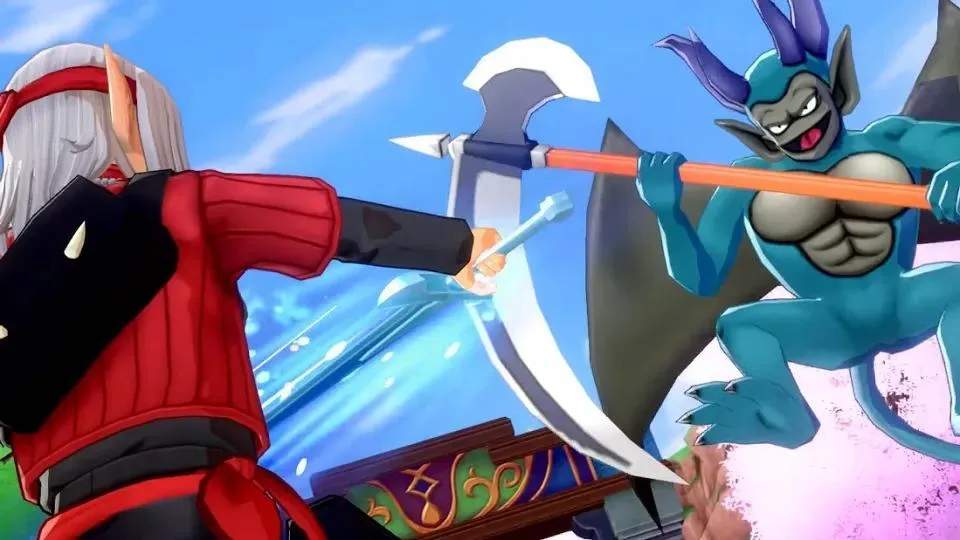
Navigating the intricate web of monster synthesis in Dragon Quest Monsters: The Dark Prince can be a daunting task. This visualizer aims to provide a clear and concise overview of the synthesis tree, allowing you to plan your monster combinations effectively. Understanding how monsters inherit traits and skills is key to creating your ultimate team.
Understanding Synthesis Basics
Synthesis in Dragon Quest Monsters: The Dark Prince involves combining two compatible monsters to create a new offspring. The offspring's species is determined by the parent monsters' species and their current ranks. Higher-ranked parents generally lead to higher-ranked offspring, and certain species combinations unlock unique monster types.
Key Synthesis Concepts
- Parental Influence: The species of the two monsters you select as parents will dictate the potential species of the resulting offspring.
- Rank Matters: The rank of the parent monsters (e.g., F, E, D, C, B, A, S, X) directly impacts the potential rank of the offspring. Synthesizing two Rank F monsters will result in a Rank F offspring, while combining higher-ranked monsters can yield higher-ranked results.
- Skill Inheritance: Skills learned by the parent monsters can be passed down to the offspring. This is a crucial aspect of customization, allowing you to tailor your monsters' abilities.
- Monster Families: Certain monster families have specific synthesis requirements or unlock unique monsters when combined. For example, combining two dragons might lead to a more powerful dragon variant.
Visualizing the Synthesis Tree
While a complete, exhaustive visual tree is beyond the scope of this text-based guide, we can outline the general principles and provide examples of common synthesis paths:
- Basic Monsters (Rank F): Many common monsters start at Rank F. Synthesizing two Rank F monsters of the same species will result in another monster of that species, often at a higher rank if the parents are leveled. Synthesizing two different Rank F monsters can lead to a new species, often a Rank F monster itself.
- Intermediate Monsters (Rank E-C): As you progress, you'll encounter and synthesize monsters of higher ranks. For instance, synthesizing two Rank E monsters might yield a Rank D monster, and so on.
- Advanced Synthesis: Creating powerful Rank S or Rank X monsters often requires specific combinations of high-ranked parents or unique monster species. For example, a common path to a powerful demon might involve synthesizing a specific type of beast with a specific type of undead monster.
Example Synthesis Paths (Illustrative)
| Parent 1 Species | Parent 2 Species | Potential Offspring Species (Rank Dependent) |
|---|---|---|
| Slime | Slime | Slime (higher rank) |
| Goblin | Orc | Ogre (or similar brute type) |
| Dragon | Wyvern | Dragonlord (or similar dragon variant) |
| Demon | Undead | Archdemon (or similar powerful fiend) |
Note: Specific offspring species can vary based on the exact species of the parents and their current ranks. Experimentation and consulting detailed monster databases are recommended for precise outcomes.