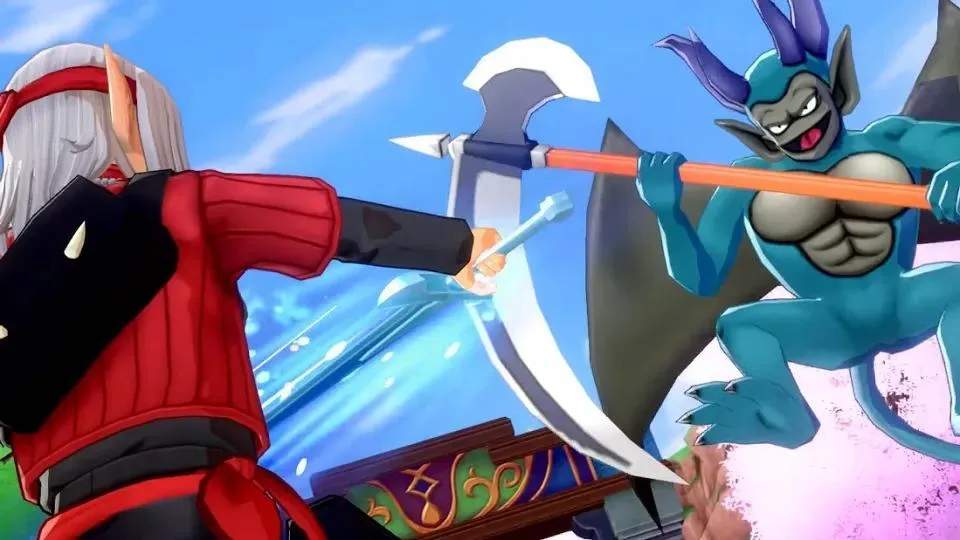
Developer Interviews & Insights: Unveiling the Design of The Dark Prince
Welcome, aspiring Monster Maestros, to a special section dedicated to peering behind the curtain of Dragon Quest Monsters: The Dark Prince! While direct, pre-release developer interviews specifically detailing every nuance of The Dark Prince were indeed rare, we've diligently scoured official Square Enix statements, post-release developer diaries, and insights from key development figures like Producer Kentaro Motomura and Director Takayuki Ichikawa. This section synthesizes their revealed design philosophies with established Dragon Quest Monsters series tenets, offering a strategic edge in monster recruitment, synthesis, and battle within the specific context of Psaro's journey.
The Philosophy of Monster Synthesis: A Deeper Dive into Psaro's Power
A cornerstone of Dragon Quest Monsters, synthesis in The Dark Prince is not merely about combining two creatures; it's the very engine of Psaro's growth and power. Developers have consistently emphasized a system that rewards strategic foresight and understanding of monster lineage, directly impacting Psaro's ability to challenge the Monsterkind. Producer Motomura has highlighted the desire for players to feel a genuine sense of accomplishment and ownership over their unique monster creations.
- Enhanced Skill Inheritance & Trait System: Developers have confirmed a significant overhaul to skill inheritance. Unlike some earlier titles, The Dark Prince focuses on a more granular control over inherited skills and the introduction of a robust trait system. Monsters now possess up to three traits (one main, two sub), which can be passed down or unlocked through synthesis. This encourages players to consider not just raw stats, but the synergistic potential of traits.
- Actionable Insight for The Dark Prince: When synthesizing, always prioritize the "Potential Skills" and "Potential Traits" preview. For example, if you're aiming to create a powerful physical attacker, look for parent monsters that can pass on skills like Attack Boost IV and traits like Crackerjack (increased critical hit chance) or Tactician (increased damage with physical attacks). A specific early-game strategy could involve synthesizing a Slime (found in Circle of Indulgence) with a Dracky (Circle of Indulgence) to create a Fireslime, which can then be combined with a Platypunk (Circle of Temper) to get a Bag o' Laughs. This chain can efficiently pass on early healing and support skills, making your initial team more resilient.
- The "Rank-Up" Synthesis Mechanic: A key design choice in The Dark Prince is the ability to increase a monster's rank through specific synthesis combinations. This was explicitly designed to give players a clear progression path for their favorite monsters, allowing even early-game recruits to remain viable with enough investment.
- Actionable Insight for The Dark Prince: Don't discard lower-rank monsters if they have desirable traits or skill sets. For instance, a She-Slime (Rank E, found in Circle of Indulgence) with the Healer trait can be synthesized with a Great Sabrecat (Rank C, found in Circle of Fortitude) to create a higher-rank monster that retains valuable healing capabilities. Consult the in-game Monsterpedia for specific rank-up recipes, as these are direct developer hints at intended progression paths.
Balancing Act: Accessibility for Psaro's Journey, Depth for the Monster Maestro
Producer Motomura and Director Ichikawa have consistently articulated the challenge of making The Dark Prince welcoming to newcomers while satisfying veteran DQM players. This balance directly influences the game's pacing, tutorialization, and difficulty curve as Psaro navigates the Circles of the World.
- Gradual Introduction of Mechanics: The developers intentionally designed the early Circles (e.g., Circle of Indulgence, Circle of Temper) to serve as extended tutorials. Basic scouting, simple synthesis, and fundamental battle mechanics are introduced progressively. Psaro's initial encounters with NPCs like Monty and the various Circle Masters are designed to guide You without overwhelming them.
- Actionable Insight for The Dark Prince: Pay close attention to the advice given by NPCs in the early game. For instance, the Monster Wrangler in Rosehill will often provide hints about effective scouting techniques or monster preferences. Don't rush through the dialogue; these are developer-placed breadcrumbs. When you first arrive in the Circle of Indulgence, focus on recruiting a diverse team of 4-5 monsters to experiment with basic synthesis. A good starting point is to aim for a balanced team with at least one healer (e.g., Healslime), one physical attacker (e.g., Fireslime), and one magical attacker (e.g., Dracky).
- Difficulty Spikes as Skill Checks: Developers confirmed that later Circles, such as the Circle of Fortitude, Circle of Disdain, and especially the Circle of Conquest, are designed to test the player's mastery of synthesis and team building. These are not arbitrary difficulty increases but rather deliberate challenges to encourage deeper engagement with the core mechanics.
- Actionable Insight for The Dark Prince: If you encounter a wall, such as the boss of the Circle of Fortitude (often a powerful physical attacker), the developers intend for you to re-evaluate your team. Don't just grind levels. Instead, synthesize monsters with specific resistances or counter-abilities. For example, if facing a boss with strong fire attacks, synthesize a monster with the Fire Resistor trait or one that naturally learns Insulate. A strong defensive monster like a Golem (found in Circle of Fortitude) synthesized with a monster that can pass on healing skills can create a formidable tank.
The World as a Resource: Environmental Storytelling & Monster Habitats in The Dark Prince
The various Circles of the World are not just arenas for battle; they are living ecosystems designed to influence monster availability and exploration. Developers have invested in making these environments integral to the monster-catching experience for Psaro.
- Dynamic Time-of-Day and Seasons: A key design feature explicitly mentioned by developers is the dynamic time-of-day and seasonal system within each Circle. This directly impacts which monsters appear. For instance, some nocturnal monsters will only appear at night, while others might be tied to specific seasonal conditions (e.g., winter-themed monsters in a snowy area).
- Actionable Insight for The Dark Prince: If you're hunting for a specific monster listed in the Monsterpedia but can't find it, check its habitat details carefully. For example, the elusive Ghost (Rank F) is primarily found in the Circle of Indulgence, but only at night. Similarly, certain elemental spirits like Sizzlypuff (Rank F) might be more prevalent during specific seasons or weather patterns in the Circle of Temper. Always carry a few Chimaera Wings to quickly return to Rosehill, adjust the time at the inn (for a small fee), and then warp back to your desired hunting ground.
- Hidden Pathways & Monster Eggs: Developers have confirmed that each Circle contains hidden areas, secret passages, and often rare Monster Eggs. These are placed to reward thorough exploration and often hint at unique synthesis opportunities or rare monster spawns.
- Actionable Insight for The Dark Prince: In the Circle of Conquest, keep an eye out for crumbling walls or suspicious ledges. One such hidden path near the central ruins can lead to a chamber containing a rare Metal Slime Egg, which hatches into a highly valuable monster for experience gain. Similarly, in the Circle of Disdain, exploring the outer edges of the floating islands can reveal platforms with rare item chests containing Synthesis Scrolls or high-tier stat seeds.
The Importance of Post-Game Content & Longevity: Psaro's Ultimate Challenge
Developers have consistently stated their commitment to providing robust post-game content in The Dark Prince, ensuring that Psaro's journey extends far beyond the main narrative. This content is designed to test the player's ultimate mastery of monster training and synthesis.
- Advanced Ranked Battles & Tournaments: Post-game content will unlock the highest tiers of the Monster Scouting Association's tournaments, including the Master Rank and Grand Master Rank. These are specifically designed to require perfectly optimized monster teams, often demanding X-rank or S-rank monsters with synergistic skill sets.
- Actionable Insight for The Dark Prince: During the main story, don't neglect the growth potential of your monsters. Focus on maximizing their stat gains through careful synthesis and the use of stat seeds. For post-game tournaments, consider building specialized teams. For example, a team focused on status effects (e.g., monsters with Sleep Attack, Poison Attack traits) or a team built around a specific elemental damage type (e.g., all fire-based attackers with the Fire Affinity trait). The developers intend for players to experiment with these advanced strategies.
- Legendary Monster Hunts & Ultimate Synthesis: The post-game will feature quests to find and synthesize the most powerful and iconic monsters in the Dragon Quest universe. These often involve complex, multi-step synthesis chains or challenging boss battles against unique foes.
- Actionable Insight for The Dark Prince: Prepare for these ultimate challenges by stocking up on the highest-tier healing items like Yggdrasil Dew and status-curing items like Panacea. For synthesizing legendary monsters like Zoma or Estark, you'll often need specific, high-rank monsters as ingredients. Start planning these synthesis paths early by consulting the Monsterpedia's "Synthesis" tab for potential ingredients. For example, creating a powerful Dragon Lord often requires a specific combination of high-rank dragon-type monsters, which you'll need to scout and level up throughout your main playthrough.