Game Mechanics
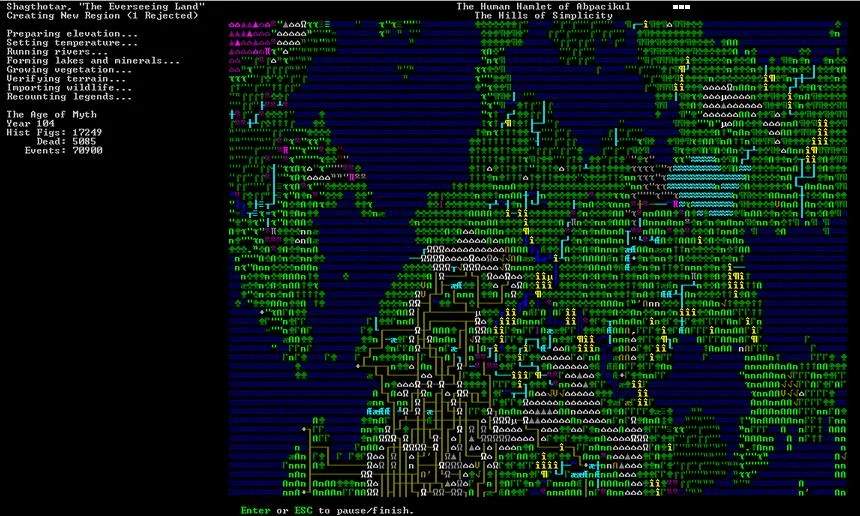
Dwarf Fortress is renowned for its intricate simulation and emergent gameplay, driven by a complex web of interconnected mechanics. At its core, the game simulates a procedurally generated world with detailed geology, hydrology, and ecosystems. Your primary role is to guide a group of dwarves as they establish a new settlement, managing their needs, labor, and defense against a harsh environment and various threats.
Key Game Mechanics:
- Procedural Generation: Every world is unique, with distinct geography, history, and civilizations.
- Dwarf Autonomy: Dwarves have individual personalities, needs, skills, and moods. You ass jobs, but they act independently.
- Labor System: Dwarves are assed specific labors (tasks they are allowed to perform), which dictates their work.
- Needs and Happiness: Dwarves require food, drink, sleep, and social interaction. Unmet needs lead to unhappiness and tantrums.
- Combat: Detailed combat simulation involving body parts, injuries, and weapon effectiveness.
- Economy: Production, trade, and resource management are vital for survival and growth.
- Thermodynamics: Heat and temperature play a role in various processes, from smelting to magma flow.
- Fluid Dynamics: Water and magma flow realistically, impacting construction and hazard management.
The simulation extends to incredibly granular detail. For example, each dwarf has a unique body with individual limbs, organs, and tissues, all of which can be injured. The game simulates the effects of heat, cold, and pressure, and the flow of liquids like water and magma is meticulously modeled. This depth allows for emergent storytelling, where unexpected events and interactions between mechanics create unique challenges and triumphs.
Understanding these mechanics is crucial for success. For instance, knowing how fluid dynamics work can help you create or avoid dangerous floods, while understanding the labor system is essential for ensuring your fortress runs efficiently. The game's complexity means that there's always more to learn, and experimentation is often the best teacher. The goal is not just to survive, but to build a thriving, self-sufficient dwarven civilization against all odds.
The game's interface, while initially daunting, provides access to a vast amount of information about these mechanics. From detailed unit screens to complex world generation reports, the game encourages players to delve deep into its simulation. The ultimate reward is the creation of a unique story, shaped by the player's decisions and the intricate workings of the Dwarf Fortress world.