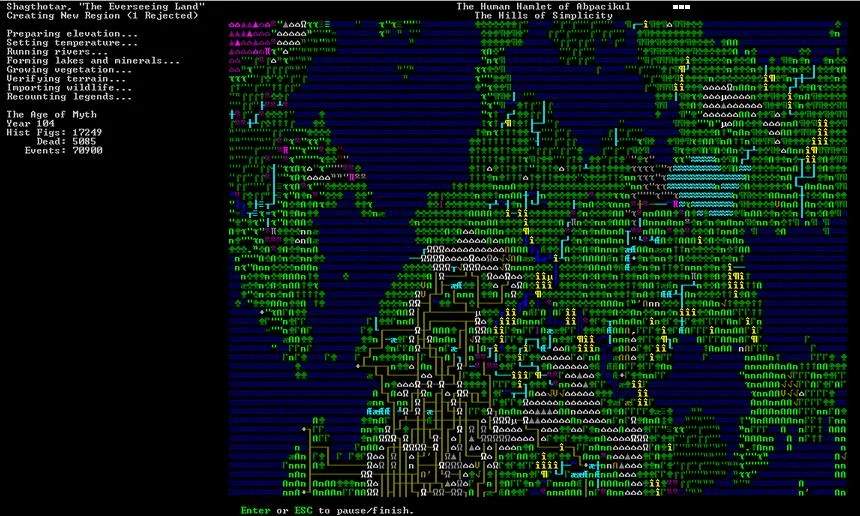
World Generation and Biomes
Understanding Dwarf Fortress's world generation and the biomes it creates is paramount for a successful fortress. Your starting location dictates available resources, potential threats, and overall playstyle. This section will guide you through the initial setup and how to leverage biome knowledge for optimal fort planning.
The World Generation Process
Before you even begin digging, Dwarf Fortress generates an entire world, complete with its own history, civilizations, and geological features. This process can be customized to a significant degree, allowing for worlds tailored to specific play experiences.
- Start a New Game: From the main menu, select "Start Playing" then "Create New World."
- World Generation Parameters: You'll be presented with a screen to adjust various world parameters.
- Size: Affects the overall scale of the world. Larger worlds have more history and diverse biomes but take longer to generate. For beginners, a "Medium" or "Large" world is a good balance.
- History Length: Determines how many years of history the world will simulate before you start playing. Longer histories mean more developed civilizations, more ruins, and potentially more powerful megabeasts. A "Long" history (250-500 years) is often recommended for a rich experience.
- Mineral Scarcity/Frequency: Directly impacts the availability of crucial ores like Iron Ore, Copper Ore, and precious metals. A "Frequent" setting is forgiving for new players.
- Evil/Savagery: These sliders influence the prevalence of dangerous creatures and hostile biomes. A "Low" setting for both is advisable for your first few forts.
- Other Parameters: Experiment with "Rainfall," "Temperature," and "Drainage" to create worlds with specific climates and hydrological features.
- Generate World: Once satisfied with your settings, select "Generate World." This process can take several minutes, depending on your computer's specifications and the chosen parameters.
Understanding the World Map
After generation, you'll be presented with the world map. This map is crucial for selecting your embark location. Use the arrow keys to navigate and 'z' to zoom in/out. Pay close attention to the following indicators:
- Biomes: Represented by different colors and textures. Hovering over an area will display its biome type (e.g., "Forest," "Mountain," "Desert").
- Civilizations: Indicated by colored squares or symbols. Green represents Dwarven civilizations, brown for Humans, and grey for Goblins. Proximity to these can mean trade opportunities or raids.
- Rivers and Oceans: Essential for water sources, fishing, and potential trade routes.
- Mountains: Often rich in minerals and provide natural defenses, but can be challenging to navigate and build within.
- Volcanoes: Marked by a distinct red icon. Offer a limitless supply of magma, invaluable for smelting and forging, but are extremely dangerous.
Key Biomes and Their Implications
The biome of your embark location is the single most important factor in determining your fortress's early game and long-term viability. Each biome presents unique challenges and opportunities.
1. Temperate Forest/Taiga
- Characteristics: Abundant trees (wood for construction, fuel), diverse wildlife (food, leather), moderate climate.
- Resources: Excellent for starting. Plentiful wood, surface plants for foraging, and often good soil for farming.
- Challenges: Can attract several wildlife, some of which may be hostile.
- Strategy: Ideal for beginners. Focus on establishing a strong wood industry and farming.
2. Mountain
- Characteristics: High elevation, rocky terrain, often cold. Can be "Calm," "Wild," or "Savage."
- Resources: Rich in minerals (ores, gems), natural defenses (cliffs, deep rock).
- Challenges: Limited surface soil for farming, fewer trees, harsh winters. Savage mountains can host dangerous creatures like Grizzly Bears or Giant Cave Spiders.
- Strategy: Prioritize mining and underground farming (e.g., Cave Wheat). Build defensive structures early. Look for areas with a river for water access.
3. Desert/Badlands
- Characteristics: Arid, hot, sparse vegetation.
- Resources: Can have unique desert-adapted plants and animals. Some deserts are rich in sand, useful for glassmaking.
- Challenges: Extreme heat, lack of water, limited wood, difficult farming.
- Strategy: Requires careful water management (wells, underground reservoirs). Focus on industries that don't rely heavily on wood or surface farming.
4. Tundra/Glacier
- Characteristics: Extremely cold, frozen ground, very little vegetation.
- Resources: Ice for water (melted), some cold-adapted animals.
- Challenges: Extreme cold, freezing rivers, almost no surface farming, limited wood.
- Strategy: Highly challenging. Requires immediate focus on insulation, underground farming, and finding magma for warmth and industry. Not recommended for new players.
5. Swamp/Marsh
- Characteristics: Wet, muddy, often humid, dense vegetation.
- Resources: Unique swamp plants, abundant water, sometimes peat for fuel.
- Challenges: Difficult terrain for movement, prone to disease, can attract dangerous creatures like Alligators or Giant Mosquitoes.
- Strategy: Good for water-based industries and specific crops. Requires careful planning for drainage and defense.
6. Evil Biomes (Haunted, Terrifying, Sinister)
- Characteristics: These biomes are marked by a distinct purple or red hue on the world map. They are inherently dangerous.
- Resources: Often contain unique, valuable materials or creatures, but at a high cost.
- Challenges: Constant threat from undead, reanimated corpses, or other horrific creatures. Dwarves in these biomes are prone to negative thoughts and mental breakdowns.
- Strategy: Only for experienced players seeking extreme challenges. Requires advanced defenses, strong military, and robust mental health management for your dwarves.
Embark Location Selection: A Checklist
When choosing your embark square, consider these factors for a balanced and sustainable fortress:
- Water Source: A river or brook is ideal. Ensure it won't freeze solid in winter if in a cold biome.
- Trees: Essential for early construction and fuel. Aim for at least "Sparse" or "Scattered" trees.
- Soil: At least one layer of "Shallow Soil" or "Deep Soil" for farming.
- Minerals: Look for "Flux Stone" (e.g., Limestone, Dolomite) for steel production, and indications of metal ores.
- Flatness: While mountains offer defense, a relatively flat area can make initial building easier.
- Neighbors: Proximity to other civilizations can mean trade caravans, but also potential raids.
- Caverns: While not visible on the world map, every embark location has multiple cavern layers below. These are a source of unique resources and dangerous creatures.
By carefully considering these aspects of world generation and biome selection, you can lay a strong foundation for your next legendary Dwarf Fortress.