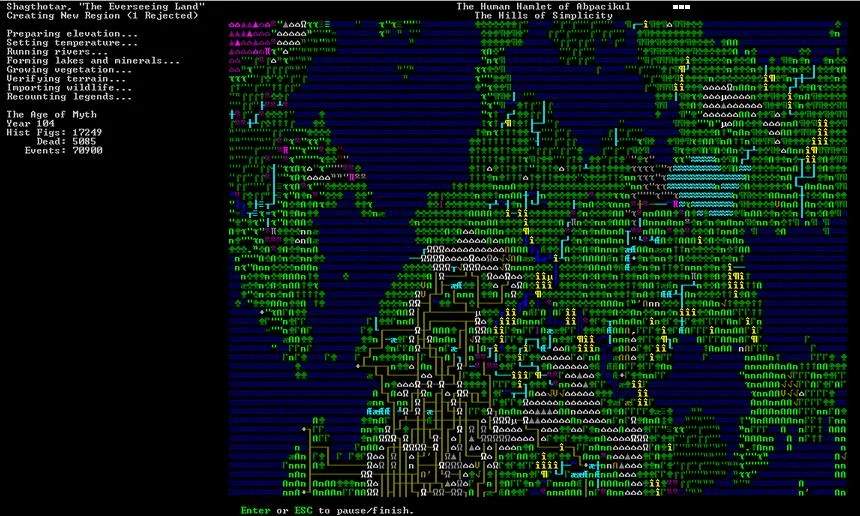
World Map
The world map in Dwarf Fortress is the canvas upon which your dwarven saga will unfold. It's a procedurally generated landscape, rich with diverse biomes, civilizations, and historical events. Understanding how to navigate and interpret this map is crucial for selecting a suitable embark location and planning your fortress's expansion.
When you first generate a world, you'll be presented with a top-down view of its continents, oceans, and major geographical features. This map is not merely cosmetic; it dictates the resources available, the climate, the types of creatures you might encounter, and the proximity of other civilizations. The scale of the world can be immense, filled with countless details that contribute to its unique character.
Key elements to observe on the world map include:
- Biomes: These are distinct geographical regions, each with unique flora, fauna, and geological properties. Examples include forests, mountains, deserts, swamps, and tundras. Your choice of biome sificantly impacts resource availability and potential hazards.
- Civilizations: The world is populated by various intelligent races, such as dwarves, humans, elves, and goblins, each with their own territories, capitals, and historical interactions. Their presence can lead to trade, conflict, or unique diplomatic opportunities.
- Rivers and Lakes: Water sources are vital for survival, providing drinking water, facilitating trade, and enabling farming. Their location and flow can be critical for your fortress's des.
- Mountain Ranges and Caves: These features offer natural defenses and opportunities for underground expansion, but also present challenges like cave-ins and the potential for subterranean threats.
The world map generation settings allow you to customize the scale and complexity of your world. For new players, it's recommended to start with a medium-sized world with moderate history length and fewer civilizations to avoid overwhelming complexity. As you gain experience, you can experiment with larger, more detailed worlds.
Interpreting the symbols on the map is key. Red rectangles often denote existing sites, while different colors might indicate the territories of specific civilizations. Zooming in and out allows for a granular view of potential embark locations, revealing details about terrain, resources, and nearby dangers.