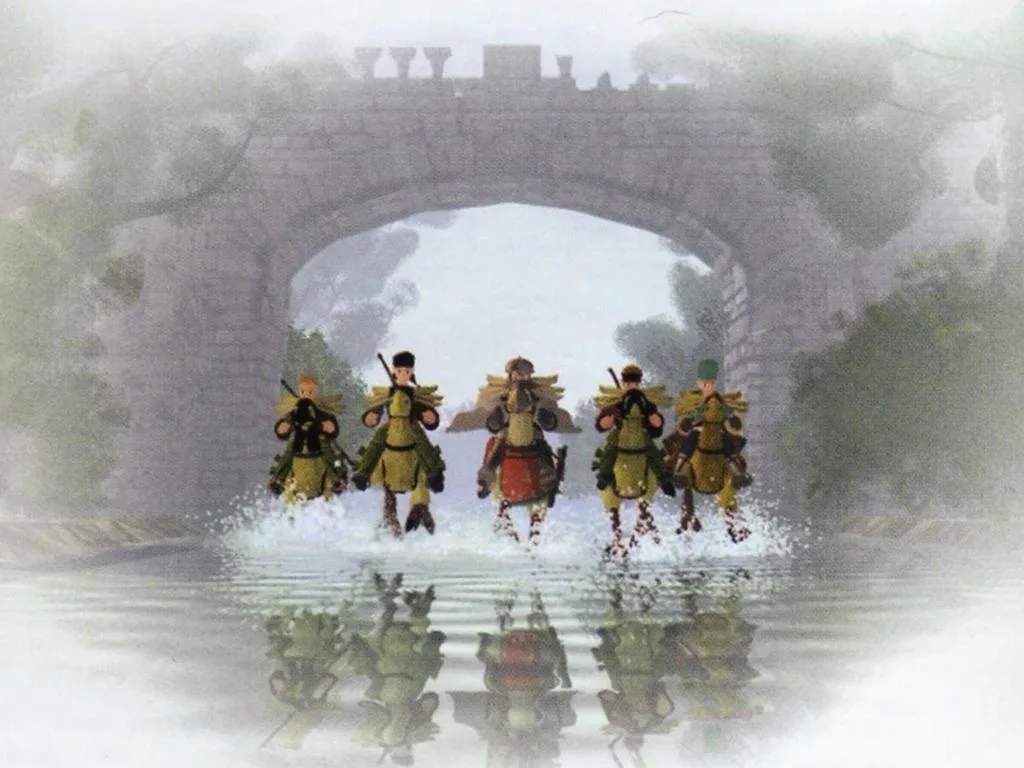
Movement & Terrain Effects
Mastering movement and understanding terrain effects is paramount to victory in Final Fantasy Tactics. Every step you take, and every tile you occupy, can significantly influence the outcome of a battle. Ignoring these mechanics is a surefire way to find yourself outmaneuvered and defeated.
Movement Basics
Each unit has a Move (MV) stat, determining the maximum number of tiles they can traverse in a single turn. This stat is primarily influenced by a unit's Job Class and equipped gear. For instance:
- Knight: Typically has an MV of 3, offering solid but not exceptional mobility.
- Thief: Boasts a higher MV of 4, making them excellent for flanking and reaching distant objectives.
- Monk: Also features an MV of 4, combining good movement with powerful physical attacks.
Movement is not just about horizontal distance; verticality plays a crucial role. Each unit also has a Jump (JP) stat, dictating how many vertical levels they can ascend or descend in a single move. A unit with a Jump of 3 can climb or drop three levels without penalty. Exceeding this limit will prevent movement to that tile.
Optimizing Movement
To maximize your unit's mobility, consider the following:
- Job Class Selection: Early in the game, consider leveling up a unit as a Squire or Chemist to unlock the Move +1 support ability. This is a foundational ability that benefits almost any unit.
- Equip Movement-Enhancing Gear:
- Germinas Boots: These invaluable accessories grant +1 Move. You can find a pair early on in Chapter 1 by completing the "Sweegy Woods" battle. Another pair can be purchased later in the game from various shops.
- Rubber Shoes: While not directly increasing Move, these prevent movement penalties on water tiles, effectively granting better mobility in aquatic environments. Obtainable from shops in Chapter 2 onwards.
- Teleport: For advanced players, the Teleport movement ability (unlocked by leveling up a Time Mage) allows units to ignore terrain and jump restrictions, moving to any visible tile within range. This is incredibly powerful for strategic positioning but has a chance to fail based on distance.
Terrain Effects
Different terrain types impact movement and combat in various ways. Always check the terrain before committing your units.
- Water:
- Movement: Units without specific abilities (like the Move on Water reaction ability or equipped Rubber Shoes) will have their movement severely restricted, often only able to move 1 tile at a time.
- Combat: Certain elemental attacks (e.g., Lightning spells) can be amplified when targeting units standing in water.
- Poisonous Swamps/Bogs:
- Movement: Units moving through these tiles will often suffer a Poison status effect.
- Combat: Units standing in poisonous terrain will continuously lose HP each turn. Consider equipping Antidotes or having a Chemist with the "Item" ability ready.
- High Ground:
- Combat: Units attacking from higher ground gain a significant advantage, increasing their hit chance and damage output. Conversely, attacking uphill reduces accuracy and damage. Always strive for the high ground!
- Obstacles (Trees, Rocks, Buildings):
- Movement: These block movement entirely. Plan your routes carefully to avoid getting trapped.
- Combat: Can provide cover, reducing the accuracy of ranged attacks. However, some abilities (like the Archer's "Charge" or the Geomancer's "Geomancy" skills) can bypass or utilize these obstacles.
Strategic Application
When planning your turns, always:
- Assess the Battlefield: Before the battle begins, take a moment to analyze the map. Identify choke points, high ground, and hazardous terrain.
- Prioritize High Ground: Move your archers, mages, and even physical attackers to elevated positions whenever possible. This gives them a tactical edge.
- Utilize Choke Points: Funnel enemies into narrow passages where your heavily armored units (e.g., Knights, Monks) can hold the line, while your ranged units attack from safety.
- Avoid Hazardous Terrain: Unless you have specific immunities or abilities, steer clear of poisonous swamps or deep water. If forced to cross, ensure you have healing or status-curing options available.
- Flank Enemies: Use units with high MV (Thieves, Monks) to get behind enemies, often bypassing their shields and increasing your hit chance.
By diligently applying these principles, you'll transform your movement from a simple action into a powerful strategic tool, turning the tide of even the most challenging battles in Ivalice.