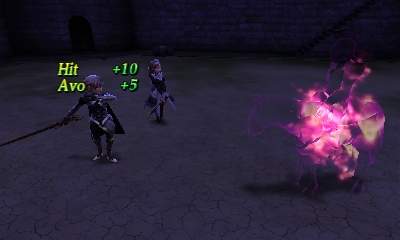
Chapter 19, "The Dragon's Gate," presents a significant escalation in the conflict within Fire Emblem Fates: Revelation, often involving powerful draconic enemies and a strategically vital location. This chapter is likely to feature a map with unique environmental properties or obstacles that play a crucial role in the battle. adapt their strategies to contend with the formidable power of dragons, which often possess high stats and devastating breath attacks. The objective in "The Dragon's Gate" might involve breaching a heavily fortified position, securing a critical artifact, or defeating a powerful dragon commander. Success will demand a well-rounded army, with units capable of exploiting potential weaknesses in draconic defenses and surviving their potent assaults.
The narrative implications of "The Dragon's Gate" are often substantial, potentially revealing ancient secrets or the true nature of the dragons' involvement in the war. The challenges presented are designed to test the player's understanding of advanced combat mechanics, including the effective use of special skills, support bonuses, and the exploitation of enemy vulnerabilities. Players might encounter enemy formations that combine draconic might with other formidable units, creating complex tactical puzzles. Overcoming these challenges will require careful unit positioning, timely use of powerful abilities, and a keen awareness of the battlefield's dynamics. The chapter's conclusion often sets the stage for the final confrontations, making mastery of "The Dragon's Gate" essential for progressing through the game.
Draconic Enemies and Their Abilities
Chapter 19, "The Dragon's Gate," introduces formidable draconic enemies that pose a significant threat to the player's army. These dragons, such as the powerful Wyvern Lords or the ancient Manaketes, often possess exceptionally high HP, defense, and resistance stats, making them difficult to damage with conventional attacks. Their sature ability is typically a devastating breath attack, which can hit multiple units in a line or cone, inflicting substantial damage and potentially status effects like "Poison" or "Burn." Players must be prepared to counter these attacks by spreading out their units to avoid area-of-effect damage and by utilizing units with high resistance to magical attacks. Certain classes, like the Wyvern Rider or Pegasus Knight, may have advantages against grounded dragons due to their aerial mobility, allowing them to strike from unexpected angles. However, dragons can also fly, negating this advantage. Exploiting elemental weaknesses, if present, or using powerful anti-dragon weaponry, if available, will be crucial for success. For instance, a unit equipped with a "Dragonstone" or a "Wyrmsbane" lance could inflict bonus damage against these creatures.
Map Mechanics and Strategic Positioning
The map in "The Dragon's Gate" is often designed to complement the draconic threat, featuring elements that can either aid or hinder the player's efforts. This might include elevated terrain that provides ranged units with increased attack range, or choke points that can be used to funnel enemies and concentrate defensive efforts. Conversely, the map could feature open areas that allow dragons to utilize their breath attacks with devastating effect, or hazardous terrain like lava pits that inflict damage on units that step on them. Players must carefully consider their unit positioning to maximize defensive bonuses and minimize exposure to enemy attacks. For example, placing units with high defense on fortified positions can create a strong defensive line, while fast-moving units can be used to flank enemies or secure objectives. If the map features bridges or narrow passages, these can be used to control enemy advances. Understanding how to utilize the map's features to your advantage, such as using forests for defensive bonuses or high ground for increased range, is essential for overcoming the challenges presented by the draconic forces.
Breaching Defenses and Securing Objectives
The primary objective in "The Dragon's Gate" often involves breaching heavily fortified enemy positions or securing a critical location guarded by draconic forces. This requires a coordinated offensive strategy. Players might need to first neutralize powerful ranged threats, such as enemy Ballistae or mages, before advancing their main force. Utilizing units with high movement and attack power, like Paladins or Great Knights, can be effective for spearheading assaults. If the objective involves capturing a specific point, ensure they have units capable of holding that position against counter-attacks. This might involve deploying units with high defense and the ability to heal themselves or nearby allies. When facing multiple dragons, it is often beneficial to focus fire on one target at a time to eliminate threats efficiently. also be mindful of any secondary objectives, such as rescuing allied units or collecting valuable items, which can provide additional advantages or lore insights. The successful completion of these objectives often hinges on careful planning, efficient resource management, and the timely deployment of powerful skills and abilities.