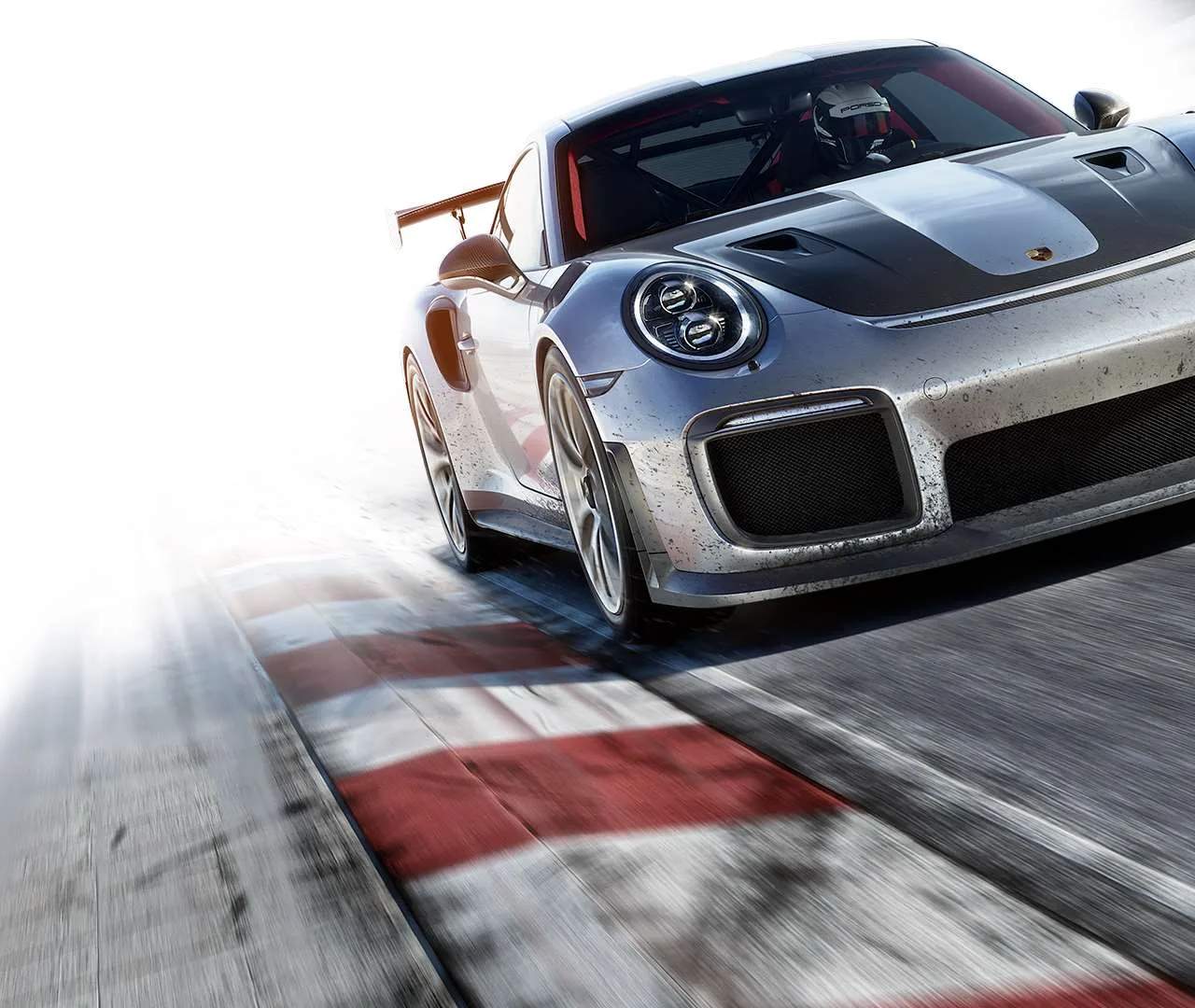
Car Setup & Tuning Basics
Welcome, aspiring Forza Motorsport 7 champions! While raw driving skill is crucial, understanding and applying car setups and tuning can shave seconds off your lap times and transform a challenging car into a track weapon. This detailed guide will walk you through the fundamentals of tuning your vehicle for optimal performance.
Accessing the Tuning Menu
Before you can tweak your ride, you need to access the tuning options. This can be done from a few key locations:
- Pre-Race Lobby: Before starting any race event, look for the "Tune Car" option. This is ideal for making quick adjustments based on the track conditions or your opponents' cars.
- My Cars Menu: From the main menu, navigate to "Cars" then "My Cars." Select the car you wish to tune, and you'll find the "Tune Setup" option. This is perfect for creating and saving custom tunes for specific vehicles and tracks.
- Garage: Similar to the "My Cars" menu, accessing your garage also provides a "Tune Setup" option for any car you own.
Understanding Tuning Categories
Once in the "Tune Setup" menu, you'll be presented with several categories, each controlling a different aspect of your car's performance. We'll break down the most critical ones:
1. Tires
Tire pressure significantly impacts grip and handling. The goal is to achieve optimal tire temperature and contact patch during a race.
- Front Tire Pressure: Adjusts the pressure in your front tires.
- Strategy: Lower pressure increases the contact patch, potentially offering more grip but can lead to overheating. Higher pressure reduces the contact patch, making the car more responsive but potentially less grippy. Start with the recommended settings and adjust based on tire temperature telemetry (available in-race). Aim for even temperature distribution across the tire.
- Rear Tire Pressure: Adjusts the pressure in your rear tires.
- Strategy: Similar principles to front tires. Generally, a slightly lower rear pressure can improve rear grip, especially under acceleration.
2. Gearing
Gearing determines how your engine's power is translated to the wheels. Incorrect gearing can leave you lacking top speed or acceleration.
- Final Drive: This is the master gear ratio.
- Strategy: A lower number (e.g., 3.00) results in higher top speed but slower acceleration. A higher number (e.g., 4.00) provides quicker acceleration but a lower top speed. Adjust this first to match the track's characteristics (e.g., high for short, twisty tracks; low for long, high-speed tracks).
- Individual Gear Ratios (1st-6th/7th/etc.): Fine-tunes each gear.
- Strategy: Adjust these to ensure smooth power delivery and to keep your engine in its optimal RPM range throughout the track. Look for the RPM drop between shifts – you want it to land in the power band of the next gear. Avoid hitting the rev limiter too early or feeling sluggish in higher gears.
3. Alignment
Alignment settings affect how your tires meet the road, influencing cornering and straight-line stability.
- Camber (Front & Rear): The vertical angle of the wheel relative to the road.
- Strategy: Negative camber (top of the wheel tilted inward) improves cornering grip by ensuring more tire contact during turns. Too much negative camber reduces straight-line grip. Start with a moderate negative camber (e.g., -2.0 to -3.0 degrees for front, -1.0 to -2.0 for rear) and adjust based on tire wear telemetry.
- Toe (Front & Rear): The horizontal angle of the wheels relative to each other.
- Strategy:
- Toe-in (positive toe): Wheels point slightly inward. Increases straight-line stability but can reduce turn-in responsiveness and increase tire wear.
- Toe-out (negative toe): Wheels point slightly outward. Improves turn-in and responsiveness but can make the car twitchy at high speeds. Generally, a small amount of front toe-out (e.g., -0.1 to -0.2 degrees) is beneficial for turn-in, while a small amount of rear toe-in (e.g., +0.1 to +0.2 degrees) can enhance stability.
- Strategy:
- Caster (Front Only): The angle of the steering axis.
- Strategy: Higher caster improves straight-line stability and self-centering of the steering wheel, but can make steering heavier. Lower caster makes steering lighter but less stable. Most cars benefit from a higher caster angle (e.g., 5.0 to 7.0 degrees).
4. Anti-Roll Bars (ARB)
ARBs control body roll and influence weight transfer during cornering.
- Front Anti-Roll Bar: Stiffer front ARB reduces body roll at the front, making the car more prone to oversteer (rear slides out).
- Strategy: Increase to reduce understeer (front pushes wide), decrease to reduce oversteer.
- Rear Anti-Roll Bar: Stiffer rear ARB reduces body roll at the rear, making the car more prone to understeer.
- Strategy: Increase to reduce oversteer, decrease to reduce understeer.
General Rule: Stiffer ARB = less grip on that axle. So, if your car understeers, stiffen the rear or soften the front. If it oversteers, stiffen the front or soften the rear.
5. Springs
Springs determine how much the car compresses and rebounds, affecting ride height, weight transfer, and bump absorption.
- Front Spring Rate: Stiffer front springs reduce body roll and dive under braking, but can make the car understeer.
- Strategy: Adjust in conjunction with ARBs. Stiffer springs can improve responsiveness but may make the car unsettled over bumps.
- Rear Spring Rate: Stiffer rear springs reduce body roll and squat under acceleration, but can make the car oversteer.
- Strategy: Similar to front springs, balance with ARBs and damping.
- Ride Height (Front & Rear): How high or low the car sits.
- Strategy: Lower ride height generally improves aerodynamics and lowers the center of gravity, enhancing grip. However, too low can cause scraping on bumps or curbs.
6. Damping
Damping controls the speed at which the springs compress (bump) and extend (rebound).
- Rebound Stiffness (Front & Rear): Controls how quickly the suspension extends after compression.
- Strategy: Higher rebound stiffness keeps the tire pressed to the road more effectively after a bump or weight transfer. Too high can "pack down" the suspension.
- Bump Stiffness (Front & Rear): Controls how quickly the suspension compresses.
- Strategy: Higher bump stiffness reduces body roll and dive/squat but can make the car harsh over bumps.
General Rule: Rebound should generally be stiffer than bump. A good starting point is a rebound setting roughly 1.5 times the bump setting.
7. Aerodynamics (Aero)
If your car has adjustable aero (wings, splitters), these settings affect downforce and drag.
- Front Downforce: Increases downforce at the front, improving front-end grip in corners but increasing drag.
- Strategy: Increase to reduce understeer, decrease to reduce oversteer or increase top speed.
- Rear Downforce: Increases downforce at the rear, improving rear-end grip in corners and under acceleration, but increasing drag.
- Strategy: Increase to reduce oversteer, decrease to reduce understeer or increase top speed.
Balance: Adjust front and rear aero to achieve a balanced feel. More downforce generally means better cornering but lower top speed.
8. Brake
Brake settings control the bias and pressure of your braking system.
- Brake Balance: Determines how much braking force is applied to the front versus the rear wheels.
- Strategy: A lower percentage (e.g., 45%) means more braking force to the rear, while a higher percentage (e.g., 55%) means more to the front. Adjust to prevent locking up either the front or rear wheels. If your front wheels lock first, move the balance rearward. If your rear wheels lock first, move it forward.
- Braking Force: The overall pressure applied to the brakes.
- Strategy: Higher force means more aggressive braking but a higher chance of locking up. Adjust to your driving style and the car's characteristics.
9. Differential
The differential manages power delivery to the driven wheels, crucial for cornering and traction.
- Acceleration (Front & Rear): How much the differential locks under acceleration.
- Strategy: Higher acceleration lock improves traction out of corners but can induce understeer (FWD/AWD front) or oversteer (RWD/AWD rear). Lower lock allows more wheel slip but can make the car more nimble.
- Deceleration (Front & Rear): How much the differential locks under deceleration (engine braking).
- Strategy: Higher deceleration lock improves stability under braking and turn-in but can cause snap oversteer. Lower lock allows the wheels to spin more freely, reducing stability but potentially making the car more forgiving.
The Tuning Process: A Step-by-Step Approach
Tuning is an iterative process. Don't expect to get it perfect on the first try. Here's a recommended workflow:
- Choose a Test Track: Select a track that features several corners (slow, medium, fast) and a long straight. Silverstone National or Catalunya National are good starting points.
- Baseline Tune: Start with the default "Race" tune if available, or a community tune that's highly rated for your car.
- Focus on One Area at a Time: Making too many changes simultaneously will make it impossible to identify what's working and what isn't.
- Identify the Problem:
- Understeer (car pushes wide in corners): Stiffen rear ARB, soften front ARB, increase front camber, decrease front toe-in, increase rear toe-in, increase front downforce, decrease rear downforce, decrease front spring rate, increase rear spring rate, decrease front diff acceleration.
- Oversteer (rear slides out in corners): Soften rear ARB, stiffen front ARB, decrease front camber, increase front toe-in, decrease rear toe-in, decrease front downforce, increase rear downforce, increase front spring rate, decrease rear spring rate, increase front diff acceleration.
- Lack of Top Speed: Adjust final drive (lower number), reduce aero.
- Poor Acceleration: Adjust final drive (higher number), adjust individual gear ratios.
- Brake Lock-up: Adjust brake balance, decrease braking force.
- Make Small Adjustments: Change values incrementally (e.g., 0.5 PSI for tires, 0.1 degrees for camber, 1 click for ARBs).
- Test and Repeat: Drive a few laps, pay attention to how the car feels, and use telemetry (available in-race) to monitor tire temperatures, slip, and G-forces.
- Save Your Tune: Once you're happy with a setup, remember to save it! You can save multiple tunes per car for different tracks or conditions.
Telemetry: Your Best Friend
During your test laps, use the in-game telemetry. This powerful tool provides real-time data on your car's performance. Key telemetry screens to watch include:
- Tire Temperatures: Shows the inner, middle, and outer temperatures of each tire. Aim for even temperatures across the tire for optimal grip.
- Suspension Travel: Helps identify if your suspension is bottoming out or not using its full travel.
- G-Forces: Indicates how much grip your car is generating in different directions.
Mastering car setup and tuning takes practice and patience, but the rewards are immense. Experiment, learn from your adjustments, and soon you'll be dominating the leaderboards in Forza Motorsport 7!