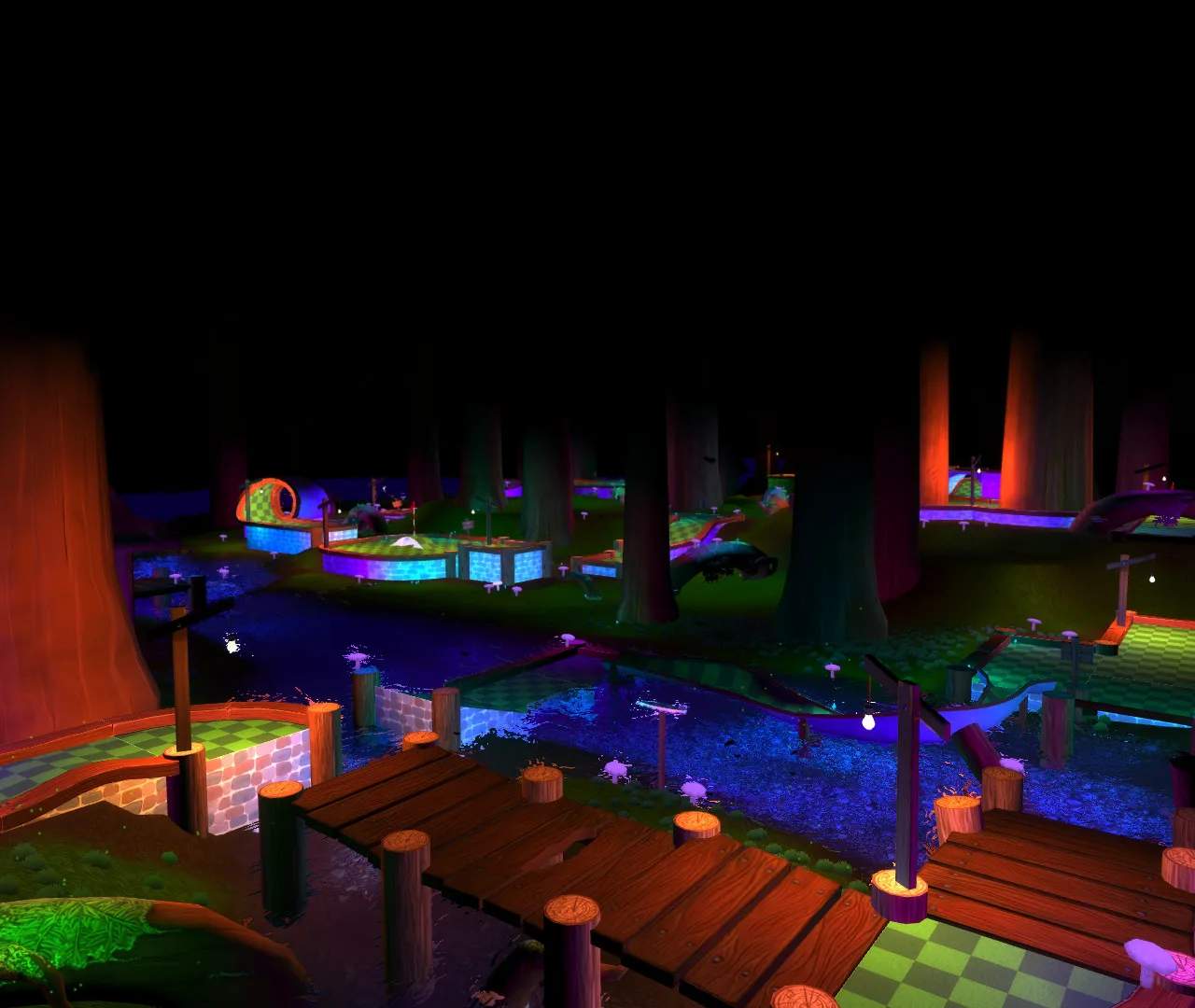
Forest Course: Hole 18 - The Verdant Gauntlet
Welcome to the grand finale of the Forest Course, Hole 18, aptly named "The Verdant Gauntlet." This hole is a true test of precision, power control, and strategic banking, designed to challenge even the most seasoned Golf With Your Friends players. It's a multi-stage, winding path culminating in a tricky uphill putt. Mastering this hole is key to securing a low score on the Forest Course and earning bragging rights among your friends.
Our comprehensive strategy breaks down this formidable hole into three distinct stages, providing exact power percentages and aiming points to guide your ball to glory. Expect to spend a few attempts perfecting these shots, but with practice, you'll consistently sink that birdie or even an elusive hole-in-one!
Hole Overview & Key Challenges
- Winding Gauntlet: A narrow, serpentine path lined with bumpers and walls, demanding precise power and angle control.
- Elevation Changes: Subtle dips and rises throughout the gauntlet, affecting ball speed and trajectory.
- Final Uphill Putt: A significant incline leading directly to the hole, requiring a strong, consistent final shot.
- Out-of-Bounds (OOB) Hazards: Numerous opportunities to go OOB if shots are over-powered or misaligned, leading to costly penalties.
Stage 1: The Initial Approach & First Bank
The first shot sets the tone for the entire hole. Your goal here is to navigate the initial narrow opening and execute a clean bank off the right wall, positioning your ball for the next segment.
Strategy:
- Aiming Point: Position your camera directly behind your ball. Aim slightly to the right of the center of the initial opening, targeting the point where the green turf meets the first wooden bumper on the right. Specifically, aim for the right edge of the first wooden bumper.
- Power: Apply exactly 35-40% power. This range is crucial. Too little, and you won't clear the opening; too much, and you risk bouncing too hard off the subsequent wall, potentially going OOB or getting stuck in a difficult position.
- Expected Outcome: Your ball should travel straight, gently bank off the right wooden bumper, and come to rest smoothly in the middle of the next straight section, ideally before the next significant turn.
Common Pitfalls & Tips:
- Overpowering: If you hit with more than 40% power, the ball might hit the right wall too hard, ricochet across the path, and potentially go OOB on the left side.
- Underpowering: Less than 35% power might leave your ball stuck in the initial opening, requiring an extra stroke.
- Alignment: Ensure your initial aim is precise. Even a slight deviation can cause an unfavorable bounce.
Stage 2: Navigating the Winding Path & Multiple Banks
This is the most intricate part of Hole 18, requiring a series of controlled banks and precise power application. We'll break this down into two sub-stages for clarity.
Sub-Stage 2a: The Left Turn Bank
From your position after Stage 1, you'll face a left-hand turn. The key here is a soft bank off the left wall.
- Aiming Point: From your ball's resting position, aim directly at the center of the left wall's curve. You want to hit it squarely to ensure a predictable bounce.
- Power: Use a precise 25-30% power. This low power ensures a gentle bank and prevents overshooting the next section.
- Expected Outcome: The ball should softly bank off the left wall and roll along the next straight section, ideally coming to a stop before the final right-hand turn.
Common Pitfalls & Tips:
- Hitting the Corner: If you hit the corner of the left wall instead of the curve, the ball's trajectory will be unpredictable, often sending it into the right wall at an awkward angle.
- Too Much Power: Over 30% power here can send your ball careening into the right wall, potentially leading to an OOB or a difficult lie.
Sub-Stage 2b: The Right Turn & Final Approach to the Uphill
This is the last major banking shot before the final putt. Precision is paramount.
- Aiming Point: From your ball's resting position, aim for the inner corner of the final right-hand turn. You want to kiss this corner, allowing the ball to gently pivot around it. Alternatively, a slightly more aggressive but riskier shot is to aim for the middle of the right wall just past the corner, allowing for a soft bank.
- Power: For the "kiss the corner" strategy, use 20-25% power. For the "bank past the corner" strategy, use 30-35% power.
- Expected Outcome: Your ball should smoothly navigate the final turn and roll to a stop at the base of the final uphill section, perfectly lined up for the putt.
Common Pitfalls & Tips:
- Hitting the Outer Wall: If you hit the outer (left) wall on this turn, your ball will likely lose too much momentum or get stuck.
- Overpowering: Too much power here can send your ball flying up the uphill section, potentially overshooting the hole or even going OOB behind it.
- Underpowering: Not enough power will leave your ball stuck in the turn, requiring another stroke to reach the uphill.
Stage 3: The Uphill Putt to Glory
You've navigated the gauntlet; now it's time for the final push. This uphill putt requires consistent power to avoid overshooting or falling short.
- Aiming Point: Position your camera directly behind your ball. Aim dead center at the hole. The path is straight and clear from here.
- Power: This is the critical part. Apply precisely 55-60% power.
- 55% Power: Ideal for a gentle roll into the hole, minimizing the risk of overshooting.
- 60% Power: Provides a bit more momentum, useful if your ball is slightly off-center or if you prefer a more assertive putt.
- Expected Outcome: Your ball will travel smoothly up the incline and drop into the hole for a well-deserved birdie or par.
Common Pitfalls & Tips:
- Underpowering: Anything below 50% power will likely result in your ball rolling back down the hill, requiring another stroke. This is the most common mistake on this final putt.
- Overpowering: While less common than underpowering, hitting with over 65% power can cause your ball to overshoot the hole and potentially go OOB behind it, incurring a penalty.
- Consistency: The key to this putt is consistent power application. Practice this shot in free play to get a feel for the 55-60% range.
Summary of Key Shots & Power Percentages
| Stage | Shot Description | Aiming Point | Recommended Power | Notes |
|---|---|---|---|---|
| 1 | Initial Approach & First Bank | Right edge of 1st wooden bumper | 35-40% | Gentle bank, position for next section. |
| 2a | Left Turn Bank | Center of left wall's curve | 25-30% | Soft bank, avoid hitting corners. |
| 2b | Right Turn & Final Approach | Inner corner of final right turn (or middle of right wall past corner) | 20-25% (corner kiss) / 30-35% (wall bank) | Smooth transition to uphill base. |
| 3 | Uphill Putt | Dead center at the hole | 55-60% | Consistent power is crucial; avoid rolling back. |
Achieving the Hole-in-One Dream
While challenging, a hole-in-one on Hole 18 is achievable with perfect execution. The strategy involves slightly more aggressive power on the banking shots to maintain momentum, hoping for a continuous roll. This is a high-risk, high-reward approach.
- Stage 1 (HIO): 40-45% power, aiming slightly further into the right bumper.
- Stage 2a (HIO): 30-35% power, aiming for a slightly earlier point on the left wall to carry more speed.
- Stage 2b (HIO): 35-40% power, aiming for the middle of the right wall just past the corner, hoping for a strong bank that sends the ball directly up the final incline.
- Stage 3 (HIO): If your ball makes it to the base of the uphill with significant momentum, it might roll in. Otherwise, you'll need the standard 55-60% putt.
Attempting a hole-in-one is best reserved for practice rounds or when you're feeling confident, as a slight miscalculation can easily lead to an OOB penalty.
Final Thoughts & Practice Tips
- Practice Makes Perfect: Hole 18 is a masterclass in precision. Don't get discouraged by early failures. Use the "Restart Hole" option liberally in practice mode.
- Camera Angles: Experiment with different camera angles, especially for the banking shots. Sometimes a top-down view can help with alignment, while a behind-the-ball view is essential for power control.
- Listen to the Sound: The sound of your ball hitting the walls can give you feedback on the power and angle. A soft "thud" is usually good; a loud "clack" might indicate too much power.
- Patience: This is not a hole to rush. Take your time with each shot, carefully lining up your aim and setting your power.
Mastering Hole 18 will not only improve your score on the Forest Course but also significantly enhance your overall precision and power control skills in Golf With Your Friends. Good luck, and may your putts be true!