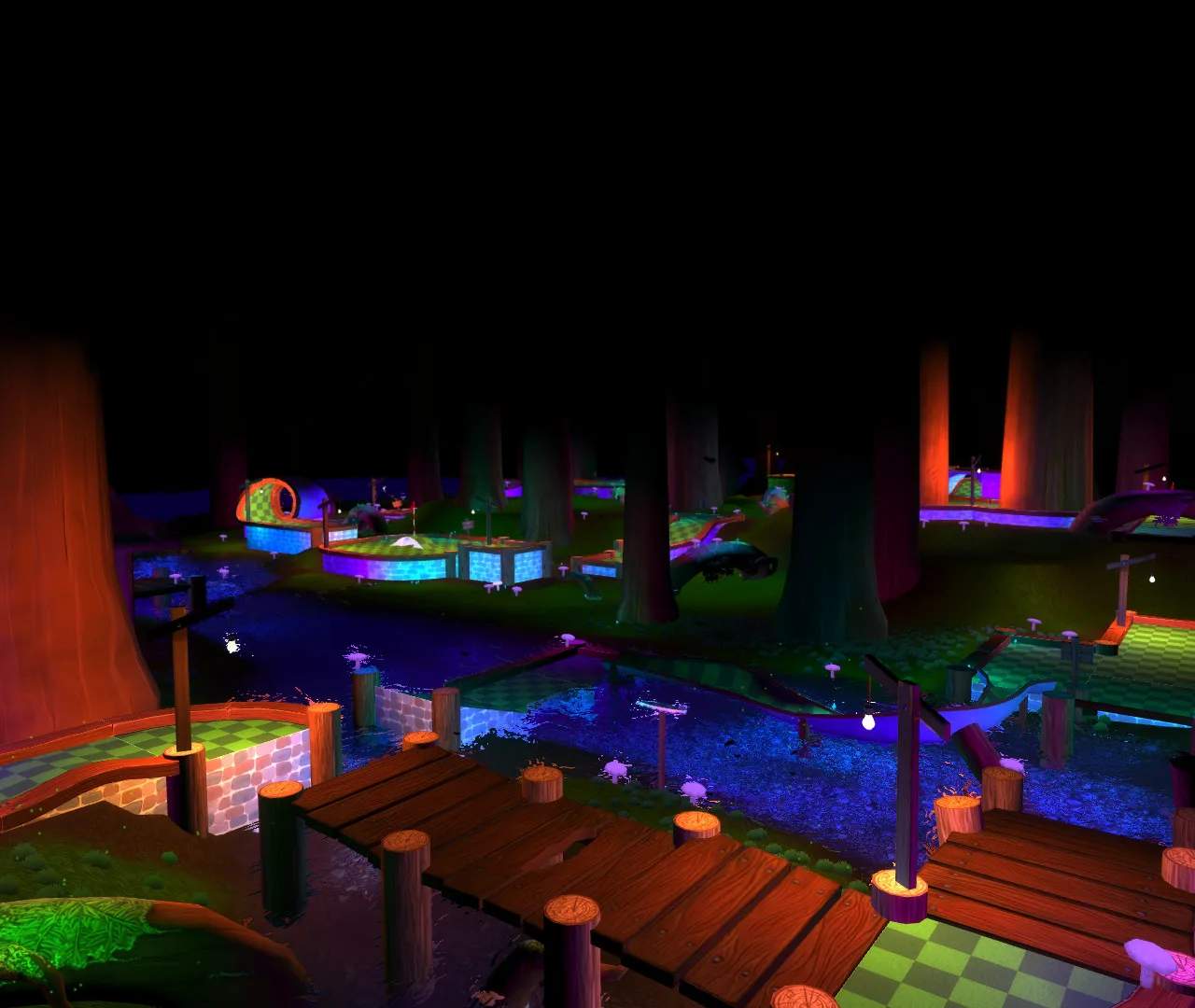
Twilight Course: Hole 16 - The Shifting Labyrinth
Welcome to Hole 16 of the Twilight Course, affectionately known as "The Shifting Labyrinth." This par 5 is arguably the most challenging hole on the entire course, demanding precision, perfect timing, and a deep understanding of its intricate teleporter and moving platform mechanics. Treat this as a multi-stage boss encounter; rushing will almost certainly lead to a high stroke count. Our comprehensive guide will break down each segment, providing exact power percentages and aiming points to navigate this complex puzzle.
Hole Overview & Key Mechanics
- Par: 5
- Primary Obstacles: Three distinct teleporter sequences, multiple synchronized moving platforms, and narrow landing zones.
- Difficulty: Extreme. This hole is a test of patience and execution.
- Strategy Focus: Precision power, precise aiming, and impeccable timing. Observe platform patterns before every shot.
Stage 1: The Initial Teleporter Gauntlet
Your first shot is critical for setting up the rest of the hole. You'll be aiming for a teleporter that leads to a small, elevated platform.
Shot 1: Tee to First Teleporter
The goal here is to land perfectly in the center of the first teleporter. Over-shooting or under-shooting will send you into the abyss or back to the tee.
- Aiming Point: Directly at the center of the teleporter entrance. Look for the faint glow or a central marker if available.
- Power Recommendation: 35-38% Power. This range ensures enough momentum to enter the teleporter without bouncing out or rolling past it.
- Common Pitfalls:
- Too much power: Your ball will likely bounce off the back wall of the teleporter and fall off the edge.
- Too little power: The ball won't reach the teleporter, falling into the void below.
- Off-center shot: Can cause the ball to clip the edge and miss the teleporter entirely.
- Expected Outcome: Your ball teleports to a small, stationary platform high above the main course.
Stage 2: The Moving Platform Ascent
From the first teleporter's exit platform, you'll need to navigate a series of three synchronized moving platforms that ascend and descend in a fixed pattern. Timing is paramount here.
Shot 2: First Platform to Second Teleporter
Observe the pattern of the moving platforms. They move in unison. You need to hit the ball onto the first moving platform, which will then carry it to a position where you can hit it into the second teleporter.
- Platform Observation: Wait until the first moving platform is at its lowest point and just beginning its ascent. This gives you the maximum window for your ball to settle before the platform moves too high.
- Aiming Point: The center of the first moving platform.
- Power Recommendation: 20-22% Power. This is a delicate shot. You want just enough power to reach the platform and stop, not roll off.
- Timing: Hit your shot as the platform starts its upward movement. If you hit it too early, the platform might be too low, and your ball will fall. Too late, and the platform might be too high, making the next shot difficult.
- Expected Outcome: Your ball lands gently on the first moving platform. It will then be carried upwards.
Shot 3: Second Teleporter to Third Teleporter
As your ball is carried by the first moving platform, you'll reach a point where the second teleporter becomes accessible. This teleporter is also on a moving structure, but its movement is synchronized with the platforms.
- Platform Observation: As your ball approaches the peak of the first platform's ascent, the second teleporter will align. You need to hit your ball into this teleporter.
- Aiming Point: The center of the second teleporter entrance. This will require a slight adjustment based on the platform's current position.
- Power Recommendation: 28-30% Power. This shot needs to be firm enough to enter the teleporter but not so strong that it overshoots if the teleporter is at the lower end of its movement.
- Timing: This is the trickiest shot. You need to hit it when the second teleporter is at its most central point relative to your ball's position on the first platform. This often occurs just as the first platform begins its descent.
- Common Pitfalls:
- Missing the teleporter: The ball will fall into the abyss.
- Hitting the teleporter's edge: Can cause an unpredictable bounce.
- Expected Outcome: Your ball teleports to a higher, isolated platform, preparing you for the final descent.
Stage 3: The Final Descent and Green Approach
From the third teleporter's exit, you'll be on a high platform overlooking the green. This stage involves a final moving platform and a precise shot to the green.
Shot 4: Third Teleporter Platform to Final Moving Platform
You'll need to hit your ball onto a final, larger moving platform that acts as a bridge to the green area. This platform moves horizontally.
- Platform Observation: Wait until the final moving platform is at its closest point to your current position and beginning its movement away from you. This gives you the longest window to land.
- Aiming Point: The center of the final large moving platform.
- Power Recommendation: 40-45% Power. This shot needs to cover a good distance and land softly.
- Timing: Hit the ball as the platform is just starting to move away from your position. This ensures your ball lands on the platform and doesn't roll off the back as it moves.
- Expected Outcome: Your ball lands on the final moving platform and is carried towards the green.
Shot 5: Final Moving Platform to Green
As the final moving platform carries your ball closer to the green, you'll have an opportunity for your approach shot. The green is often slightly elevated or has subtle undulations.
- Platform Observation: As the platform reaches its furthest point towards the green, you'll have the best angle.
- Aiming Point: Analyze the green's contours. Aim for a flat spot near the hole, accounting for any slopes.
- Power Recommendation: 25-30% Power for a controlled approach. Adjust based on the distance and any wind effects.
- Timing: Take your shot when the platform is stable and provides the clearest path to the green. Don't rush; wait for the perfect alignment.
- Common Pitfalls:
- Over-shooting the green: Can lead to an out-of-bounds or a difficult chip.
- Under-shooting: Your ball might fall off the platform or into a bunker.
- Expected Outcome: Your ball lands on the green, ideally setting up a putt for par or birdie.
General Strategy Tips for The Shifting Labyrinth
- Patience is a Virtue: This hole cannot be rushed. Take your time to observe platform patterns and teleporter movements before every shot. A missed shot often means restarting the entire sequence.
- Practice Mode is Your Friend: If you're struggling, use practice mode to repeatedly attempt specific shots without penalty. This allows you to fine-tune your power and timing.
- Camera Angles: Utilize different camera angles (especially the overhead view) to get a better perspective on platform movements and teleporter alignment.
- Don't Be Afraid to Reset: If you make a critical error early in a sequence, sometimes it's better to reset the hole (if playing in a casual mode) or take the penalty stroke and restart from the last safe point rather than trying to recover from an impossible lie.
- Consistency Over Heroics: Aim for consistent, safe shots rather than risky attempts at a hole-in-one. Par is an excellent score on this hole.
Mastering Hole 16 is a true accomplishment in "Golf With Your Friends." By following these detailed steps and practicing your timing, you'll conquer The Shifting Labyrinth and significantly improve your overall score on the Twilight Course.