Gameplay Mechanics & Systems
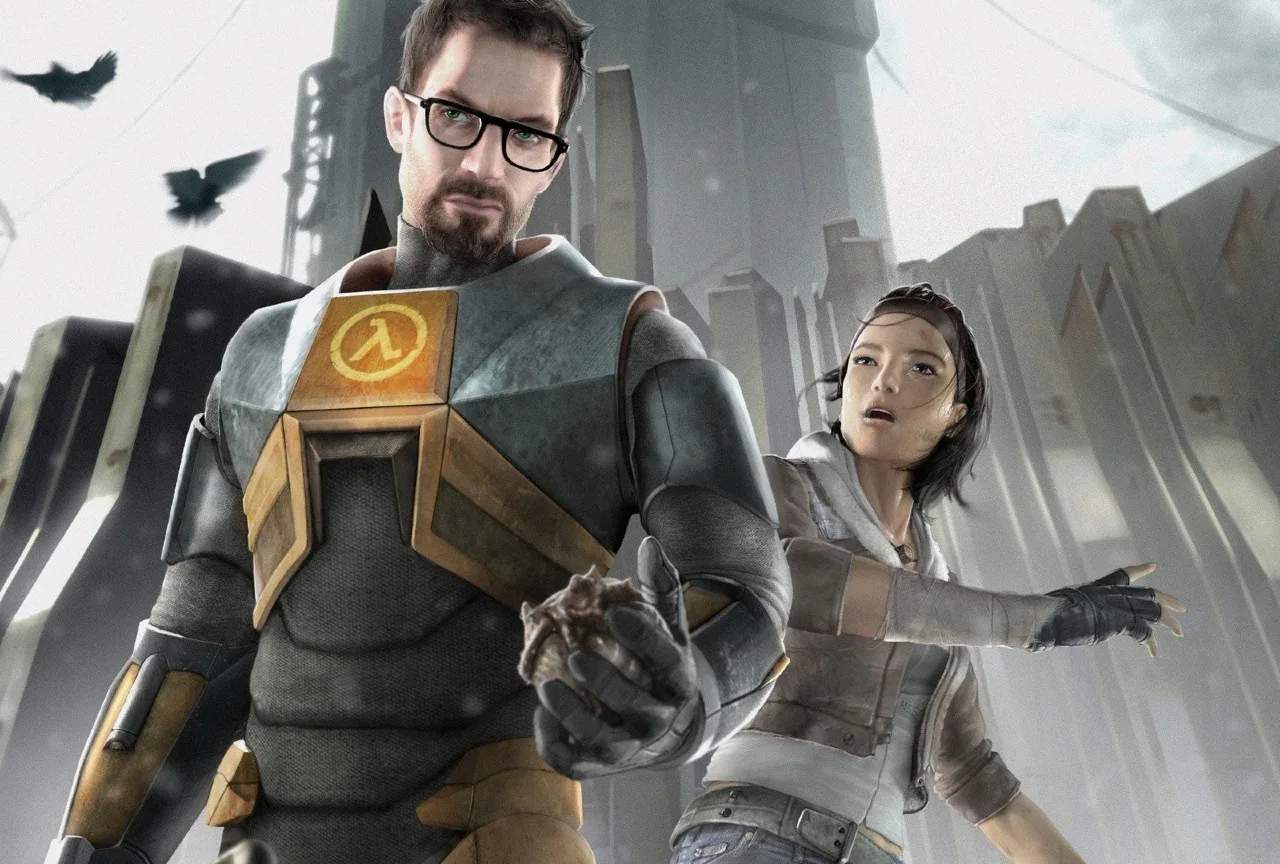
Half-Life 2's gameplay is a masterclass in player agency and emergent gameplay, built upon a foundation of sophisticated mechanics and interconnected systems. From its revolutionary physics engine to its intuitive controls and environmental interactions, the game consistently empowers You to approach challenges in creative ways, making each playthrough a unique experience.
At the core of Half-Life 2's gameplay is its groundbreaking Source Engine. This engine is responsible for the game's stunning visuals, realistic physics, and seamless world des. Unlike many games of its era, Half-Life 2 features a continuous world with no loading screens between levels, creating a truly immersive experience. The engine also facilitates advanced AI, allowing enemies to react dynamically to the player's actions and the environment.
The Gravity Gun is arguably the most iconic gameplay mechanic introduced in Half-Life 2. This versatile tool allows Gordon Freeman to manipulate physics objects in the environment, picking them up, moving them, and hurling them at enemies or obstacles. It's not just a weapon; it's a puzzle-solving tool, a traversal aid, and a primary means of interacting with the world. Its secondary fire mode can also be used to disarm enemies or pull objects towards the player.
Health and Suit Management are critical survival mechanics. Gordon's health is represented by a health bar, which can be replenished by health packs scattered throughout the environment or by standing in a healing beam emitted by Vortigaunts. His HEV (Hazardous Environment) suit provides a protective layer and also displays his current health and ammo. The suit's energy can be recharged by energy stations or by Vortigaunts.
Combat in Half-Life 2 is a dynamic blend of shooting, environmental interaction, and tactical positioning. Enemies exhibit intelligent behavior, flanking the player, taking cover, and coordinating attacks. The game encourages players to use several weapons and tactics, adapting to different enemy types and combat scenarios. The introduction of physics-based combat means that not only can you shoot enemies, but you can also use the environment against them.
Puzzle Solving is integrated seamlessly into the gameplay. Many puzzles rely on the game's physics engine, requiring players to manipulate objects, redirect energy flows, or use the Gravity Gun to overcome obstacles. These puzzles are rarely arbitrary and often feel like natural extensions of the game's world and mechanics.
NPC Interaction and Companions: Half-Life 2 features several non-player characters (NPCs) who can assist Gordon. These include resistance fighters who provide combat support and Vortigaunts who offer healing and unique abilities. The game also features companion mechanics, where certain NPCs follow Gordon and assist him in various ways, adding a layer of strategic depth to combat and exploration.
Vehicles and Transportation: As Gordon progresses, he gains access to various vehicles, such as the Airboat and the iconic Dune Buggy. These vehicles are not just for fast travel; they often become integral parts of gameplay segments, requiring skillful operation to navigate treacherous terrain, overcome obstacles, and engage in combat.
Environmental Storytelling: The game masterfully uses its environments to convey narrative and lore. Details in the world, from propaganda posters to the state of buildings, tell a story of oppression and resistance without explicit exposition, immersing You in the game's dystopian setting.
These interconnected mechanics work in harmony to create a fluid and engaging gameplay experience that has set a benchmark for first-person shooters and action-adventure games alike.