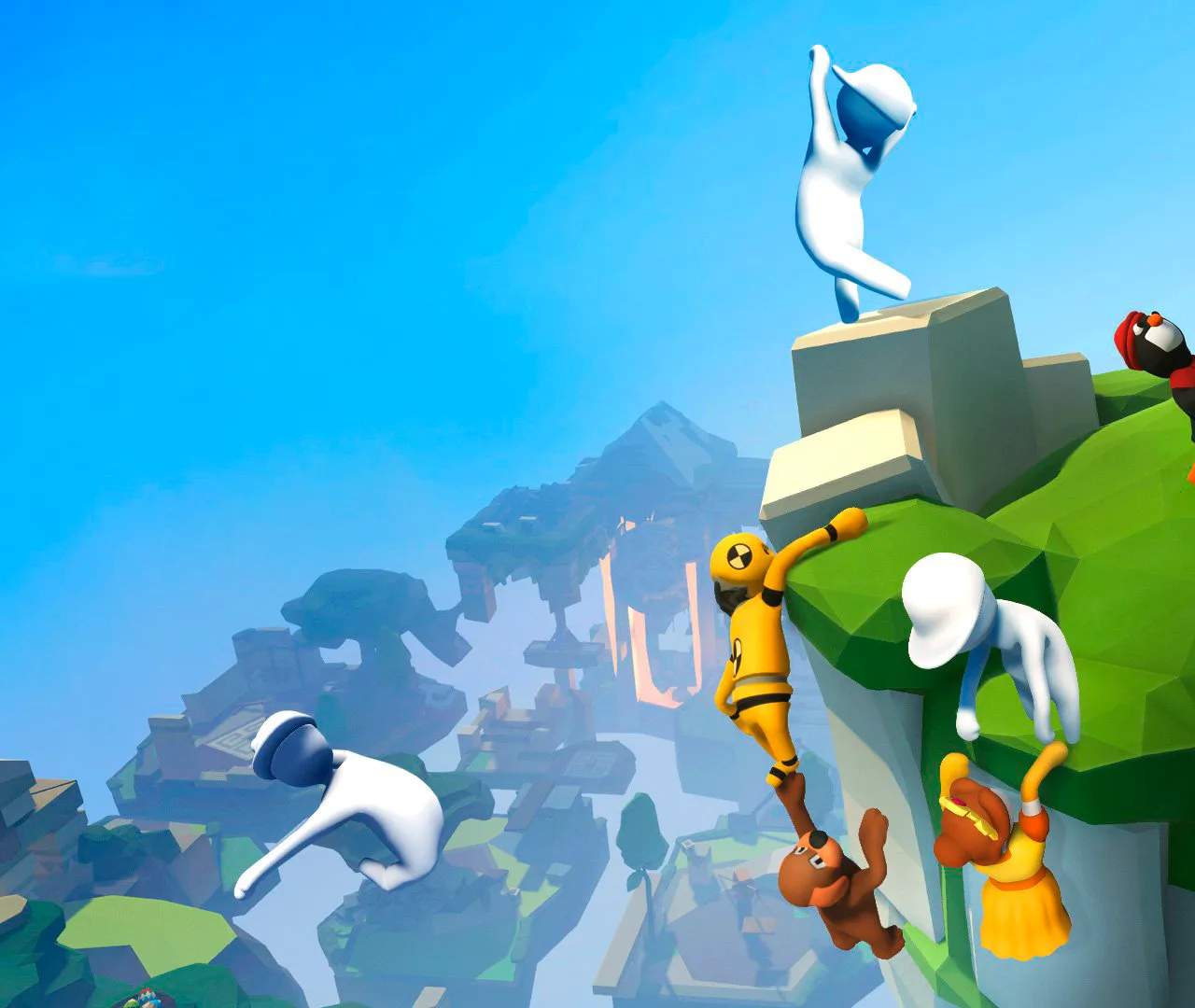
Co-op Strategies
Human: Fall Flat truly shines when played with friends. While the core mechanics remain the same, co-op introduces unique challenges and opportunities for creative problem-solving. This section will guide you through effective teamwork, highlighting specific scenarios and techniques to overcome obstacles together.
Communication is Key
Before diving into any puzzle, establish clear communication with your teammates. Whether you're using voice chat or in-game emotes, coordinating your actions is paramount. Misunderstandings can lead to hilarious but frustrating failures.
- Verbal Callouts: Clearly state your intentions. "I'm going to pull this lever," or "Can you grab that box?"
- Visual Cues: Pointing, waving, or even falling intentionally can draw attention to an area or object.
- Role Assignment: For complex puzzles, quickly decide who will perform which task.
Leveraging Multiple Bodies
The "Human Ladder" Technique
Many vertical challenges that seem impossible solo become trivial with a human ladder. This technique is fundamental for reaching high ledges or activating distant switches.
- The Base: One player positions themselves firmly on the ground or a stable platform. They should stand as tall as possible.
- The Climber: The second player jumps onto the first player's head. The base player can often lift the climber slightly by jumping or wiggling.
- The Grab: Once the climber is high enough, they can grab the ledge or object. The base player can then release, allowing the climber to pull themselves up.
- Assisting Up: If the climber struggles, the base player can attempt to grab the climber's legs or torso and push them upwards.
Weight Distribution and Counterbalance
Certain puzzles involve scales, pressure plates, or unstable platforms that require precise weight distribution. Co-op makes these much easier.
- Balancing Beams (e.g., "Castle" level, Drawbridge): If one player is crossing a narrow beam, another player can stand on the opposite side of the pivot point to act as a counterbalance, preventing the beam from tipping too severely.
- Pressure Plates (e.g., "Mansion" level, Library Puzzle): Some plates require more weight than a single Human can provide. Two or more players standing on a single plate will activate it.
- Catapults (e.g., "Castle" level): One player can act as the "ammunition" while another operates the catapult. Ensure the launching player is firmly gripping the catapult's basket before the other player releases the tension.
Object Manipulation and Transportation
Team Lifting Heavy Objects
Some objects, like large crates or boulders, are too heavy for one Human to move effectively. Teamwork is essential here.
- Coordinated Grab: Both grab the object simultaneously, ideally on opposite sides for better leverage.
- Synchronized Movement: Move in unison. If one player pulls while the other pushes, the object will likely get stuck or fall. Count down ("3, 2, 1, pull!") for best results.
- Overcoming Obstacles: For particularly stubborn objects, one player can lift while the other pushes or pulls from a different angle.
The "Human Crane" for Item Delivery
When an item needs to be moved across a gap or lifted to a high platform, but cannot be thrown, the human crane is your solution.
- The Carrier: One player grabs the item securely.
- The Lifter: The second player grabs the carrier. The lifter can then jump, swing, or be pulled by a third player to elevate the carrier and the item.
- Careful Release: Once in position, the carrier can carefully drop or place the item.
Advanced Co-op Techniques
The "Human Springboard"
For extreme vertical boosts, the springboard technique can launch a player much higher than a standard jump.
- The Springboard: One player lies flat on their back.
- The Jumper: The second player runs and jumps onto the springboard player's chest or stomach.
- The Launch: As the jumper lands, the springboard player quickly jumps upwards, effectively "bouncing" the jumper even higher. Timing is crucial for maximum height.
Tug-of-War for Stuck Objects
If an object is wedged or stuck, a coordinated tug-of-war can free it.
- Opposite Sides: Players grab the object from opposing sides.
- Synchronized Pull: Both players pull simultaneously in their respective directions. The combined force can dislodge the object.
Specific Level Examples (Co-op Focus)
"Water" Level: The Dam Gate
Opening the dam gate requires two levers to be held down simultaneously. This is a classic co-op puzzle.
- Player 1: Positions themselves at one of the levers and holds it down.
- Player 2: Positions themselves at the second lever and holds it down.
- Coordination: Both players must hold their respective levers until the gate is fully open. If one player lets go, the gate will begin to close.
"Power Plant" Level: The Generator Room
Activating the main generator often involves multiple steps that are easier with two or more players.
- Circuit Breaker Activation: One player can be responsible for flipping the various circuit breakers, while another monitors the power flow or clears obstacles.
- Conveyor Belt Management: If items need to be placed on a conveyor belt and then activated, one player can load items while the other operates the belt controls.
Remember, Human: Fall Flat is all about experimentation and creative solutions. Don't be afraid to try unconventional approaches with your friends – often, the most ridiculous ideas lead to the most satisfying breakthroughs!