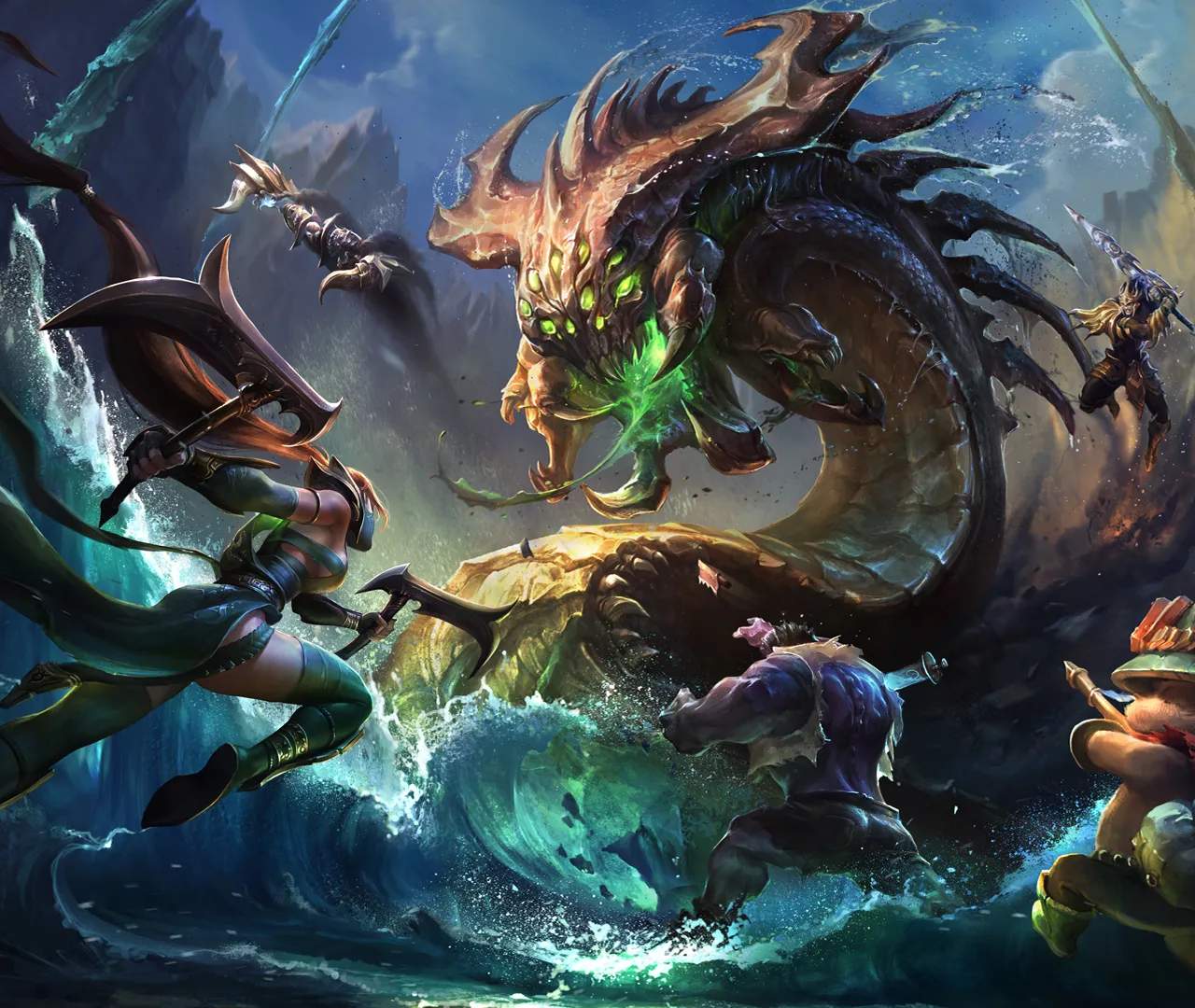
Game Flow and Phases Overview
Understanding the natural ebb and flow of a League of Legends match is crucial for consistent improvement. While every game presents unique challenges, they generally progress through distinct phases, each demanding different strategies and priorities. Mastering these phases, from the initial minion wave to the final Nexus destruction, will elevate your gameplay.
I. Early Game (Laning Phase)
The early game typically spans from 0:00 until the first few towers fall or major team fights erupt. This phase is characterized by individual lane matchups and farming efficiency.
- Objective: Secure Gold and Experience, deny your opponent, and establish lane dominance.
- Key Actions:
- Last Hitting: Focus on landing the killing blow on enemy minions to gain gold. Aim for 10-12 minions per minute as a benchmark.
- Trading: Exchange damage with your lane opponent to gain a health advantage. Understand your champion's power spikes (e.g., after purchasing
Doran's Blade
or hitting level 3). - Vision Control: Place
Stealth Wards
in key locations (river bushes, tribush) to prevent ganks and track enemy jungler movements. PurchaseControl Wards
to deny enemy vision. - Jungle Tracking: Pay attention to where the enemy jungler starts (e.g., Red Buff or Blue Buff) to anticipate their gank paths.
- First Blood Potential: Look for opportunities to secure an early kill, especially with jungler assistance. This provides a significant gold and experience lead.
- Itemization: Start with a
Doran's Blade
,Doran's Ring
, orDoran's Shield
depending on your champion and matchup. Prioritize components for your first major item (e.g.,Sheen
for Trinity Force,Lost Chapter
for Luden's Tempest).
II. Mid Game (Skirmishes and Objective Control)
The mid game begins as players start to leave their lanes more frequently, typically around 10-15 minutes, and focuses on small-scale team fights and securing neutral objectives.
- Objective: Secure Dragon and Rift Herald, push down outer towers, and group for skirmishes.
- Key Actions:
- Dragon Control: The first Dragon spawns at 5:00. Prioritize securing these objectives as a team for their powerful buffs. Ensure vision around the Dragon pit with
Control Wards
andSweeping Lens
. - Rift Herald: Spawns at 8:00. Securing the Herald and using its charge to take down an inner tower can open up the map significantly.
- Tower Pushing: After securing a kill or an objective, look to push down nearby towers. Outer towers are crucial for map control.
- Roaming: Mid laners and supports should look to roam to side lanes to create numerical advantages and secure kills.
- Grouping: While not full 5v5 team fights yet, players will start to group for objectives or to contest enemy pushes.
- Dragon Control: The first Dragon spawns at 5:00. Prioritize securing these objectives as a team for their powerful buffs. Ensure vision around the Dragon pit with
- Itemization: Complete your first major item (e.g.,
Infinity Edge
,Luden's Tempest
,Sunfire Aegis
). Begin building towards your second core item, often a defensive option or a complementary damage item.
III. Late Game (Team Fights and Baron/Elder Dragon)
The late game typically starts around 25-30 minutes, or when multiple inhibitors are exposed. This phase is characterized by high stakes team fights, powerful neutral objectives, and a focus on ending the game.
- Objective: Secure Baron Nashor and Elder Dragon, destroy inhibitors, and push for the Nexus.
- Key Actions:
- Baron Nashor: Spawns at 20:00. The Baron buff provides a massive advantage for pushing and ending the game. Securing Baron requires careful vision control, baiting the enemy, and executing a clean team fight.
- Elder Dragon: Spawns 6 minutes after the fourth elemental dragon is slain. This buff provides an execution effect on low-health enemies and amplifies previous Dragon buffs, making it incredibly powerful for closing out games.
- Inhibitor Pushing: Destroying an inhibitor spawns super minions in that lane, creating immense pressure. Aim to destroy all three inhibitors to spawn empowered super minions.
- Team Fighting: Late game revolves around decisive 5v5 team fights. Positioning, ability usage, and target focus are paramount.
- Split Pushing: While the main team pressures an objective, a strong duelist can split push a side lane to create pressure and force enemy resources.
- Itemization: Complete your core build (3-4 items). Consider selling your starting item (
Doran's Blade
, etc.) for a more powerful late-game item. PurchaseElixirs
(e.g.,Elixir of Iron
,Elixir of Sorcery
) for their temporary stat boosts before major engagements.
IV. Post-Game (Analysis and Improvement)
Even after the Nexus explodes, the game isn't truly over. The post-game lobby offers valuable insights for improvement.
- Objective: Review performance, identify strengths and weaknesses, and learn from mistakes.
- Key Actions:
- Scoreboard Review: Analyze KDA, CS, damage dealt, and damage taken. Compare your stats to your teammates and opponents.
- Replay Analysis: Watch replays of your games, especially close losses or dominant wins. Focus on decision-making, positioning, and ability usage.
- Identify Patterns: Did you consistently miss last hits? Did you get caught out of position frequently? Were your ward placements effective?
- Formulate Actionable Goals: Based on your analysis, set specific goals for your next game (e.g., "improve CS by 10 at 10 minutes," "ward defensively around Baron at 20 minutes").