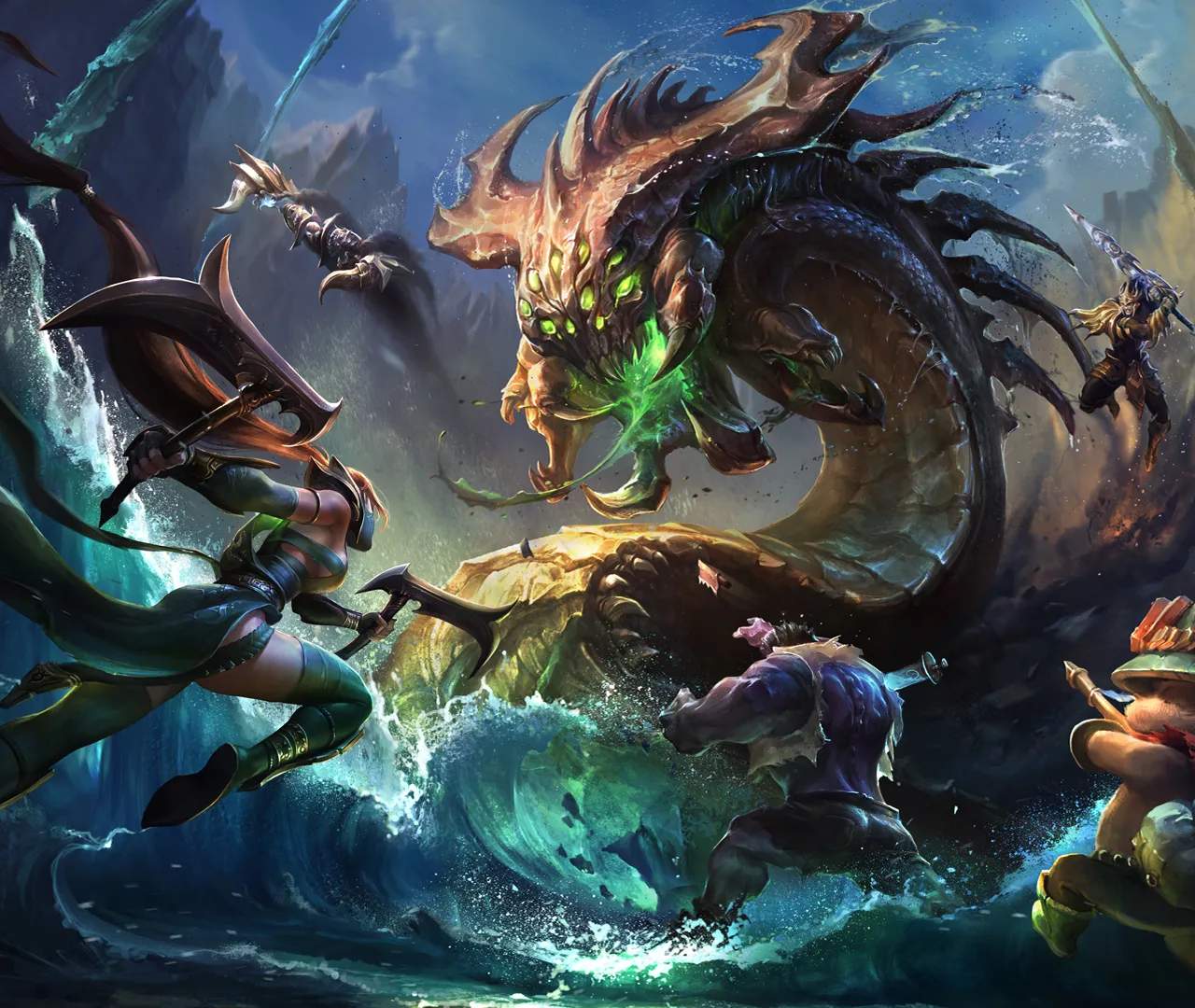
Securing Dragons
Dragons are crucial neutral objectives in League of Legends that provide significant permanent buffs to your team, influencing the flow and outcome of the game. Understanding their mechanics, spawn timers, and strategic importance is vital for any aspiring Summoner.
Dragon Mechanics and Spawn Timers
- Initial Spawn: The first elemental dragon spawns at 5:00 minutes into the game.
- Subsequent Spawns: After an elemental dragon is defeated, the next one will spawn exactly 5:00 minutes later.
- Location: All dragons spawn in the Dragon Pit, located in the bottom side of the river, equidistant from both blue and red side bases.
- Types of Dragons: There are four elemental dragons (Infernal, Mountain, Ocean, Cloud) and the powerful Elder Dragon. The type of elemental dragon that spawns is random, but once the first two elemental dragons have been slain, the Rift transforms to reflect one of the elemental types, and only that elemental type will spawn for the remainder of the elemental dragon phase.
Elemental Dragons and Their Buffs
Each elemental dragon provides a unique, permanent buff to your entire team upon defeat. These buffs stack, making dragon control increasingly impactful as the game progresses.
- Infernal Dragon: Grants bonus Attack Damage (AD) and Ability Power (AP). Ideal for teams focused on burst damage and scaling offensive stats.
- Mountain Dragon: Grants bonus Armor and Magic Resist. Excellent for increasing team durability, especially against mixed damage compositions or strong engage.
- Ocean Dragon: Grants bonus health regeneration. Provides sustain, allowing teams to stay on the map longer and recover from skirmishes more effectively.
- Cloud Dragon: Grants bonus Ability Haste for your ultimate ability. Accelerates ultimate cooldowns, enabling more frequent power spikes and teamfight opportunities.
The Dragon Soul: A Game-Changing Objective
The Dragon Soul is a powerful, permanent buff granted to the first team that secures four elemental dragons. Once a team obtains the Dragon Soul, elemental dragons will no longer spawn. Instead, the Elder Dragon will begin to spawn.
Each Dragon Soul is unique to the elemental type that transformed the Rift:
- Infernal Soul: Every 3 seconds, your next basic attack or ability deals a burst of adaptive damage in an area.
- Mountain Soul: After not taking damage for 5 seconds, gain a shield that lasts indefinitely. The shield's strength scales with bonus AD, AP, and health.
- Ocean Soul: Dealing damage to enemies restores a percentage of your missing health and mana.
- Cloud Soul: Gain bonus movement speed, which is significantly increased after casting your ultimate ability.
Securing the Dragon Soul often provides a decisive advantage, making it a primary objective for teams in the mid-to-late game.
Elder Dragon: The Ultimate Objective
Once a team has claimed the Dragon Soul, or after 35 minutes if no team has claimed it, the Elder Dragon will begin to spawn. The Elder Dragon is the most powerful neutral objective in the game, offering a temporary but incredibly potent buff.
- Elder Dragon Buff: Grants true damage burn on attacks and abilities, and an "Execute" effect that instantly kills enemies below a certain health threshold (usually 20%). This buff is temporary but can single-handedly win teamfights and close out games.
- Spawn Timer: The Elder Dragon spawns 6 minutes after the Dragon Soul is claimed, or 6 minutes after the 35-minute mark if no Soul was claimed. Subsequent Elder Dragons spawn 6 minutes after the previous one is defeated.
Strategic Considerations for Dragon Control
Effective dragon control requires careful planning, coordination, and execution. Here are key strategies:
- Vision Control: Always prioritize placing wards around the Dragon Pit and its entrances (river bushes, jungle camps) before attempting a dragon. This denies enemy vision and provides early warning of potential contests. Control wards are invaluable here.
- Jungler's Smite: Your jungler's Smite is critical for securing dragons. It deals a large amount of true damage, making it essential for out-smite battles against enemy junglers. Ensure your jungler has Smite available and is healthy enough to contest.
- Lane Priority: Before attempting a dragon, push out your mid and bottom lanes. This forces enemy laners to choose between losing minion gold/experience or rotating to contest the dragon, giving your team a numbers advantage or a free objective.
- Team Composition Synergy: Prioritize dragons that synergize with your team's strengths.
- Early Game Teams: May prioritize any dragon to gain an early advantage.
- Scaling Teams: Might focus on Infernal or Cloud for late-game power spikes.
- Tanky Compositions: Benefit greatly from Mountain for added durability.
- Poke/Sustain Compositions: Ocean can enhance their ability to wear down opponents.
- Timing is Key: Look for opportunities when the enemy jungler is on the opposite side of the map (e.g., top lane gank, taking Rift Herald) or when key enemy ultimate abilities are on cooldown.
- Baiting and Contesting: Sometimes, starting a dragon isn't about taking it, but about baiting the enemy team into a disadvantageous fight. Be prepared to pivot from dragon to a teamfight if the enemy engages poorly.
- The "2-Dragon Rule": If your team has secured two elemental dragons and the enemy has none, consider dedicating more resources to securing the third and setting up for Dragon Soul.
- Post-Dragon Actions: After securing a dragon, look for opportunities to push lanes, take towers, or invade the enemy jungle. Don't just recall immediately unless necessary.
- No Vision: Attempting a dragon without proper vision is a common mistake that can lead to being ambushed and losing both the dragon and team members.
- No Smite: Engaging a dragon without your jungler's Smite available significantly increases the risk of it being stolen by the enemy.
- Low Health/Mana: Starting a dragon when your team is low on health or mana makes you vulnerable to enemy engages. Recall and reset if necessary.
- Ignoring Lane States: Forcing a dragon when your mid and bot lanes are pushed in allows the enemy to easily collapse on you.
- Over-Committing: Don't tunnel vision on securing a dragon if it means giving up multiple towers, inhibitors, or even Baron. Understand when to concede an objective.
- Lack of Communication: Clear communication with your team about dragon timers, intentions, and pings for enemy movements is crucial for successful dragon plays.
Common Pitfalls and How to Avoid Them
Mastering dragon control is a hallmark of strong team play and significantly increases your chances of victory on the Rift.