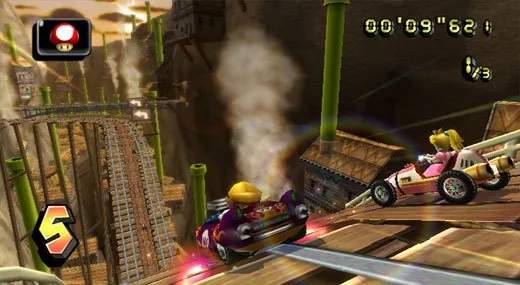
Online Play: A Look Back and Beyond
Venturing into the online world of Mario Kart Wii once offered a thrilling dimension of competitive racing against players from around the globe. While the core mechanics remained the same, online play introduced unique challenges and strategies due to the unpredictable nature of human opponents. Mastering these nuances was key to elevating your game significantly.
Important Historical Note: The official Nintendo Wi-Fi Connection service, which powered Mario Kart Wii's online multiplayer, was discontinued on May 20, 2014. This means that, as of today, players cannot connect to Nintendo's official servers for online play directly through their Wii console. The information below reflects the experience as it once was, and also touches upon community-driven efforts to revive online functionality.
The Golden Age of Online Racing (2008-2014)
During its active period, Mario Kart Wii's online component was a vibrant hub of activity. Players could engage in two primary modes:
- Worldwide/Continental Races: Compete against up to 11 other players from across the globe or within your continent. This was the most popular mode, offering constant variety in opponents and tracks.
- Friend Races: Set up private races with players on your Wii Friend Roster. This allowed for more organized and friendly competition.
Connecting Online (Historical Process)
For those who experienced it, connecting to Nintendo Wi-Fi Connection was a straightforward process:
- From the Mario Kart Channel or the main menu, select "Nintendo WFC."
- Choose "Worldwide" or "Continental" for public matches, or "Friends" to join/create a private room.
- The game would then search for available players and lobbies.
- Once enough players were found (typically 12 for public races), a track would be randomly selected from the available courses.
- Players would then vote on the next track after each race.
Online Ranking and VR/BR
Online play featured a ranking system known as VR (Versus Rating) and BR (Battle Rating). These numerical values increased when you performed well in races or battles and decreased with poor performance. A higher VR/BR indicated greater skill, and the matchmaking system attempted to pair players with similar ratings, though this wasn't always perfect. Achieving a high VR was a badge of honor for many dedicated players.
Strategies for Online Success (Then and Now)
Even without official servers, the strategies honed during the online era remain valuable for local multiplayer or if you engage with community-run servers. The unpredictable nature of human opponents demands a different approach than racing against AI.
1. Item Management is Paramount
Unlike AI, human players are ruthless with items. Knowing when to hold, use, or even discard an item can turn the tide.
- Defensive Items: Always try to hold a defensive item (Green Shell, Red Shell, Banana) behind you, especially when in first place. This protects against incoming Red Shells and even Blue Shells if timed perfectly (though incredibly difficult).
- Offensive Items: Don't just fire indiscriminately. Aim your Green Shells carefully, and use Red Shells to punish opponents who are bunched up or just ahead.
- Star/Mega Mushroom: These are not just speed boosts. Use them to cut corners off-road, recover from falls, or plow through item boxes for quick item cycling.
- Blue Shell (Spiny Shell): The bane of every first-place racer. There's no foolproof defense, but a well-timed Mushroom or Star can help you recover quickly after impact. Some advanced players could even dodge them with a perfectly timed drift boost, but this was extremely rare.
2. Master the Drifts and Boosts
Mini-Turbos are your bread and butter. Consistently chaining them together is crucial for maintaining speed and gaining ground.
- Snaking: While controversial and often nerfed in later games, "snaking" (rapidly drifting left and right to chain mini-turbos) was a highly effective, albeit skill-intensive, technique in Mario Kart Wii. Mastering it provided a significant speed advantage.
- Slipstreaming: Draft behind opponents to gain a speed boost. This is excellent for catching up or setting up an overtake.
- Tricks: Always perform a trick off ramps and bumps for a small speed boost. Every little bit helps.
3. Character and Vehicle Selection
While personal preference plays a role, certain combinations were historically dominant in online play due to their stat distributions.
- Heavy Characters: Often favored for their higher speed and weight, making them less susceptible to being pushed around. Popular choices included Funky Kong, Bowser, and Rosalina.
- "Flame Runner" (Bowser Bike) / "Mach Bike": These bikes were incredibly popular due to their excellent speed, drift, and mini-turbo stats. The Flame Runner, in particular, was a common sight at the top tiers of online play.
- "Spear" (Bullet Bike): Another strong bike option, offering good acceleration and handling.
Experiment with different combinations to find what suits your playstyle, but be aware of the meta that developed around these top-tier choices.
4. Track Knowledge and Shortcuts
Knowing every corner, every ramp, and every shortcut is vital. Online opponents will exploit every advantage.
- Mushroom Shortcuts: Identify where Mushrooms can be used to cut across grass or sand.
- Boost Panel Lines: Learn the optimal lines to hit every boost panel on a track.
- Cornering: Practice taking corners tightly and efficiently to maximize mini-turbo opportunities.
5. Adaptability and Mental Game
Online racing is chaotic. You'll be hit by items, fall off tracks, and experience frustrating moments. Staying calm and adapting to the situation is key.
- Don't Give Up: Even if you're in last place, a well-placed Star or Bullet Bill can bring you back into contention.
- Observe Opponents: Pay attention to how others are racing. Are they aggressive? Do they hold items? This can inform your own strategy.
The Post-Nintendo Wi-Fi Connection Era: Community Alternatives
Despite the official shutdown, the dedicated Mario Kart Wii community has worked to keep online play alive. Projects like Wiimmfi allow players to connect to custom servers, effectively restoring online functionality for those willing to set it up.
How Wiimmfi Works (General Overview)
Wiimmfi replaces the defunct Nintendo Wi-Fi Connection servers with community-run ones. This typically involves:
- Modifying your Wii: This often requires homebrew software to redirect network traffic.
- Patching the game: Applying a patch to your Mario Kart Wii game disc or digital copy to point it to the Wiimmfi servers.
- Connecting: Once set up, you can access the online modes much like you would have during the official service's heyday.
Disclaimer: Engaging with homebrew and custom servers carries inherent risks and is not officially supported by Nintendo. Players interested in this option should research thoroughly and proceed with caution, understanding the technical requirements and potential implications.
While the official online experience of Mario Kart Wii is a fond memory, its legacy of competitive racing and the strategies it fostered continue to influence players. The community's efforts to keep it alive are a testament to the game's enduring appeal.