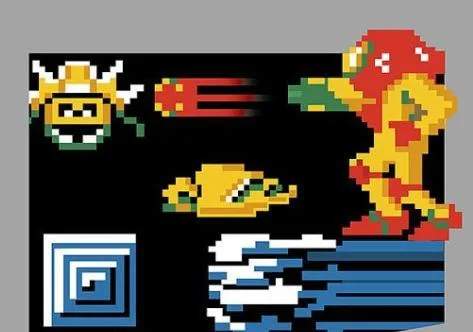
Version Differences / Glitches
This section details the notable differences between the original 1986 NES release of Metroid and its various re-releases, particularly the Metroid: Zero Mission port on the Game Boy Advance (GBA) where applicable, as well as common glitches found in the NES version. Understanding these distinctions is crucial for players, especially those attempting speedruns or seeking to exploit game mechanics.
NES Version (1986)
The original Metroid for the Nintendo Entertainment System is a landmark title, known for its non-linear exploration and atmospheric design. However, it also features several quirks and glitches that can be exploited or encountered during gameplay.
NES Version Differences from Later Releases
- Password System: Unlike modern games with save files, the NES Metroid uses a 24-character password system to resume gameplay. These passwords can be manipulated to grant various advantages, such as starting with all items, infinite health, or even as the "Justin Bailey" code (see below).
- No Map System: The original NES game does not feature an in-game map. Players must rely on memory, hand-drawn maps, or external resources to navigate the labyrinthine world of Zebes. This significantly increases the challenge of exploration.
- Limited Control Scheme: Samus's movement is more rigid compared to later titles. There's no diagonal aiming, and jumping mechanics are less forgiving.
- Energy Tank Behavior: In the NES version, collecting an Energy Tank immediately refills Samus's health to full. This can be strategically used to heal during difficult encounters.
- Enemy AI and Placement: Some enemy behaviors and their placements differ slightly from later ports, particularly in Zero Mission, which often rebalances difficulty.
- Music and Sound Effects: The iconic chiptune soundtrack and sound effects are unique to the NES hardware.
- Graphical Limitations: Due to NES hardware limitations, the graphics are simpler, and the color palette is more restricted.
Common NES Glitches and Exploits
The NES version is rich with glitches that can be used for sequence breaking, item duplication, or simply for fun. Be aware that some of these can soft-lock the game or lead to unexpected behavior.
- Door Glitch / Wall Jump (Early Access):
This is one of the most famous and useful glitches, allowing Samus to bypass many early game obstacles and acquire items out of sequence.
- Prerequisite: Morph Ball.
- Location: Any vertical shaft with a door at the bottom, particularly useful in Brinstar to access Norfair early or in Norfair itself to skip needing the High Jump Boots for certain areas.
- Execution:
- Morph into a ball and position Samus directly against the closed door at the bottom of a vertical shaft.
- Drop a bomb.
- As the bomb explodes, un-morph into Samus and immediately jump.
- If timed correctly, Samus will be propelled upwards by the bomb explosion and simultaneously "clip" through the door, allowing her to jump higher than normal and potentially reach ledges that would otherwise require High Jump Boots or Screw Attack.
- This can be used to get to the Varia Suit or Screw Attack much earlier than intended, significantly altering the game's progression.
- Common Pitfall: Incorrect timing can lead to Samus simply taking damage from the bomb or not gaining enough height. Practice is key.
- Item Duplication Glitch (Missiles/Energy Tanks):
This glitch allows players to obtain multiple copies of certain items, most notably Missile Expansions and Energy Tanks, beyond their intended limits.
- Prerequisite: Access to an item room with a Missile Tank or Energy Tank.
- Execution:
- Enter the room containing the item.
- Collect the item.
- Immediately after collecting it, exit the room through the same door you entered.
- Re-enter the room. The item should have respawned.
- Repeat the process to accumulate as many Missiles or Energy Tanks as desired.
- Strategy Tip: This is extremely useful for speedruns or for players struggling with difficulty, as it provides a virtually infinite supply of resources.
- "Justin Bailey" Password:
While not a glitch in the traditional sense, this is a famous password that reveals a unique aspect of the game.
- Password:
JUSTIN BAILEY ------ ------(the dashes represent blank spaces). - Effect: Samus starts the game with the Varia Suit, Screw Attack, and 255 Missiles. Additionally, Samus appears in her leotard without the Power Suit, revealing her identity as a woman much earlier than the game's intended ending. This password was likely an intentional developer Easter egg.
- Password:
- Bomb Jumping (Advanced Mobility):
While not strictly a glitch, bomb jumping is an advanced technique that allows Samus to gain significant vertical height using only the Morph Ball and bombs.
- Prerequisite: Morph Ball and Bombs.
- Execution:
- Morph into a ball.
- Drop a bomb.
- As the bomb explodes and propels Samus upwards, immediately drop another bomb.
- Continue this rhythm, dropping a bomb just before the previous one explodes and propels Samus upwards.
- With practice, Samus can ascend indefinitely, reaching otherwise inaccessible areas.
- Strategy Tip: Essential for speedrunners and sequence breakers to bypass areas requiring High Jump Boots or Screw Attack.
- Out-of-Bounds Glitches:
Various methods exist to push Samus outside the normal game boundaries, often involving precise bomb jumps near screen transitions or specific geometry.
- These are generally not useful for progression and often lead to soft-locks or crashes. Use with caution and save frequently.
Metroid: Zero Mission (GBA, 2004)
Metroid: Zero Mission is a complete remake of the original NES Metroid, released for the Game Boy Advance. It features vastly improved graphics, sound, controls, and introduces new areas, story elements, and gameplay mechanics. Crucially, it addresses almost all the glitches and exploits present in the NES original.
Key Differences from NES Metroid
- In-Game Map: A fully functional in-game map is included, making navigation significantly easier.
- Modern Controls: Samus has much more fluid movement, including diagonal aiming, wall jumping (as a standard ability, not a glitch), and a dedicated "aim lock" button.
- New Areas and Bosses: Zero Mission expands the world of Zebes with entirely new sections, including the Chozodia area, and introduces new bosses.
- Post-Game Content: After defeating Mother Brain, a new stealth-based segment is added where Samus loses her Power Suit and must infiltrate a Space Pirate mothership to regain it.
- Item Rebalancing: The placement and functionality of many items are altered. For example, the Long Beam is an early pickup, and the Power Grip (allowing Samus to grab ledges) is introduced.
- No Password System: The game uses a standard save file system.
- Glitches Patched: Nearly all the sequence-breaking glitches from the NES version (e.g., Door Glitch, Item Duplication) have been intentionally removed or made impossible due to redesigned level geometry and physics.
- Graphical and Audio Overhaul: The game features a vibrant 32-bit graphical style and a completely re-orchestrated soundtrack.
- Difficulty Modes: Offers Easy, Normal, and Hard difficulty settings.
Glitches in Zero Mission (Limited)
While Zero Mission is much more polished, a few minor glitches or unintended mechanics have been discovered:
- Mockball: An advanced technique that allows Samus to maintain her momentum while morphing into a ball and rolling through a 1-tile gap, effectively allowing her to cross gaps that would normally require a Speed Booster Shinespark. This is a skill-based technique rather than a traditional glitch.
- Minor Graphical Anomalies: Occasionally, very minor graphical flickering or layering issues can occur, but these are rare and do not impact gameplay.
- Soft-Locks: Extremely rare, but certain combinations of actions (often involving specific sequence breaks not intended by developers, like early Screw Attack) can lead to Samus getting stuck in a room without a way out. Always save frequently, especially when experimenting.
Summary of Key Differences
| Feature | Metroid (NES) | Metroid: Zero Mission (GBA) |
|---|---|---|
| Release Year | 1986 | 2004 |
| Platform | NES | Game Boy Advance |
| Graphics/Sound | 8-bit Chiptune | 32-bit Remake |
| Map System | None | In-game Map |
| Save System | Password System | Save Files |
| Controls | Rigid, No Diagonal Aim | Fluid, Diagonal Aim, Wall Jump |
| Glitches/Exploits | Numerous (Door Glitch, Item Duplication) | Mostly Patched, Few Minor Techniques (Mockball) |
| New Content | N/A | New Areas, Bosses, Stealth Segment |
| Difficulty | Fixed | Easy, Normal, Hard Modes |
For players seeking the classic, challenging experience with opportunities for extensive sequence breaking via glitches, the NES version is the definitive choice. For a more modern, polished, and expanded take on Samus's origin story, Metroid: Zero Mission is highly recommended. Be mindful of which version you are playing, as strategies and expected gameplay mechanics will vary significantly.