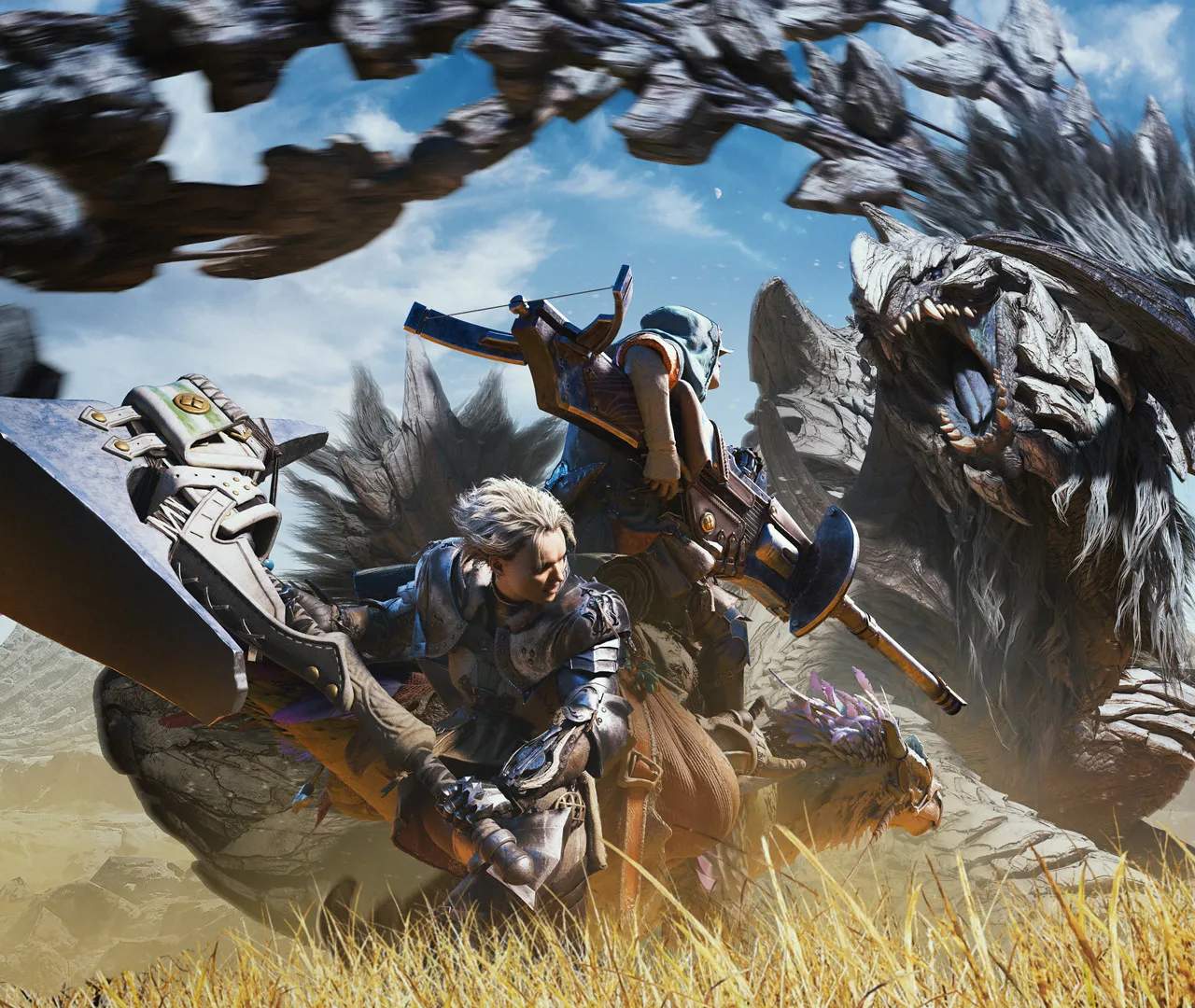
Characters & Builds
Mastering the challenging hunts of Monster Hunter Wilds demands more than just sharp reflexes; it requires a profound understanding of character progression and meticulous build optimization. This comprehensive section will guide you through the core elements of forging a formidable hunter, from understanding your character's foundational mechanics to crafting synergistic gear sets that maximize your hunting efficiency, survivability, or utility for any encounter.
The ultimate goal of build optimization in Monster Hunter Wilds is to tailor your equipment and skills to specific challenges. Whether you aim to maximize your damage output against a formidable Elder Dragon, enhance your survivability for a prolonged siege, or provide crucial support to your hunting party, a well-constructed build is your key to success. We'll explore how to achieve this balance, allowing you to find and perfect the playstyle that suits you best.
The Hunter: Character Foundation & Progression
Unlike traditional RPGs with discrete character classes or stat point allocation, your hunter in Monster Hunter Wilds is a highly customizable avatar whose capabilities are almost entirely defined by their equipment. There are no inherent character stats to level up independently; instead, your "character progression" is intrinsically linked to the gear you forge, the skills you activate, and the weapons you master.
Character Customization: Beyond Aesthetics
- Appearance: While largely cosmetic, your initial character creation allows for extensive visual customization. Remember, you can typically change your appearance (excluding gender and body type) later at your tent or in the main hub area.
- Hunter Rank (HR): This is your primary measure of overall progression. HR increases by completing key quests and defeating new monsters, unlocking access to stronger materials, higher-tier quests, and more advanced crafting recipes. A higher HR signifies your experience and opens up new possibilities for powerful builds.
- Master Rank (MR): Introduced in later stages or expansions, Master Rank functions similarly to Hunter Rank but for endgame content, offering even greater challenges and more potent gear.
Crucially, your hunter's base stats (Attack, Defense, Elemental Resistances) are directly derived from your equipped weapon and armor pieces. There are no "strength" or "intelligence" stats to increase; instead, you boost these attributes by upgrading your gear and activating powerful armor skills.
Weapon Types Overview
The weapon you choose is the cornerstone of your build, dictating your combat style, movement, and the types of skills that will benefit you most. Monster Hunter Wilds features a diverse arsenal, each with unique mechanics, combos, and strategic applications. Mastering even a few can dramatically expand your tactical options.
Melee Weapons
- Great Sword: Slow, powerful attacks with immense raw damage potential. Focuses on charged attacks and precise timing.
- Key Skills: Focus, Critical Draw, Punishing Draw, Attack Boost.
- Strategy: Hit-and-run tactics, capitalizing on monster openings for devastating charged slashes.
- Long Sword: Agile, combo-heavy weapon with a spirit gauge that builds up for powerful spirit blade attacks.
- Key Skills: Handicraft, Weakness Exploit, Critical Eye, Quick Sheath.
- Strategy: Maintain spirit gauge, counter-attacks, and precise foresight slashes.
- Sword & Shield: Versatile weapon offering quick attacks, blocking capabilities, and item usage without sheathing.
- Key Skills: Guard, Offensive Guard, Elemental Attack Up, Wide-Range.
- Strategy: Adaptable for offense, defense, and support; excellent for applying elemental damage or status.
- Dual Blades: Extremely fast, elemental-focused attacks with a "Demon Mode" for enhanced aggression.
- Key Skills: Elemental Attack Up, Constitution, Stamina Surge, Critical Element.
- Strategy: Relentless assault, exploiting elemental weaknesses, and maintaining Demon Mode uptime.
- Hammer: Blunt weapon specializing in stunning monsters and dealing high raw damage to the head.
- Key Skills: Slugger, Stamina Thief, Attack Boost, Focus.
- Strategy: Prioritize headshots, charge attacks, and capitalize on stun opportunities.
- Hunting Horn: Blunt weapon that buffs allies with musical melodies while dealing damage.
- Key Skills: Horn Maestro, Wide-Range, Stamina Thief, Attack Boost.
- Strategy: Support-focused, providing crucial buffs while still contributing to damage and stunning.
- Lance: Defensive weapon with a large shield, capable of powerful pokes and counter-attacks.
- Key Skills: Guard, Guard Up, Offensive Guard, Evade Extender.
- Strategy: Tanking hits, precise counter-attacks, and maintaining consistent pressure.
- Gunlance: Combines lance pokes with explosive shelling attacks.
- Key Skills: Artillery, Guard, Guard Up, Capacity Boost.
- Strategy: Mix pokes and shells, focus on explosive damage, and maintain defensive posture.
- Switch Axe: Transforms between a fast Axe Mode and a powerful Sword Mode with elemental bursts.
- Key Skills: Power Prolonger, Evade Extender, Attack Boost, Elemental Attack Up.
- Strategy: Adaptable weapon, switching modes to exploit openings and unleash powerful elemental discharges.
- Charge Blade: Transforms between Sword & Shield Mode (charging phials) and Axe Mode (discharging phials for explosive attacks).
- Key Skills: Artillery, Capacity Boost, Guard, Offensive Guard.
- Strategy: Master phial management, guard points, and powerful Super/Ultra Amped Element Discharges.
- Insect Glaive: Agile weapon focused on aerial combat, vaulting, and utilizing a Kinsect for buffs.
- Key Skills: Airborne, Power Prolonger, Constitution, Stamina Surge.
- Strategy: Extract Kinsect buffs, maintain aerial combos, and mount monsters frequently.
Ranged Weapons
- Light Bowgun: Fast-firing ranged weapon with high mobility, capable of rapid-fire and status application.
- Key Skills: Ballistics, Spare Shot, Recoil Down, Reload Speed, Elemental Attack Up.
- Strategy: Maintain distance, exploit elemental/status weaknesses, and utilize rapid-fire capabilities.
- Heavy Bowgun: Slower, more powerful ranged weapon with higher recoil but access to devastating special ammo.
- Key Skills: Pierce Up, Spread Up, Normal Up, Recoil Down, Reload Speed.
- Strategy: Position carefully, unleash powerful shots, and manage special ammo effectively.
- Bow: Ranged weapon focused on charged shots, elemental damage, and close-range coatings.
- Key Skills: Constitution, Stamina Surge, Bow Charge Plus, Elemental Attack Up.
- Strategy: Manage stamina, exploit elemental weaknesses, and apply coatings for added effects.
Armor Skills & Set Bonuses
Armor skills are the true engine of your build. Each piece of armor (Head, Chest, Arms, Waist, Legs) comes with specific skill points, and equipping decorations (gems) into slots on your armor and weapon can further enhance these. When the total points for a specific skill reach certain thresholds (e.g., 10, 20, 30), the skill activates, providing powerful benefits.
Understanding Skill Tiers
Most skills have multiple levels, with each level providing a stronger effect. For example, "Attack Boost Lv.1" might give a small raw attack increase, while "Attack Boost Lv.7" provides a significant boost and a percentage increase.
Key Skill Categories
Skills generally fall into several categories, and a balanced build often incorporates elements from each:
- Offensive Skills: Maximize damage output.
- Examples: Attack Boost, Critical Eye, Weakness Exploit, Critical Boost, Agitator, Elemental Attack Up, Artillery (Gunlance/Charge Blade), Pierce/Spread/Normal Up (Bowguns).
- Defensive Skills: Enhance survivability.
- Examples: Health Boost, Divine Blessing, Defense Boost, Guard, Guard Up, Evade Extender, Evade Window.
- Utility/Quality of Life Skills: Improve comfort, stamina management, or item usage.
- Examples: Constitution, Stamina Surge, Quick Sheath, Speed Sharpening, Wide-Range, Free Meal, Geologist.
- Weapon-Specific Skills: Directly benefit certain weapon types.
- Examples: Focus (Great Sword/Hammer), Horn Maestro (Hunting Horn), Bow Charge Plus (Bow), Capacity Boost (Gunlance/Charge Blade).
Set Bonuses
Some armor sets, particularly those crafted from specific monsters, offer powerful "Set Bonuses" when you equip multiple pieces from that set (e.g., 2 pieces, 3 pieces, 5 pieces). These bonuses can range from unique skill activations to significant stat boosts or entirely new mechanics. Prioritizing these can be crucial for endgame builds.
- Example: A Rathalos set might grant a bonus that boosts critical element damage, making it ideal for elemental builds.
- Strategy: Always check the set bonus of armor pieces. Sometimes, breaking a full set to incorporate a single piece from another monster for a crucial skill is more beneficial than completing a less impactful set bonus.
Build Optimization: Crafting Your Perfect Hunter
The process of build optimization is iterative and highly personal. It involves identifying your primary goals for a hunt and then selecting the weapon, armor pieces, decorations, and Palico/Palamute gear that best achieve those goals.
Step-by-Step Build Creation
- Define Your Goal:
- Are you aiming for maximum raw damage?
- Do you need high elemental damage against a specific monster?
- Is survivability your top priority for a challenging encounter?
- Are you building a support hunter for multiplayer?
- Choose Your Weapon: Select the weapon type that aligns with your goal and preferred playstyle. Consider its raw damage, elemental properties, and available slots.
- Identify Core Skills: Based on your weapon and goal, list the 3-5 most crucial skills.
- Example (Great Sword Damage): Attack Boost, Weakness Exploit, Critical Boost, Focus.
- Example (Lance Survivability): Guard, Guard Up, Health Boost, Divine Blessing.
- Select Armor Pieces: Browse your available armor (or research craftable armor) for pieces that naturally provide points in your core skills. Prioritize pieces with good decoration slots.
- Utilize Decorations: Fill any open decoration slots on your weapon and armor with gems that provide additional points in your desired skills, or activate secondary utility skills.
- Consider Charms/Talismans: These unique items provide skill points and/or decoration slots and are often a critical component for completing high-level builds. Crafting and melding for optimal charms is an endgame pursuit.
- Palico/Palamute Gear: Don't forget your trusty companions! Their weapons and armor also offer skills and elemental properties that can complement your build. A Palico with a healing gadget or a Palamute with a status-inflicting weapon can significantly impact a hunt.
- Test and Refine: Take your new build into a hunt. Does it perform as expected? Are you lacking in defense? Is your damage lower than anticipated? Adjust armor pieces, decorations, or even your weapon choice as needed.
Common Pitfalls & Tips
- Don't Over-Cap Skills: Once a skill reaches its maximum level (e.g., Attack Boost Lv.7), any additional points in that skill are wasted. Pay attention to your total skill points.
- Balance Offense and Defense: Especially in early and mid-game, don't sacrifice all defense for offense. A dead hunter deals no damage. Health Boost and Divine Blessing are often excellent foundational defensive skills.
- Elemental vs. Raw: Understand when to prioritize elemental damage (often for fast-hitting weapons like Dual Blades or Bow against monsters with high elemental weaknesses) versus raw damage (generally good for all weapons, especially slow, heavy hitters).
- Status Effects: Don't underestimate the power of Paralysis, Sleep, or Poison. Builds focused on applying these can be incredibly effective, especially in multiplayer.
- Resource Management: Always consider the materials required for crafting and upgrading. Sometimes, a slightly less optimal but easier-to-build set is better than waiting indefinitely for rare drops.
- Learn Monster Weaknesses: Consult your Hunter's Notes for every monster's elemental weaknesses, weak points, and status resistances. This information is paramount for tailoring effective builds.
By diligently applying these principles, you'll transform from a fledgling hunter into a master of the wilds, capable of confronting any beast and emerging victorious with a perfectly optimized build.
Compare characters & builds inMonster Hunter: World