
Fungal Caverns
The Fungal Caverns, often encountered as a side biome branching off the Coal Mines or the Snowy Depths, are a vibrant, bioluminescent, and notoriously dangerous region in Noita. This biome is a crucible of unique challenges, from its treacherous terrain and pervasive airborne hazards to its specialized fungal inhabitants. Success here demands careful navigation, environmental awareness, and adaptable combat strategies. While it often holds powerful wands and rare spells, it's also the primary source of the game-altering Fungal Shift mechanic.
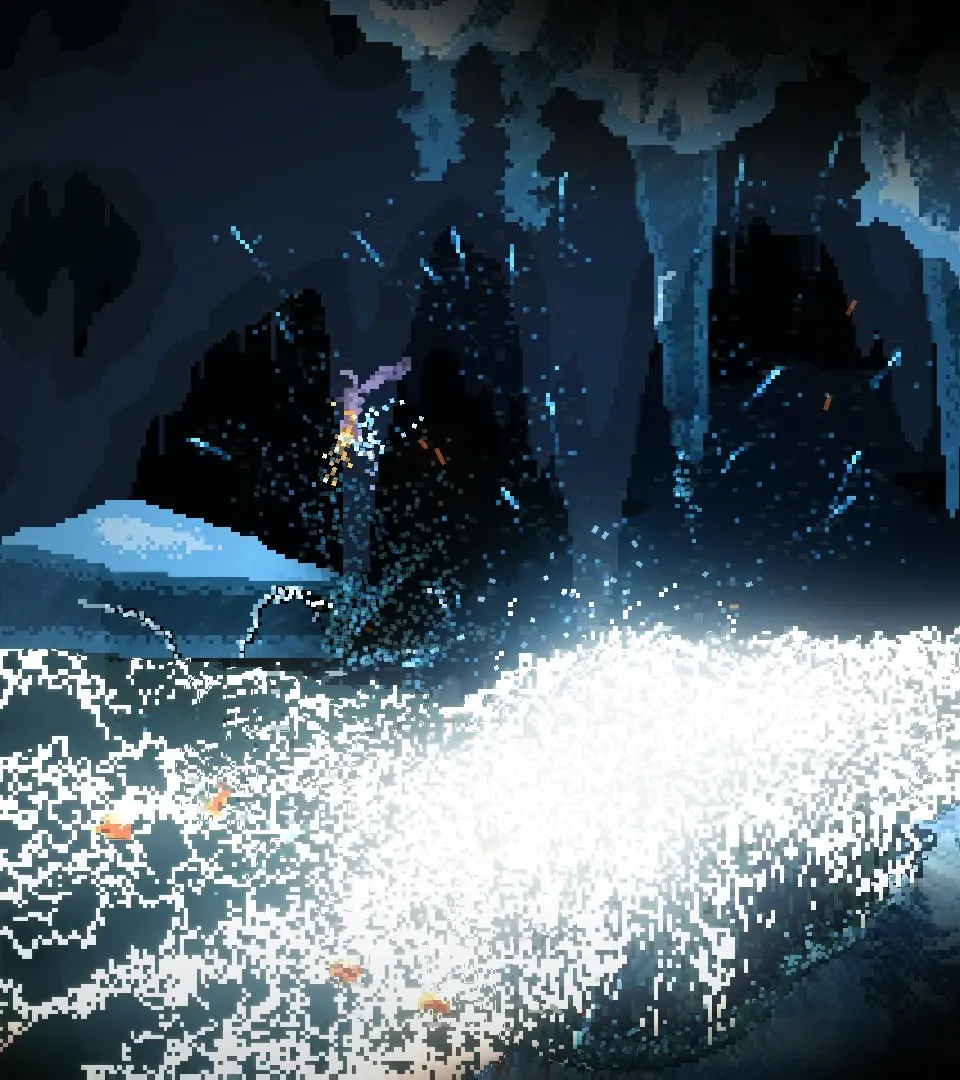
Environmental Hazards & Navigation
The Fungal Caverns are defined by their organic, uneven, and often destructible terrain. Expect narrow passages, large open chambers, and areas completely overgrown with various fungi. Mobility spells like Teleport Bolt or Personal Fireball Thrower (for creating pathways) are invaluable for traversing this biome safely.
Spore Hazards
The air in the Fungal Caverns is frequently saturated with various types of spores, each with distinct and often detrimental effects. Proximity to large fungal growths or disturbing certain enemies can release these clouds. Equipping perks like Toxic Immunity or All-Seeing Eye (to detect spore clouds) can significantly mitigate these dangers.
- Toxic Spores: The most common type, these green clouds inflict the Toxic status effect, causing continuous health drain. Toxic Immunity makes these harmless.
- Polymorph Spores: Less common but far more dangerous, these rainbow-colored clouds can instantly trigger the Polymorph status effect, transforming you into a harmless creature (usually a sheep) for a short duration. This is almost always a death sentence in combat. Avoid at all costs.
- Healing Spores: Rare and beneficial, these golden spores can heal you. They are usually found near specific, glowing fungal growths or dropped by certain fungal creatures.
- Explosive Spores: Certain red fungi, when damaged, release explosive spores that detonate after a short delay, dealing significant damage.
Common Enemies & Combat Strategies
The Fungal Caverns host a unique ecosystem of fungal and spore-based creatures. Understanding their resistances, weaknesses, and attack patterns is crucial for survival.
Enemy List & Characteristics:
- Fungal Creature:
- Appearance: Large, mushroom-like bipedal creatures.
- Attacks: Melee charge, occasionally spits toxic projectiles.
- Resistances: Moderate resistance to Slice and Projectile damage.
- Weaknesses: Vulnerable to Fire and Explosion damage.
- Strategy: Keep your distance. Fire spells or explosive projectiles are highly effective. Be wary of their toxic spit.
- Spore Creature:
- Appearance: Floating, amorphous blobs of spores.
- Attacks: Releases clouds of toxic spores upon death or when damaged.
- Resistances: High resistance to Projectile and Slice damage.
- Weaknesses: Extremely vulnerable to Fire and Electricity damage. Explosions are also effective.
- Strategy: Prioritize these enemies. Use fire or electric wands to dispatch them quickly before they can release large spore clouds. Toxic Immunity makes them much less threatening.
- Fungal Zombie:
- Appearance: Reanimated corpses covered in fungal growths.
- Attacks: Slow melee attacks, can release small bursts of toxic spores.
- Resistances: Standard resistances, similar to regular zombies.
- Weaknesses: Vulnerable to Fire and Slice damage.
- Strategy: Relatively slow and easy to kite. Treat them like tougher, spore-emitting zombies.
- Fungal Turret:
- Appearance: Stationary fungal growths that resemble turrets.
- Attacks: Fires slow-moving, homing toxic projectiles.
- Resistances: Moderate resistance to most damage types.
- Weaknesses: Vulnerable to Explosion damage.
- Strategy: Destroy from a distance with explosives or high-damage projectiles. Their projectiles are slow enough to dodge.
- Hiisi Base Scout (occasional):
- Appearance: Standard Hiisi soldier, sometimes found patrolling the edges of the biome.
- Attacks: Fires energy projectiles.
- Resistances: Standard Hiisi resistances.
- Weaknesses: Vulnerable to Electricity and Explosion damage.
- Strategy: Treat as you would any Hiisi. Their presence usually indicates proximity to a Hiisi Base entrance.
Fungal Shifts Explained
The Fungal Shift is a unique and often run-defining mechanic tied directly to the Fungal Caverns. It occurs when you consume a specific type of mushroom found within this biome. Upon consumption, a message appears on screen: "The world has shifted." This signifies a global material transformation.
How Fungal Shifts Work:
- Triggering a Shift: Locate and consume any of the large, colorful mushrooms found growing in the Fungal Caverns. There are several varieties, but all trigger the same "Fungal Shift" event.
- The Transformation: Upon consumption, the game randomly selects two materials present in the world (e.g., Water, Blood, Gold, Rock, Toxic Sludge, etc.). One material will be chosen as the "source" and another as the "target." All instances of the source material throughout the entire game world will instantly transform into the target material.
- Impact on Gameplay:
- Positive Shifts: Imagine all Toxic Sludge turning into Water, or all Lava becoming Blood. These shifts can make dangerous biomes much safer or provide infinite resources.
- Negative Shifts: Conversely, a shift where all Water turns into Acid, or all Gold becomes Polymorphine, can instantly end a run or make progression incredibly difficult.
- Neutral/Amusing Shifts: Some shifts are less impactful, like Sand turning into Snow, or Meat turning into Worm Blood.
- Resource Generation: A particularly powerful shift can turn a common material (like Dirt) into a valuable one (like Gold or Diamond), providing immense wealth.
- Limited Shifts: You can typically only trigger a Fungal Shift once per run. Subsequent mushroom consumption will not trigger another shift.
Fungal Shift Strategy:
- Timing is Key: Consider when to trigger a shift. Early in a run, a bad shift can be devastating. Later, with more perks and powerful wands, you might be better equipped to handle a negative outcome.
- Risk vs. Reward: Fungal Shifts are a gamble. They can save a struggling run or instantly end a promising one. Weigh the potential benefits against the risks.
- Preparation: Before triggering a shift, ensure you have a safe escape route or are in a relatively secure location. Having some Teleport Bolt charges or Black Hole spells can help you escape if a shift turns the environment hostile.
- Material Awareness: Pay attention to the materials around you. If you're surrounded by a dangerous material, a shift might be a good idea. If you rely on a specific material (like water for dousing fires), be aware that it could disappear.
Example Fungal Shift Impact:
Imagine you're having a tough run, constantly running low on health, and the Coal Mines are filled with Toxic Sludge. You find a mushroom in the Fungal Caverns and consume it. The message "The world has shifted" appears. Suddenly, all Toxic Sludge in the entire world transforms into Water! This makes the Coal Mines much safer, provides an infinite source of dousing liquid, and potentially opens up new pathways. Conversely, if all Water turned into Polymorphine, even a small splash could be fatal, turning previously safe areas into death traps.
Recommended Loadouts & Perks
- Wands:
- Fire Damage: Essential for dealing with fungal creatures and spore creatures. Spells like Fireball, Flamethrower, or even Spark Bolt with Trigger + Fireball work wonders.
- Explosive Damage: Effective against Fungal Creatures, Fungal Turrets, and for clearing terrain. Bomb, Explosive Projectile, or Dynamite are good choices.
- Mobility: Teleport Bolt or Personal Fireball Thrower are highly recommended for navigating the uneven terrain and escaping dangerous situations.
- High Projectile Damage: For Hiisi Scouts and general combat, a reliable high-damage projectile wand is always useful.
- Perks:
- Toxic Immunity: The single most valuable perk for the Fungal Caverns, rendering most spore hazards harmless.
- Fire Immunity: While not as critical as Toxic Immunity, it protects against the prevalent fire damage you'll be dealing and any environmental fires.
- Explosion Immunity: Useful for clearing terrain aggressively and protecting against Fungal Turrets or accidental explosions.
- All-Seeing Eye: Helps detect hidden enemies and, crucially, spore clouds, allowing you to avoid polymorph hazards.
- Repelling Field/Attractor Field: Can help manage enemy positioning, especially against charging Fungal Creatures.
Common Pitfalls & Missables
- Ignoring Spore Clouds: Underestimating the danger of toxic or, especially, polymorph spores is a common cause of death. Always be aware of your surroundings.
- Aggressive Exploration: The Fungal Caverns reward caution. Rushing into unknown areas can lead to being overwhelmed by enemies or trapped in spore clouds.
- Mismanaging Fungal Shifts: Triggering a shift without considering the potential consequences can ruin a run. Think before you consume that mushroom.
- Lack of Fire Damage: Entering the Fungal Caverns without a reliable source of fire damage will make combat significantly harder and slower.
- Falling into the Abyss: While less common than in other biomes, some areas have deep drops. Always check before descending.
Mastering the Fungal Caverns requires a blend of tactical combat, environmental awareness, and a willingness to gamble with the Fungal Shift. Approach with caution, prepare your wands, and you might just emerge with powerful loot and a world-altering advantage.