Full Pokémon List / Pokédex
Welcome, aspiring Pokémon Master! This comprehensive section will guide you through the vast world of Johto and Kanto, detailing every Pokémon you can encounter in Pokémon Crystal. Catching 'em all is a monumental task, but with this guide, you'll be well on your way to completing your Pokédex!
The Pokédex in Pokémon Crystal features 251 unique Pokémon. To truly complete it, you'll need to trade with friends who own Pokémon Gold and Silver, as some Pokémon are exclusive to those versions. However, this guide focuses on what you can achieve within Crystal itself, providing a foundational understanding for your journey.
Understanding the Pokédex Entries
Each Pokémon entry in this guide will follow a consistent format to provide you with all the essential information. While the full list of 251 Pokémon will be presented in subsequent sub-sections, this introductory page outlines the structure and strategies for completion.
- #XXX: Pokémon Name: The official Pokédex number and name.
- Type(s): The elemental typing of the Pokémon.
- Evolution: How the Pokémon evolves, including required levels, stones, or special conditions.
- Location(s): Where you can find this Pokémon in the wild. This will include specific routes, caves, forests, or bodies of water, detailing methods like walking, surfing, fishing, or Headbutt.
- Rarity: An indication of how frequently you'll encounter this Pokémon (Common, Uncommon, Rare, Very Rare).
- Special Notes: Any unique strategies for catching, item requirements, time-of-day restrictions, or version exclusivity.
Strategies for Pokédex Completion
Completing the Pokédex requires patience, strategy, and sometimes a bit of luck. Here are some actionable tips to maximize your catching efficiency and ensure you don't miss any elusive creatures.
1. Essential Catching Tools: Poké Balls and Apricorns
Always carry a generous supply of various Poké Balls. Different situations call for different types, and being prepared is half the battle. Remember that some special balls are crafted by Kurt in Azalea Town, not purchased.
Purchasable Poké Balls:
- Poké Balls: The most basic and affordable. Available from any Poké Mart from the beginning of the game. Essential for early-game catches.
- Great Balls: A step up from Poké Balls, offering a higher catch rate. Become available in Poké Marts after obtaining your first Gym Badge.
- Ultra Balls: The most effective purchasable ball, crucial for catching rarer and higher-level Pokémon. Available in Poké Marts later in the game, typically after the fifth or sixth Gym Badge.
- Master Ball: The ultimate Poké Ball, guaranteeing a catch on any wild Pokémon without fail. Only one is obtainable in the game, typically from the Team Rocket Director in the Goldenrod Radio Tower. Save it for a Legendary Pokémon like Lugia or Ho-Oh, or a particularly frustrating roaming Pokémon.
Apricorn Balls (Crafted by Kurt in Azalea Town):
Kurt, the Poké Ball craftsman in Azalea Town, can turn Apricorns into specialized Poké Balls. You can find Apricorns growing on trees throughout Johto. Give him one Apricorn, and he'll craft a ball for you by the next in-game day. Each Apricorn yields one specific type of ball:
- Fast Ball: Crafted from a White Apricorn. More effective on Pokémon that are quick to flee or have high Speed stats.
- Friend Ball: Crafted from a Green Apricorn. Catches a Pokémon and immediately raises its happiness significantly. Useful for Pokémon that evolve via happiness.
- Heavy Ball: Crafted from a Black Apricorn. More effective on very heavy Pokémon.
- Level Ball: Crafted from a Red Apricorn. More effective on Pokémon that are a lower level than your active Pokémon.
- Love Ball: Crafted from a Pink Apricorn. More effective on Pokémon of the opposite gender to your active Pokémon.
- Lure Ball: Crafted from a Blue Apricorn. More effective on Pokémon encountered via fishing.
- Moon Ball: Crafted from a Yellow Apricorn. More effective on Pokémon that evolve using a Moon Stone (e.g., Clefairy, Jigglypuff, Nidorina, Nidorino).
Important Note: The "Net Ball" mentioned in previous guides is NOT present in Pokémon Crystal. It was introduced in Generation III (Ruby/Sapphire).
2. Evolution Methods: Mastering Pokémon Transformations
Many Pokémon evolve, and understanding these methods is key to filling out your Pokédex without having to catch every single stage in the wild. Keep track of your Pokémon's levels and hold onto any evolution stones or special items you find.
Common Evolution Triggers:
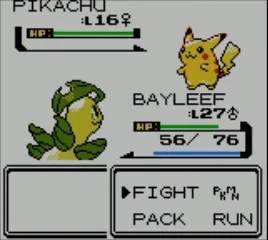
- Level-Up Evolution: The most common method. Simply battle and gain experience until the Pokémon reaches a certain level. For example, Chikorita evolves into Bayleef at Level 16, and Bayleef into Meganium at Level 32.
- Stone Evolution: Requires a specific evolution stone. These are one-time use items.
- Fire Stone: Evolves Eevee into Flareon, Growlithe into Arcanine, Vulpix into Ninetales. Found in the Burned Tower (hidden), or as a prize from the Bug-Catching Contest.
- Water Stone: Evolves Eevee into Vaporeon, Poliwhirl into Poliwrath, Staryu into Starmie. Found in the Whirl Islands (hidden), or as a prize from the Bug-Catching Contest.
- Thunder Stone: Evolves Eevee into Jolteon, Pikachu into Raichu. Found in the Power Plant (Kanto), or as a prize from the Bug-Catching Contest.
- Leaf Stone: Evolves Gloom into Vileplume, Weepinbell into Victreebel, Exeggcute into Exeggutor. Found in the Viridian Forest (Kanto), or as a prize from the Bug-Catching Contest.
- Moon Stone: Evolves Nidorina into Nidoqueen, Nidorino into Nidoking, Clefairy into Clefable, Jigglypuff into Wigglytuff. Found in Mt. Moon (Kanto), or sometimes held by wild Clefairy.
- Sun Stone: Evolves Gloom into Bellossom, Sunkern into Sunflora. Found in the National Park (as a prize for winning the Bug-Catching Contest), or occasionally held by wild Sunkern.
- Trade Evolution: Some Pokémon only evolve when traded between two Game Boy Color systems using a Link Cable. Some also require holding a specific item during the trade.
- Kadabra into Alakazam
- Machoke into Machamp
- Graveler into Golem
- Haunter into Gengar
- Onix (holding Metal Coat) into Steelix
- Scyther (holding Metal Coat) into Scizor
- Porygon (holding Up-Grade) into Porygon2
- Seadra (holding Dragon Scale) into Kingdra
Key Items for Trade Evolution:
- Metal Coat: Found in the Union Cave (after defeating Team Rocket), or sometimes held by wild Magnemite or Steelix.
- Up-Grade: Obtained from Professor Elm's aide in Goldenrod City after registering all 251 Pokémon (a post-game reward).
- Dragon Scale: Found in Mt. Mortar, or sometimes held by wild Horsea or Dratini.
- Happiness Evolution: Certain Pokémon evolve when they have a high friendship level with their trainer. This is influenced by walking with them, giving them vitamins, leveling them up, and avoiding letting them faint. The Soothe Bell (given by a girl in a house in Goldenrod City) boosts happiness gains.
- Pichu into Pikachu
- Cleffa into Clefairy
- Igglybuff into Jigglypuff
- Togepi into Togetic
- Eevee into Espeon (daytime, high happiness) or Umbreon (nighttime, high happiness)
- Chansey into Blissey
3. Version Exclusives and Trading
To truly complete the 251-entry Pokédex, you will need to trade with players who own Pokémon Gold and Pokémon Silver. coordinate with friends to get the Pokémon you can't find in Crystal. This is a fundamental aspect of Pokédex completion in Generation II.
- Pokémon Gold Exclusives: Mankey, Primeape, Growlithe, Arcanine, Spinarak, Ariados, Gligar, Phanpy, Donphan, Murkrow, Delibird.
- Pokémon Silver Exclusives: Vulpix, Ninetales, Meowth, Persian, Ledyba, Ledian, Skarmory, Teddiursa, Ursaring, Houndour, Houndoom, Mantine.
- Pokémon Crystal Exclusives: While most Pokémon are available across all three versions, Crystal has unique encounter rates and specific Pokémon that are more common or only available in certain areas (e.g., Phanpy and Teddiursa are available in Crystal in Union Cave, whereas they are version exclusives in Gold/Silver). Suicune also plays a more prominent role.
4. Time-Based Encounters: The Day/Night Cycle
Pokémon Crystal introduced the real-time clock, meaning some Pokémon only appear at specific times of day (morning, day, night). Pay close attention to the in-game clock, which syncs with your Game Boy Color's internal clock.
- Morning (4:00 AM - 9:59 AM): Certain Pokémon like Hoothoot are more common or exclusively appear during these hours.
- Day (10:00 AM - 5:59 PM): The most common encounter period, with many Pokémon appearing during this time.
- Night (6:00 PM - 3:59 AM): Pokémon like Gastly, Noctowl, and Spinarak (in Crystal) appear more frequently or exclusively at night.
5. Utilizing Fishing and Headbutt
utilize your fishing rods and the Headbutt HM! These methods unlock access to many Water-type and tree-dwelling Pokémon that cannot be found by simply walking in tall grass.
- Old Rod: Obtained from the Fisherman in Vermilion City (Kanto). Catches common Water-types like Magikarp.
- Good Rod: Obtained from the Fisherman in Olivine City. Catches a wider variety of Water-types, including Poliwag and Tentacool.
- Super Rod: Obtained from the Fisherman in Route 12 (Kanto). Catches the rarest Water-types, such as Dratini and Gyarados.
- Headbutt (HM02): Taught by a man in Ilex Forest. Use this HM on trees to knock down Pokémon like Aipom, Heracross, and Pineco. Different trees on different routes yield different Pokémon, so experiment widely! Some trees on the same route might even yield different Pokémon.
Now, prepare yourself for the ultimate challenge! The following detailed list (in subsequent sections) will guide you through every single Pokémon, helping you track down each elusive creature with precise locations and methods.
While Pokémon Crystal introduced the first female protagonist, it would take until Pokemon X and Y for the series to implement full character customization and 3D models.
While Pokémon Crystal focuses on traditional turn-based captures to fill the Pokédex, Pokémon Ranger later introduced a unique capture stylus mechanic for calming wild creatures.