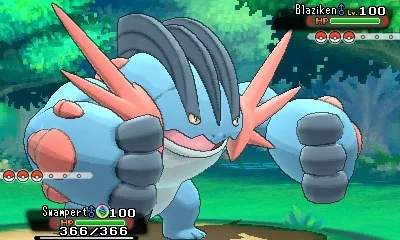
Competitive Pokémon Strategy
Welcome, aspiring Pokémon Master, to the world of competitive battling in Pokémon Omega Ruby and Alpha Sapphire! Beyond the main story, a deep and rewarding strategic layer awaits. This section will guide you through the essential steps to breed, train, and battle with a team capable of taking on any opponent.
I. Understanding the Fundamentals
Before diving into specific strategies, it's crucial to grasp the core concepts that differentiate competitive play from casual playthroughs:
A. Individual Values (IVs)
- What they are: IVs are hidden stats (ranging from 0 to 31) for each of a Pokémon's six stats (HP, Attack, Defense, Special Attack, Special Defense, Speed). A higher IV in a stat means a higher final value for that stat at level 100.
- Why they matter: For competitive play, you generally want Pokémon with 31 IVs (often called "perfect IVs") in their most important stats. For example, a physical attacker wants 31 IVs in Attack, HP, Defense, Special Defense, and Speed. A special attacker would want 31 IVs in Special Attack instead of Attack. Sometimes, a 0 IV in Attack is desired for special attackers to minimize damage from confusion or Foul Play.
- How to check: After defeating the Elite Four, visit the IV Judge in the Battle Resort's Pokémon Center. He will give you a general assessment of your Pokémon's IVs. For precise numbers, you'll need to use an online IV calculator or a more advanced in-game tool (not available in ORAS, but accessible via Pokémon Bank).
B. Effort Values (EVs)
- What they are: EVs are points gained by defeating specific Pokémon in battle or by using certain items. A Pokémon can gain a maximum of 510 EVs in total, with a maximum of 252 EVs in any single stat. Every 4 EVs in a stat translates to 1 additional stat point at level 100.
- Why they matter: EVs allow you to customize your Pokémon's stats beyond their natural growth. For instance, you can make a naturally fast Pokémon even faster, or bolster a defensive Pokémon's HP.
- How to gain EVs:
- Battling Wild Pokémon: Each species gives specific EVs. For example, defeating a Zigzagoon gives 1 Speed EV. Holding a Macho Brace doubles EV gain, and Pokerus (a rare in-game virus) doubles it again. Combine both for 4x EV gain.
- Super Training: Accessible from the bottom screen, Super Training allows you to play mini-games to directly assign EVs. This is a precise and easy method for beginners.
- Vitamins: Items like HP Up, Protein, Iron, Calcium, Carbos, and Zinc each grant 10 EVs to a specific stat, up to 100 EVs per stat. These are purchasable at the Mauville City Department Store.
- EV Resetting: If you make a mistake, you can reset EVs using specific Berries: Pomeg Berry (HP), Kelpsy Berry (Attack), Qualot Berry (Defense), Hondew Berry (Special Attack), Grepa Berry (Special Defense), and Tamato Berry (Speed). These can be found on various routes or grown in the Berry Fields.
C. Natures
- What they are: A Pokémon's Nature affects two of its stats, boosting one by 10% and lowering another by 10%. Some Natures have no effect.
- Why they matter: Choosing the correct Nature is crucial for optimizing your Pokémon's offensive or defensive capabilities. For example, a physical attacker like Mega Metagross would benefit greatly from an Adamant Nature (+Attack, -Special Attack). A special attacker like Mega Gardevoir would prefer a Modest Nature (+Special Attack, -Attack).
- How to find: A Pokémon's Nature is displayed on its summary screen.
D. Abilities
- What they are: Abilities are special powers that can affect battles in various ways, from boosting stats to inflicting status conditions or changing weather.
- Why they matter: The right Ability can define a Pokémon's role and strategy. For example, a Speed Boost Blaziken can become incredibly fast, while a Prankster Sableye can set up hazards or status conditions with priority.
- Hidden Abilities: Some Pokémon have "Hidden Abilities" that are rarer than their standard ones. These are often obtained through the DexNav's search function or specific events.
II. Building Your Competitive Team
Now that you understand the core mechanics, let's outline the steps to create a battle-ready team.
A. Step 1: Team Composition and Role Assignment
- Define Roles: A balanced team usually consists of a mix of roles:
- Physical Sweeper: High Attack, aims to knock out opponents quickly (e.g., Mega Metagross, Dragonite).
- Special Sweeper: High Special Attack, similar to physical sweepers but uses special moves (e.g., Mega Gardevoir, Latios).
- Wall/Tank: High Defense/Special Defense, designed to take hits and support the team (e.g., Skarmory, Blissey).
- Support: Focuses on setting up entry hazards (Stealth Rock, Spikes), inflicting status, or healing (e.g., Clefable, Ferrothorn).
- Revenge Killer: Fast Pokémon designed to switch in after an ally faints and take out the opposing threat (e.g., Greninja, Talonflame).
- Type Synergy: Ensure your team has good type coverage, both offensively and defensively. Avoid having too many Pokémon weak to common types like Fighting or Ice.
- Mega Evolution: Remember you can only Mega Evolve one Pokémon per battle. Choose your Mega wisely to complement your team's strategy.
B. Step 2: Breeding for Perfect IVs and Natures
This is where the real grind begins, but it's essential for top-tier competitive Pokémon.
- Acquire a Destiny Knot: This crucial item, found on Route 116 (given by a lady in the house near Rustboro City) or held by wild Gardevoir/Kirlia, ensures that 5 IVs from the parents are passed down to the offspring.
- Acquire an Everstone: Found in Granite Cave (B2F) or held by wild Roggenrola/Geodude, this item ensures the holder's Nature is passed down to the offspring when held by a parent in the Day Care.
- Find a High-IV Ditto: While not strictly necessary, a Ditto with 3-6 perfect IVs makes breeding significantly easier. These are often obtained through trading or specific events. If you don't have one, you'll need to catch and breed with Pokémon that have good IVs in the stats you need.
- The Breeding Process (Day Care on Route 117):
- Place your desired Pokémon (e.g., a female Ralts with a Modest Nature) and a high-IV Ditto (holding Destiny Knot) into the Day Care.
- The female Pokémon's species will determine the offspring.
- Collect eggs and hatch them. Use the Battle Resort's cycling path to hatch eggs quickly.
- Check the IVs of the hatched Pokémon with the IV Judge.
- Once you hatch a Pokémon with better IVs than one of your parents, swap it into the Day Care. For example, if your original Ralts had 3 perfect IVs and you hatch one with 4 perfect IVs, replace the original Ralts with the new one.
- Repeat this process until you have a Pokémon with the desired perfect IVs and Nature.
- Egg Moves: Some powerful moves can only be learned by breeding. Research your Pokémon's desired moveset to see if any require specific Egg Moves.
C. Step 3: EV Training
Once you have your perfectly bred Pokémon, it's time to distribute its EVs.
- Plan Your EVs: Decide on the 252/252/4 spread (or other custom spread) for each Pokémon based on its role. For example, a physical sweeper might get 252 Attack, 252 Speed, and 4 HP.
- Use Super Training: For precise control and ease, Super Training is highly recommended. Complete the specific training bags for the stats you want to boost.
- Combine with Power Items: If you prefer battling, equip Power Anklet (Speed), Power Band (Special Defense), Power Belt (Defense), Power Bracer (Attack), Power Lens (Special Attack), or Power Weight (HP). These items, purchasable at the Battle Resort, grant +8 EVs per battle in their respective stat, in addition to the Pokémon's base EV yield.
- Pokerus: If you have a Pokémon with Pokerus, spread it to your competitive team members. This will double all EV gains from battling.
D. Step 4: Leveling Up and Move Acquisition
- Leveling: The fastest way to level up is often through the Elite Four rematch or by using Lucky Eggs (found on wild Pelipper) and Exp. Share.
- Move Tutors: Many powerful moves are learned through Move Tutors, found in various locations:
- Battle Resort: Several tutors teach moves for Battle Points (BP).
- Mauville City: A tutor teaches elemental pledges.
- Sootopolis City: Teaches Draco Meteor and Frenzy Plant/Blast Burn/Hydro Cannon.
- TMs/HMs: Ensure your Pokémon have their optimal movesets using Technical Machines (TMs) and Hidden Machines (HMs).
E. Step 5: Item Selection
Held items can significantly impact a battle.
- Offensive Items:
- Choice Band/Scarf/Specs: Boosts a stat by 50% but locks the Pokémon into one move.
- Life Orb: Boosts damage by 30% but drains 10% HP each turn.
- Assault Vest: Boosts Special Defense by 50% but only allows attacking moves.
- Mega Stones: Essential for Mega Evolution.
- Defensive/Support Items:
- Leftovers: Recovers 1/16th of max HP each turn. Found in the Battle Resort.
- Sitrus Berry/Lum Berry: Heals HP or cures status once.
- Focus Sash: Guarantees survival from one hit if at full HP.
- Rocky Helmet: Damages opponents who make physical contact.
III. Battling Strategies and Practice
A. Understanding the Metagame
The "metagame" refers to the most popular and effective Pokémon, strategies, and teams currently being used by competitive players. Staying updated on the metagame is crucial for success.
- Online Resources: Websites like Smogon are excellent for researching common threats, viable sets, and team archetypes.
- Practice Battles: The best way to learn is by doing. Battle against friends, use the Battle Spot online, or challenge the Battle Maison in the Battle Resort.
B. Common Battle Strategies
- Offensive Pressure: Overwhelm your opponent with powerful attacks.
- Stall/Defensive: Outlast your opponent by healing, inflicting status, and slowly chipping away at their health.
- Setup Sweeping: Use stat-boosting moves (e.g., Dragon Dance, Swords Dance, Nasty Plot) to make a Pokémon incredibly powerful before sweeping the opponent's team.
- Weather Teams: Build a team around a specific weather condition (e.g., Sun with Drought Ninetales, Rain with Drizzle Politoed).
- Trick Room: A strategy where slower Pokémon move first for a few turns after Trick Room is used.
C. Battle Maison
The Battle Maison in the Battle Resort is an excellent place to test your team and earn Battle Points (BP) for valuable items and TMs. Challenge the various battle formats (Single, Double, Triple, Rotation, Multi) to hone your skills.
Competitive Pokémon battling is a journey of continuous learning and adaptation. With dedication to breeding, training, and strategic thinking, you'll be well on your way to becoming a formidable opponent in the world of Pokémon Omega Ruby and Alpha Sapphire!
While breeding mechanics have become more accessible, the core competitive foundation remains rooted in the IV and Nature systems first popularized during the Hoenn region's debut in Pokemon Emerald.
Unlike the capture styling of Pokémon Ranger, high-level battling in Omega Ruby and Alpha Sapphire requires precise EV training to maximize a Pokémon's potential in the competitive circuit.