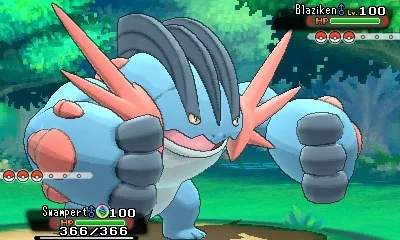
Game Mechanics & Terminology
Welcome, aspiring Pokémon Trainer, to a deep dive into the fundamental mechanics and essential terminology that govern your journey through the Hoenn region in Pokémon Omega Ruby and Alpha Sapphire. Understanding these core concepts will empower you to make strategic decisions, optimize your team, and truly master the game.
Important Terms & Definitions
Before we delve into the intricacies, let's establish a common language. Familiarize yourself with these crucial terms:
- Pokémon Type: Each Pokémon and most moves have a type (e.g., Fire, Water, Grass). These types dictate effectiveness in battle (e.g., Water is super effective against Fire).
- Ability: A special passive skill that a Pokémon possesses, providing various effects in battle or on the field. For example, the Ability Intimidate lowers the opponent's Attack stat upon entry.
- Nature: A characteristic that influences a Pokémon's stat growth, typically boosting one stat by 10% and lowering another by 10%. For instance, an Adamant Nature boosts Attack but lowers Special Attack.
- Stats: The numerical values representing a Pokémon's strengths: HP (Hit Points), Attack, Defense, Special Attack, Special Defense, and Speed.
- STAB (Same-Type Attack Bonus): When a Pokémon uses a move that matches one of its own types, the move's power is increased by 50%.
- Critical Hit: A random chance for an attack to deal 1.5 times its normal damage, bypassing stat drops and stat boosts on the target.
- Status Ailments: Conditions that negatively affect a Pokémon in battle, such as Poison, Paralysis, Burn, Sleep, and Freeze.
- Entry Hazards: Moves like Stealth Rock, Spikes, and Toxic Spikes that lay traps on the opponent's side of the field, damaging or afflicting status upon switching in.
Pokémon Capture
Catching Pokémon is a core part of your adventure. Here’s how to maximize your chances:
- Weaken the Target: Reduce the wild Pokémon's HP as much as possible without knocking it out. Moves like False Swipe (learned by many Pokémon, including Gallade via TM) are ideal as they always leave the target with at least 1 HP.
- Inflict Status Conditions: Applying a non-damaging status ailment significantly increases capture rates.
- Sleep: The most effective status for capture, doubling your chances. Use moves like Spore (Parasect, Breloom) or Hypnosis.
- Paralysis: Also highly effective, increasing chances by 1.5x. Moves like Thunder Wave are excellent.
- Freeze: Equally effective as Sleep, but very rare to inflict.
- Burn/Poison: While they deal damage, they still offer a 1.5x capture bonus. Be cautious not to let the Pokémon faint from residual damage.
- Choose the Right Poké Ball: Different Poké Balls have varying effectiveness based on the situation.
- Great Ball: A good upgrade from the standard Poké Ball.
- Ultra Ball: The best general-purpose Poké Ball for tough captures.
- Dusk Ball: Highly effective at night or in caves.
- Dive Ball: More effective on Pokémon encountered underwater.
- Net Ball: Especially effective on Water and Bug-type Pokémon.
- Quick Ball: Extremely effective if used on the first turn of a wild encounter.
- Timer Ball: Becomes more effective the longer the battle lasts.
- Use O-Powers: The Capture Power O-Power, obtainable from various NPCs throughout Hoenn (e.g., a man in Mauville City's Pokémon Center after certain conditions are met), temporarily boosts your capture rate.
Status Ailments
Understanding and managing status ailments is crucial for both offense and defense:
- Burn (BRN): Halves the Pokémon's Attack stat and deals 1/8th of its max HP in damage each turn. Cured by Burn Heal or Full Heal.
- Freeze (FRZ): Prevents the Pokémon from moving. It has a 20% chance to thaw each turn. Cured by Ice Heal or Full Heal.
- Paralysis (PAR): Halves the Pokémon's Speed stat and gives it a 25% chance to be unable to move each turn. Cured by Paralyze Heal or Full Heal.
- Poison (PSN): Deals 1/8th of the Pokémon's max HP in damage each turn. Cured by Antidote or Full Heal.
- Badly Poisoned (PSN-B): An intensified form of Poison, where damage starts at 1/16th of max HP and increases by 1/16th each turn. Cured by Antidote or Full Heal.
- Sleep (SLP): Prevents the Pokémon from moving for 1-3 turns. Cured by Awakening or Full Heal.
- Confusion: A temporary status where the Pokémon has a 33% chance to hit itself instead of attacking. Lasts 1-4 turns. Cured by switching out or using a Persim Berry.
- Infatuation: If a Pokémon of the opposite gender is infatuated, it has a 50% chance to be unable to move. Cured by switching out or using a Mental Herb.
Weather & Field Effects
The environment can dramatically alter battle conditions:
- Sunlight: Boosts Fire-type moves by 50%, weakens Water-type moves by 50%. Activates Abilities like Chlorophyll and Leaf Guard. Caused by moves like Sunny Day or Abilities like Drought.
- Rain: Boosts Water-type moves by 50%, weakens Fire-type moves by 50%. Activates Abilities like Swift Swim and Hydration. Caused by moves like Rain Dance or Abilities like Drizzle.
- Sandstorm: Deals 1/16th of max HP damage each turn to all non-Rock, Ground, or Steel-type Pokémon. Boosts Special Defense of Rock-type Pokémon by 50%. Activates Abilities like Sand Rush and Sand Force. Caused by moves like Sandstorm or Abilities like Sand Stream.
- Hail: Deals 1/16th of max HP damage each turn to all non-Ice-type Pokémon. Activates Abilities like Ice Body and Snow Cloak. Caused by moves like Hail or Abilities like Snow Warning.
- Fog: Reduces accuracy of all moves by 33%. Not present in ORAS battles, but a common field effect in older games.
The "Minor" Details: EVs, IVs, and Nature
These hidden values are critical for competitive play and maximizing your Pokémon's potential:
- Individual Values (IVs): These are inherent, unchangeable stats a Pokémon is born with, ranging from 0 to 31 for each of the six stats (HP, Attack, Defense, Special Attack, Special Defense, Speed). A higher IV in a stat means better growth for that stat. You can check a Pokémon's IVs roughly by speaking to the IV Judge in the Battle Resort's Pokémon Center. He'll give you a general appraisal of its potential.
- Effort Values (EVs): These are bonus stats gained by defeating specific Pokémon. Each Pokémon gives out EVs in certain stats (e.g., defeating a Zigzagoon gives 1 Attack EV). A Pokémon can have a maximum of 252 EVs in a single stat and a total of 510 EVs across all stats. Every 4 EVs in a stat equates to 1 additional stat point at Level 100.
- EV Training Strategy: To efficiently EV train, use items like the Macho Brace (doubles EV gain, found in Slateport City's market) or Power Items (e.g., Power Bracer for Attack EVs, found at the Battle Resort for 16 BP each), which add 8 EVs to a specific stat per battle. Combine these with the PokéRus (a rare in-game virus that doubles all EV gains) for rapid training. Horde Encounters (using Sweet Scent or Honey in tall grass) are excellent for quickly gaining EVs from multiple Pokémon at once.
- EV Reducing Berries: If you've accidentally gained EVs in the wrong stats, certain berries can reduce them: Pomeg Berry (HP), Kelpsy Berry (Attack), Qualot Berry (Defense), Hondew Berry (Special Attack), Grepa Berry (Special Defense), and Tamato Berry (Speed). These can be grown in your Secret Base or found in various locations.
- Nature: As mentioned, Nature influences stat growth. For example, a Pokémon with an Adamant Nature (Attack up, Special Attack down) will have a higher Attack stat at max level than one with a Modest Nature (Special Attack up, Attack down), assuming all other factors are equal. You can influence a Pokémon's Nature during breeding by having one parent hold an Everstone.