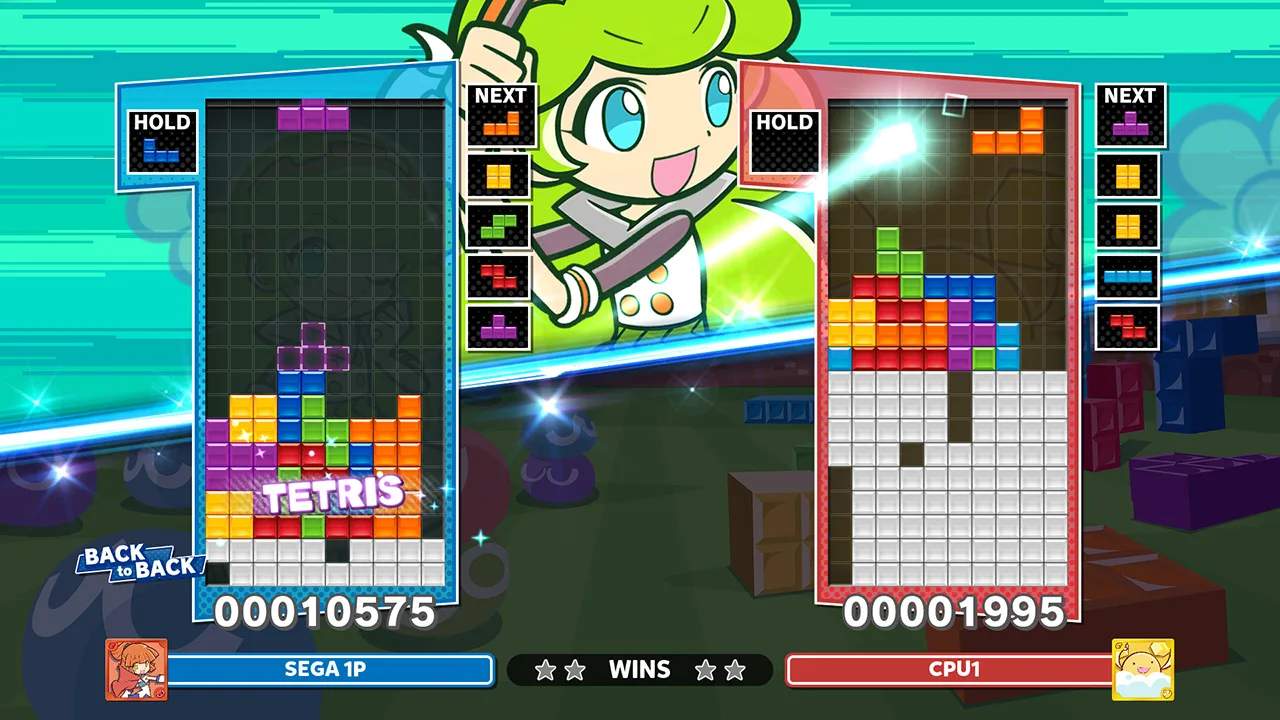
Puyo Puyo Basics
Welcome to the squishy, colorful world of Puyo Puyo! Unlike the rigid blocks of Tetris, Puyo Puyo is all about matching four or more same-colored Puyo to make them pop. This section will guide you through the fundamental mechanics and strategies to become a Puyo popping master.
The Puyo Puyo Board
Your playing field is a vertical well, typically 6 columns wide and 12-13 rows high. Puyo fall from the top in pairs (called "Puyo Pairs" or "Puyo Duos"), and your goal is to arrange them to create chains and send Nuisance Puyo to your opponent.
Puyo Types
- Colored Puyo: These are your main tools. They come in various colors (Red, Blue, Green, Yellow, Purple) and are the ones you'll match to clear.
- Nuisance Puyo (Garbage Puyo): These transparent, grey Puyo fall onto your board when your opponent makes a chain. They don't have a color and cannot be popped on their own. To clear them, you must pop adjacent colored Puyo.
- Hard Puyo: A more resilient form of Nuisance Puyo, requiring two adjacent Puyo pops to clear. These are typically sent by larger chains.
- Iron Puyo: The toughest Nuisance Puyo, requiring three adjacent Puyo pops to clear. These are rare and usually sent by massive chains.
- Star Puyo: These special Puyo appear in certain game modes or as a result of specific chain reactions. They often clear a larger area or have unique properties.
Basic Controls and Actions
Mastering these simple controls is key to setting up complex chains:
- Move Puyo Pair: Use the Left/Right directional buttons (or left stick) to move the falling Puyo Pair horizontally across the board.
- Rotate Puyo Pair: Use the A/B buttons (or X/Y on PlayStation, or the corresponding face buttons on other consoles like Switch) to rotate the Puyo Pair. This allows you to change the orientation of the two Puyo within the pair.
- Soft Drop: Press Down to make the Puyo Pair fall faster. This is crucial for quick placements and reacting to your opponent's moves.
- Hard Drop: Press Up to instantly drop the Puyo Pair to the lowest available position. Be careful, as this is irreversible!
- Hold Puyo (Swap): In Puyo Puyo Tetris 2, you can often hold a Puyo Pair for later use by pressing the L or R shoulder buttons. This allows you to strategically save a specific Puyo Pair for a crucial moment.
Making a Pop: The Core Mechanic
To make Puyo pop, you need to connect four or more Puyo of the same color. They must be touching horizontally or vertically (diagonals don't count). When they pop, they disappear, and any Puyo above them fall down to fill the empty space. This falling action is what allows for chains!
Chains: Your Path to Victory
Chains are the heart and soul of Puyo Puyo. A chain occurs when Puyo pop, causing other Puyo to fall and create new groups of four or more same-colored Puyo, which then pop, and so on. The more links in your chain, the more Nuisance Puyo you send to your opponent.
Building a Chain: Step-by-Step
- Foundation: Start by placing Puyo of different colors next to each other, but don't connect four of the same color yet. Think of this as building layers.
- Trigger: Identify a spot where placing a single Puyo will connect four or more of the same color, initiating the first pop.
- Cascade: As the first group pops, observe how the Puyo above them will fall. Your goal is to have these falling Puyo create new groups of four or more, triggering subsequent pops.
- Anticipate and Plan: This is the hardest part. You need to visualize how Puyo will fall and where they will land to continue the chain. Look for "gaps" or "holes" in your Puyo formation that can be filled by falling Puyo to extend your chain.
Common Chain Strategies
- Staircase Chain: A beginner-friendly method where you build up Puyo in a stair-like pattern, with each step being a different color. This makes it easier to visualize how Puyo will fall and connect.
- Sandwich Chain: Involves placing a "trigger" Puyo between two groups of the same color, causing both to pop and potentially extend the chain.
- GTR (GTR Setup): A more advanced technique, often used by experienced players, that involves building a specific, compact structure that can easily be triggered into a large chain. This typically involves a "T-shape" or "L-shape" of Puyo.
- Double Rotation: A crucial technique where you rotate a Puyo Pair twice to place them in a specific orientation, often used to fill gaps or extend chains in tight spaces.
Sending Nuisance Puyo
When you make a chain, you send Nuisance Puyo to your opponent. The larger your chain, the more Nuisance Puyo you send. These Puyo appear at the top of your opponent's board, pushing their existing Puyo down and making it harder for them to clear their board. The goal is to fill their board with Nuisance Puyo until they can no longer place new Puyo, resulting in a "Game Over" for them.
Countering Nuisance Puyo
Don't despair if your opponent sends you Nuisance Puyo! You can clear them by popping adjacent colored Puyo. If you make a chain while Nuisance Puyo are falling, you can "offset" or "counter" your opponent's attack, preventing some or all of the Nuisance Puyo from landing on your board. This is a critical defensive and offensive strategy.
Fever Mode
In certain game modes, particularly in "Swap" or "Fusion" modes, you can enter Fever Mode. This is a temporary power-up state where pre-arranged chains appear on your board, allowing you to rapidly clear them for massive points and Nuisance Puyo attacks. To enter Fever Mode, you typically need to clear a certain number of Puyo or perform specific actions.
With these Puyo Puyo basics under your belt, you're ready to dive into the colorful chaos of Puyo Puyo Tetris 2! Practice these techniques, experiment with different chain setups, and soon you'll be sending mountains of Nuisance Puyo to your opponents!