Game Difficulty Differences
Resident Evil 3: Nemesis offers a dynamic difficulty system that subtly adjusts based on your performance. Unlike many games with explicit difficulty selections, RE3's challenge is largely organic, making each playthrough feel unique. Understanding these underlying mechanics is crucial for mastering the game, whether you're aiming for a speedrun or simply trying to survive Raccoon City.
Adaptive Difficulty Explained
The game continuously monitors various player statistics to determine the overall difficulty. This includes:
- Damage Taken: Consistently getting hit or entering "Danger" status will generally lower the difficulty.
- Enemies Killed: Efficiently dispatching foes, especially with headshots or critical hits, tends to increase the difficulty.
- Ammunition Used: Wasting ammo or using excessive rounds per kill can reduce the difficulty, as the game might interpret this as struggling.
- Healing Item Usage: Frequent use of Green Herbs, Blue Herbs, Red Herbs, or First Aid Sprays signals to the game that you might be having trouble.
- Time Taken: While not a primary factor, excessively long playtimes might slightly influence resource availability.
These factors influence several key aspects of gameplay:
Enemy Behavior and Placement
- Aggressiveness: On higher difficulty, zombies and other creatures like Drain Deimos or Hunters will attack more frequently and relentlessly. They may also pursue you for longer distances.
- Health Points (HP): Enemies will have increased HP, requiring more shots to put down. This is particularly noticeable with standard Zombies, where a headshot might take 2-3 pistol rounds on easy settings, but 4-5 or more on harder ones.
- Critical Hit Chances: Your chances of landing a critical headshot on zombies or stunning other creatures will decrease on higher difficulties.
- Enemy Spawns: While fixed encounters remain, the number of additional enemies in certain areas can vary. For instance, the alleyway near the Raccoon City Police Department (RPD) might have more zombies on a tougher run.
Resource Management
This is where the adaptive difficulty truly shines and can significantly impact your strategy.
- Ammunition Drops:
- Easy/Lower Difficulty: You'll find more plentiful Handgun Bullets, Shotgun Shells, and Grenade Rounds (Flame, Acid, Freeze). For example, the "Office" in the RPD might yield an extra box of Handgun Bullets.
- Hard/Higher Difficulty: Ammo drops become scarcer. You might find fewer boxes of Handgun Bullets, and more advanced ammunition types like Shotgun Shells or Grenade Rounds will be significantly rarer. Crafting ammo becomes absolutely essential.
- Healing Item Availability:
- Easy/Lower Difficulty: Green Herbs and First Aid Sprays are more common. You might find a Green Herb in a previously empty locker or an extra First Aid Spray in a storage room.
- Hard/Higher Difficulty: Healing items are severely limited. Every Green Herb and First Aid Spray must be conserved. Combining herbs (e.g., Green + Green + Green for a Full Heal) becomes paramount.
- Weapon Part Drops: While specific weapon parts (e.g., Shotgun Parts A/B, M37 Parts A/B) are generally fixed, the frequency of finding additional Gun Powder or Enhanced Gun Powder can be affected.
Nemesis Encounters
Nemesis himself adapts to your performance:
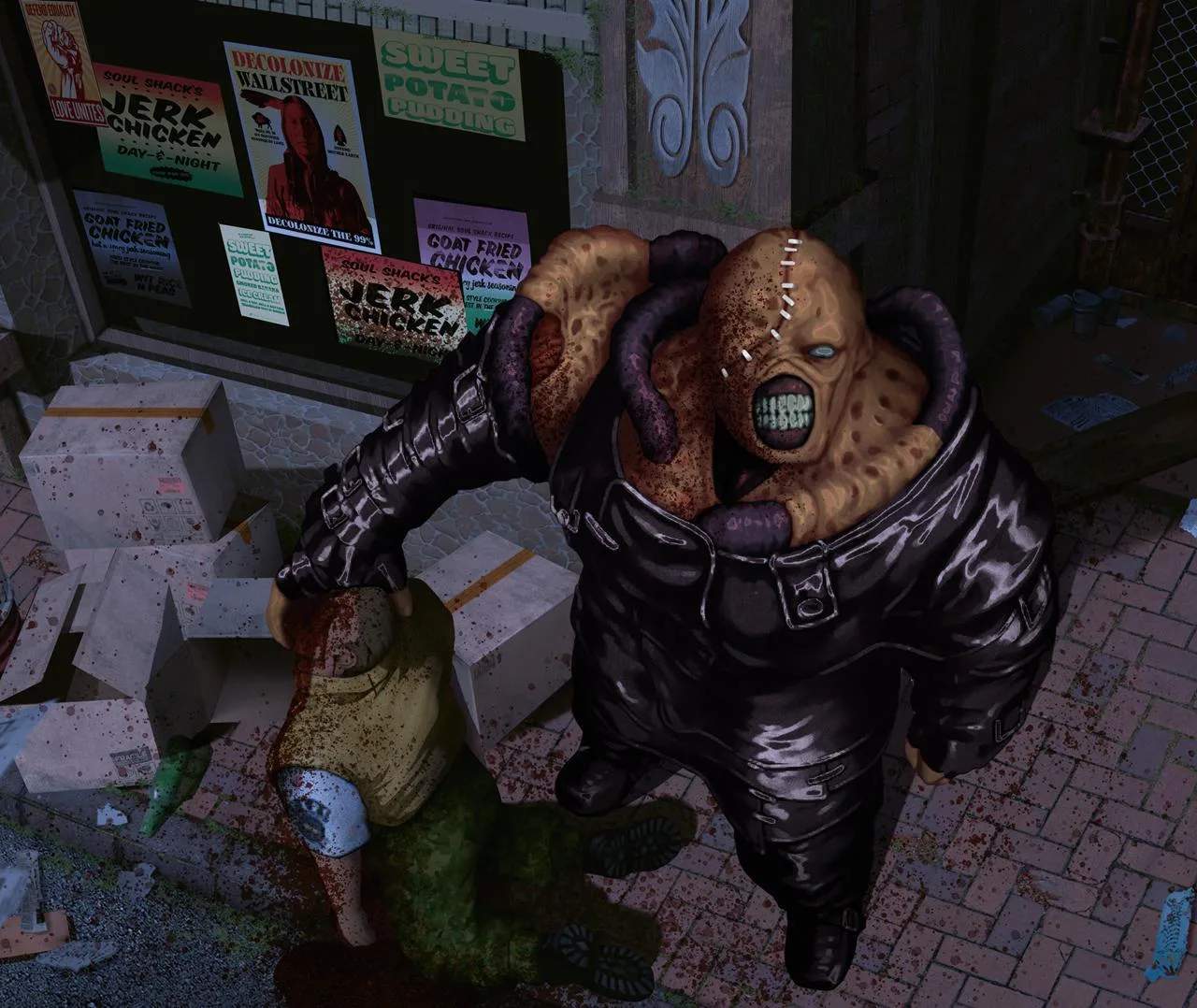
- Aggressiveness: On higher difficulties, Nemesis will be more relentless in his pursuit, attack more frequently, and use his Rocket Launcher more often. His grab attacks will also be harder to escape.
- HP: Nemesis will have increased HP, requiring more damage to temporarily incapacitate him or force him to drop items.
- Item Drops: The quality and quantity of items Nemesis drops upon defeat can vary.
- Lower Difficulty: More likely to drop higher-tier items like the Eagle Parts A/B, M37 Parts A/B, or even the powerful Magnum.
- Higher Difficulty: More often drops basic items like First Aid Sprays or Handgun Bullets, making his defeat less rewarding in terms of powerful weaponry. You might still get weapon parts, but the chance for the Magnum is reduced.
Strategies for Different Difficulties
- Lower Difficulty (Struggling):
- Conserve Ammo (Still!): Even with more ammo, don't waste it. Aim for headshots on zombies.
- Utilize Dodging: Practice Jill's dodge mechanic to avoid damage and save healing items.
- Explore Thoroughly: Check every corner for extra items, as the game is more generous.
- Don't Fear Nemesis: If you're low on resources, running from Nemesis is often the best option. The game will likely compensate with more drops later.
- Higher Difficulty (Performing Well):
- Master Crafting: Combine Gun Powder A with Gun Powder B to create Shotgun Shells, or use Gun Powder C for Grenade Rounds. This is your primary source of powerful ammo.
- Precision is Key: Every shot counts. Aim for critical hits and learn enemy weaknesses.
- Strategic Nemesis Encounters: Decide carefully when to fight Nemesis for his drops and when to run. On higher difficulties, fighting him can be a massive drain on resources. If you do fight him, use powerful weapons like the Shotgun or Grenade Launcher.
- Item Box Management: Keep your inventory lean. Only carry what you absolutely need for the immediate area. Store excess healing items and ammo.
- Know the Map: Familiarity with Raccoon City's layout allows for efficient movement and avoiding unnecessary encounters.
By understanding how Resident Evil 3's adaptive difficulty works, you can better prepare for the challenges ahead and tailor your playstyle to maximize your chances of survival, no matter how the game tries to push back.