Historical Context & Development
Resident Evil 3: Nemesis, released in 1999 for the PlayStation, holds a unique place in the survival horror genre. It wasn't just a sequel; it was a parallel narrative, designed to bridge the gap between Resident Evil 2 and the original Resident Evil, while simultaneously pushing the boundaries of what a survival horror game could be. Understanding its development helps appreciate the design choices and the unrelenting pressure Jill Valentine faces throughout Raccoon City.
From Spin-off to Mainline
Initially, Resident Evil 3 was conceived as a spin-off title, a side story focusing on a different character. However, as development progressed, Capcom realized the potential of the project and elevated it to a mainline entry, albeit one that ran concurrently with the events of Resident Evil 2. This decision allowed for a fresh perspective on the Raccoon City outbreak, showcasing the city's descent into chaos from the perspective of an experienced S.T.A.R.S. member, Jill Valentine.
- Concurrent Narrative: The game begins 24 hours before the events of Resident Evil 2 and concludes after its resolution, offering a broader view of the city's destruction.
- Engine Evolution: While still utilizing the pre-rendered backgrounds and fixed camera angles of its predecessors, RE3 introduced more dynamic camera work and environmental destruction, enhancing the sense of urgency and danger.
The Birth of Nemesis
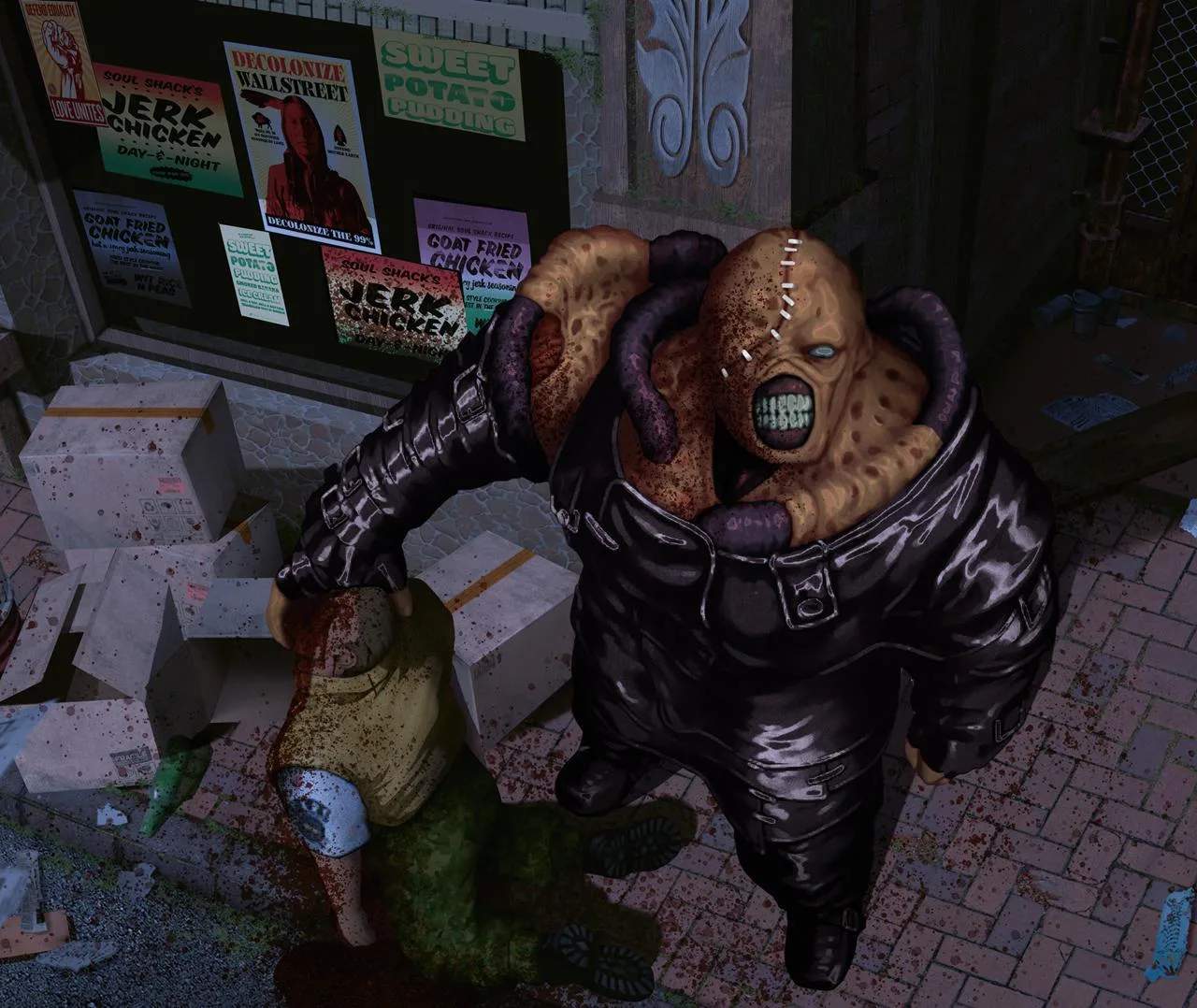
The most defining feature of Resident Evil 3 is, without a doubt, the Nemesis-T Type. This relentless bioweapon was a direct response to player feedback from earlier titles, where enemies were often predictable. Capcom wanted to create an antagonist that instilled constant fear and unpredictability. The "Pursuer" system was a groundbreaking innovation for the time.
- Dynamic Encounters: Unlike static boss fights, Nemesis can appear at various, often unexpected, locations throughout the game. This dynamic system forces players to adapt on the fly, conserving resources and making split-second decisions.
- Persistent Threat: Nemesis isn't just a monster; it's a force of nature. It can open doors, climb obstacles, and even use weapons, making it a truly terrifying and unforgettable adversary.
- Choice System: The "Live Selection" system, where players are presented with timed choices during certain Nemesis encounters, was a novel addition. These choices can alter minor aspects of the narrative or provide different tactical advantages/disadvantages. For example, during the initial encounter outside the R.P.D. Station, choosing to "Fight Nemesis" might yield a valuable weapon part, but at the cost of significant health and ammunition. Conversely, "Run into the Police Station" offers a temporary reprieve but delays the inevitable confrontation.
Gameplay Innovations
Beyond Nemesis, Resident Evil 3 introduced several key gameplay mechanics that would become staples or influence future entries in the series:
- Dodge Mechanic: Jill can perform a quick dodge or a 180-degree turn, offering a crucial defensive option against incoming attacks. Mastering this is essential for conserving health and ammunition, especially against faster enemies like Hunters or the Nemesis itself. To execute a dodge, press the aim button (R1) and a directional button just as an enemy is about to strike.
- Ammunition Crafting: The "Reloading Tool" found early in the game (e.g., in the Garage near the beginning) allows players to combine Gunpowder with other Gunpowder types to create various ammunition. This system encourages resource management and strategic planning.
- Gunpowder A + Gunpowder A = Handgun Ammo
- Gunpowder B + Gunpowder B = Shotgun Ammo
- Gunpowder C + Gunpowder C = Grenade Launcher Ammo (Explosive Rounds)
- Gunpowder A + Gunpowder B = Magnum Ammo
- Environmental Interaction: The game featured more interactive environments, such as exploding barrels and destructible objects, which could be used to your advantage against hordes of zombies or even Nemesis. For instance, shooting the explosive barrel in the alleyway near the beginning can clear a path through a group of zombies.
- Mercenaries Mode: Unlocked after completing the main story, "The Mercenaries: Operation Mad Jackal" offered a fast-paced, score-attack mini-game, providing replayability and a chance to earn powerful weapons for subsequent playthroughs.
By understanding these historical and developmental aspects, You can better appreciate the intricate design and lasting impact of Resident Evil 3: Nemesis, a game that truly pushed the boundaries of survival horror.