
Act 3: The Beyond
Welcome, brave adventurer, to Act 3: The Beyond – the crucible that will forge you into a true Spire-slayer, or break you upon its unforgiving challenges. This is the final ascent before confronting the Heart itself (if you've unlocked it), and every encounter, every choice, carries immense weight. Enemies here are not just stronger; they are smarter, more synergistic, and designed to exploit any weakness in your carefully constructed deck.
Your primary goal in Act 3 is to refine your deck to its absolute peak, ensuring it can consistently execute its core strategy while also possessing answers to a wide array of threats. Expect brutal multi-enemy compositions, devastating debuffs, and bosses that demand precise play and often, unique counter-strategies. Robust defensive solutions, reliable damage scaling, and efficient card draw are no longer luxuries – they are necessities.
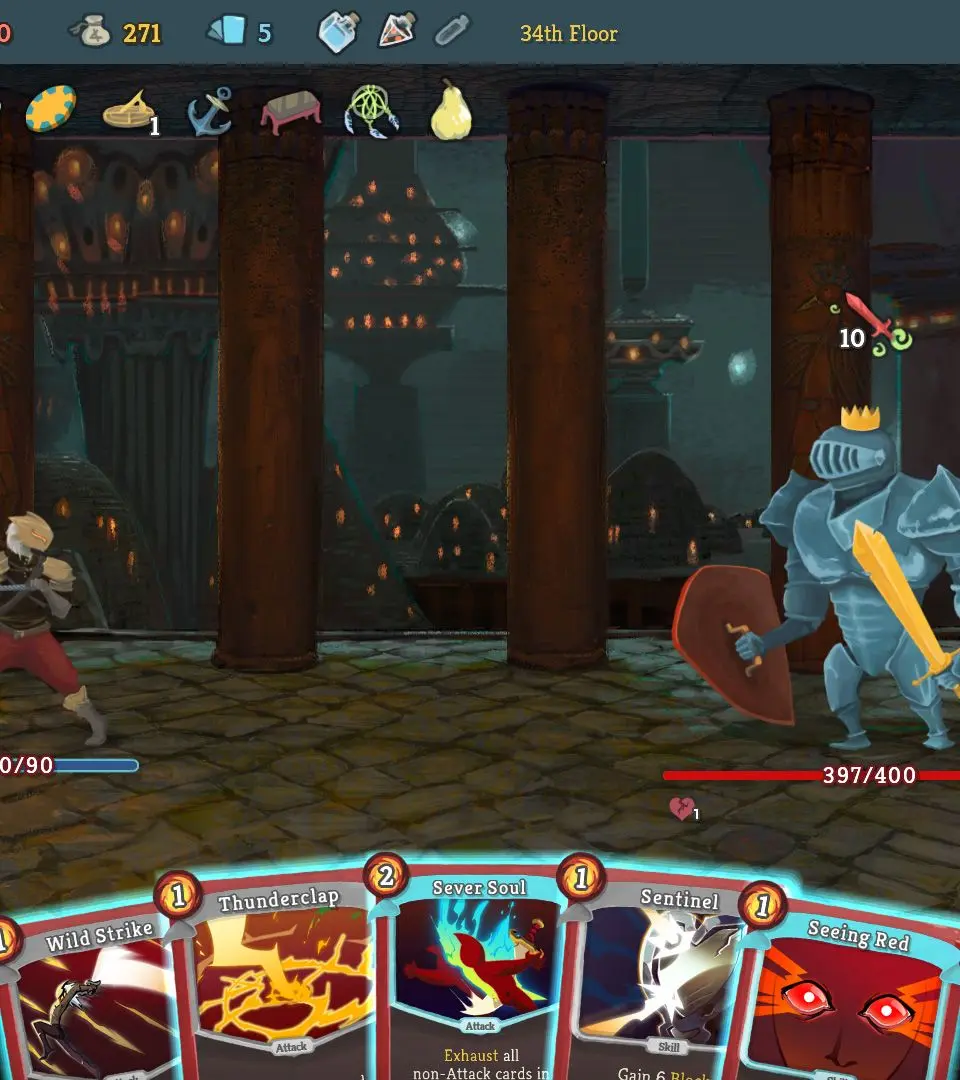
Common Challenges & Enemy Archetypes
Act 3 introduces a diverse and deadly roster of foes, each designed to test different aspects of your deck. Understanding their mechanics is crucial for survival.
- Debuff Overload: Many Act 3 enemies apply powerful debuffs like Weak, Vulnerable, Poison, Frailty, Dazed, Wound, and Slimed. Cards that cleanse debuffs (e.g., Panacea, Orange Pellets relic) or provide Artifact become incredibly valuable.
- Multi-Enemy Swarms: Expect frequent encounters against 3-4 powerful enemies simultaneously. Prioritization is key. Do you eliminate the damage dealer, the debuffer, or the one buffing its allies? Area-of-effect (AoE) damage cards (e.g., Whirlwind, Thunderclap, Sunder, Corpse Explosion) shine here.
- Scaling Threats: Some enemies start weak but scale rapidly, either through buffs (e.g., Darklings) or by accumulating effects (e.g., Spikers). You need to be able to burst them down or control their scaling.
- Status Card Spam: Enemies like the Nemesis or Awakened One will flood your deck with status cards. Cards that exhaust (e.g., True Grit, Sever Soul, Bash+) or provide strong card draw/discard are essential to maintain deck purity.
Notable Act 3 Elite Encounters
Elites in Act 3 are often tougher than some Act 1 or 2 bosses. Approach them with caution and a full health bar.
- Giant Head: A massive HP pool and a unique "Stun" mechanic that prevents you from playing cards if you don't deal enough damage. Requires consistent, high damage output.
- Nemesis: Starts Intangible and cycles between attacking and applying Burn. You need to survive its attacks while waiting for its Intangible to wear off, then burst it down. Artifact is excellent here.
- Reptomancer: Summons multiple Daggers that hit hard and apply Vulnerable. AoE is highly effective to clear the daggers, but you must also deal with the Reptomancer's own attacks.
Deck Optimization for Act 3
Your deck's strategy should be well-defined by Act 3, but refinement is still possible and often necessary. Focus on consistency, efficiency, and having answers to common threats.
Key Card Types & Synergies
- Reliable Block: Whether through high-value block cards (e.g., Barricade, Entrench, Impervious), consistent block generation (e.g., Deflect, After Image), or Block scaling (e.g., Body Slam, Feel No Pain), you need to mitigate incoming damage.
- Damage Scaling: Flat damage won't cut it against Act 3's HP pools. Look for ways to scale your damage over time (e.g., Strength buffs, Poison, Claw, Shives, Dark Orb scaling).
- Card Draw & Discard: To cycle through your deck and find your key cards, draw is paramount. Discard can help manage status cards or activate specific synergies (e.g., Tactician, Calculated Gamble).
- Energy Generation: More energy means more actions. Relics like Coffee Dripper or Velvet Choker (if your deck allows) or cards like Adrenaline, Concentrate, Forethought are game-changers.
- Utility & Control: Cards that apply Weak, Vulnerable, Stun, or Exhaust status cards are invaluable for controlling fights.
Relic Synergies to Prioritize
Certain relics become exponentially more powerful in Act 3 due to the nature of the encounters.
- Tungsten Rod: Reduces all damage taken by 1. In fights with many small hits, this can save significant HP.
- Orange Pellets: Removes all debuffs when you play an Attack, Skill, and Power card in the same turn. Incredible against debuff-heavy enemies.
- Bottled Flame/Lightning/Tornado: Ensures your most crucial Attack, Skill, or Power card is in your opening hand. Consistency is king.
- Dead Branch: For Silent or Ironclad exhaust decks, this can create an endless stream of new cards.
- Incense Burner: Provides Intangible every 6 turns. Can negate massive boss attacks.
Act 3 Bosses: The Ultimate Test
Act 3 features three potential bosses, with one chosen randomly for your run. Each demands a distinct strategy.
The Awakened One
- Mechanics: Starts with Strength and gains more whenever you play a Power card. Summons two Cultists. After its first phase, it revives with full HP and loses its Strength gain mechanic but hits harder.
- Strategy:
- Phase 1: Minimize Power card usage if possible, or ensure you have enough block to mitigate its scaling damage. AoE to clear Cultists is helpful.
- Phase 2: This is a pure damage race. Burst it down quickly.
- Pitfall: Over-reliance on Power cards without sufficient block or damage to compensate.
Donu and Deca
- Mechanics: Two separate entities. Donu grants Strength to both every turn. Deca applies Dazed to your hand.
- Strategy:
- Prioritization: Generally, focus Donu first to stop the Strength scaling. However, if Deca's Dazed is crippling your deck, you might need to take it out first.
- Card Draw/Discard: Essential to manage the Dazed cards.
- Pitfall: Letting Donu scale too much Strength, leading to overwhelming damage.
Time Eater
- Mechanics: Has a "12-card limit" counter. After you play 12 cards, your turn immediately ends, and Time Eater gains Strength and heals. Also applies Frailty.
- Strategy:
- Card Efficiency: Every card counts. Prioritize high-impact cards. Avoid playing too many low-value cards just to cycle.
- Burst Damage: Try to set up turns where you can deal massive damage within the 12-card limit.
- Frailty Counter: Cards that remove debuffs or provide Artifact are good.
- Pitfall: Playing too many cards, ending your turn prematurely and allowing Time Eater to scale. Decks that rely on playing many cheap cards (e.g., Silent Shivs) struggle here without careful planning.
General Act 3 Survival Tips
- Pathing: Prioritize Campfires for upgrades or rests, and Shops for crucial relics or card removals. Elites are high risk, high reward – only take them if your deck is strong enough to handle them and you need the relic.
- Card Removal: Removing weak cards from your deck becomes even more impactful in Act 3, increasing the consistency of drawing your powerful cards. Prioritize removing Strikes and Defends if possible.
- Health Management: Don't be afraid to rest at campfires if your HP is low, especially before an Elite or Boss. A full health bar can be the difference between victory and defeat.
- Potion Usage: Potions are designed to be used! Don't hoard them. A well-timed Attack Potion or Block Potion can turn the tide of a difficult fight. Essence of Darkness (extra Orb slot) or Essence of Steel (permanent Metallicize) are incredibly strong.
- Adaptability: Even with a strong strategy, you need to be able to adapt to the specific enemies you face. Sometimes, a slight shift in target prioritization or card play can save a run.
Mastering Act 3 is about more than just having powerful cards; it's about understanding the intricate dance of enemy mechanics, resource management, and strategic decision-making. Good luck, and may your deck be ever in your favor!