Easter Eggs & Fun Facts
Super Mario Sunshine, while a unique entry in the Mario franchise, is brimming with delightful Easter Eggs and fun facts that pay homage to Nintendo's rich history and add layers of charm to the tropical adventure. From subtle visual gags to nostalgic musical throwbacks, these hidden gems reward observant players and deepen the game's lore. This section will guide you through some of the most notable secrets and interesting tidbits scattered across Isle Delfino.
Bowser Jr.'s Artistic Tag: Graffiti Signatures
Before his grand reveal, Bowser Jr. (in his Shadow Mario guise) leaves his mark all over Isle Delfino. His distinctive "Jr." signature, often accompanied by a mischievous grin or a Bowser-like symbol, can be found spray-painted in various locations. These aren't just random scribbles; they serve as early clues to his identity and add a personal touch to the environmental storytelling.
- Bianco Hills: Look for his tag on the large windmill structures and the walls surrounding the village. One prominent spot is on the base of the main windmill in the central plaza.
- Ricco Harbor: Check the sides of crates, shipping containers, and the walls near the large ship. A particularly clear signature can be found on a container near the entrance to the harbor.
- Gelato Beach: Keep an eye on the walls of the small huts and the rock formations near the beach.
- Pinna Park: His signature can be seen on some of the ride structures and the entrance archway.
- Noki Bay: While less prevalent due to the natural environment, some of the ancient ruins and cliff faces bear his mark.
- Sirena Beach: Inside the Hotel Delfino, especially in the lobby and some of the more accessible rooms, you might spot his tag on walls or furniture.
These graffiti tags often appear in areas that Shadow Mario has recently "polluted" or passed through, making them a breadcrumb trail for the observant player.
Nostalgic Tunes: Classic Mario Music Remixes
Super Mario Sunshine features several "secret" levels – often referred to as "puzzle rooms" or "platforming challenges" – that strip Mario of FLUDD and challenge his pure platforming skills. What makes these levels even more special is their musical accompaniment: remixes of iconic tunes from past Mario games.
- Secret Levels (General): Many of the FLUDD-less platforming stages across Isle Delfino feature a jazzy, upbeat remix of the classic Super Mario Bros. Overworld Theme. This instantly recognizable melody evokes a strong sense of nostalgia for long-time fans.
- Specific Examples:
- Bianco Hills: "The Secret of the Dirty Lake" (Episode 3)
- Ricco Harbor: "The Secret of Ricco Tower" (Episode 3)
- Gelato Beach: "The Secret of the Dirty Lake" (Episode 3)
- Pinna Park: "The Secret of the Roller Coaster" (Episode 3)
- Sirena Beach: "The Secret of Casino Delfino" (Episode 3)
- Noki Bay: "The Secret of the Waterfall" (Episode 3)
- Pianta Village: "The Secret of the Village" (Episode 3)
- Specific Examples:
- Bonus Levels: The hidden "Red Coin" stages, accessed by finding specific M Graffiti in each area, also frequently use these classic remixes, further cementing the connection to Mario's platforming roots.
These musical choices are a deliberate nod to the series' history, reminding players that despite the new mechanics and tropical setting, Super Mario Sunshine is still fundamentally a Mario platformer.
Clever Naming Conventions: Real-World & Fictional References
Isle Delfino and its various locales are rife with clever names that often reference real-world companies, famous stories, or even other Nintendo properties.
- Noki Bay: This serene, cliff-lined bay is widely believed to be a playful reference to the Finnish telecommunications giant, Nokia. The name similarity, combined with Nokia's prominence in the early 2000s, makes this a strong contender for an intentional Easter Egg.
- Pinna Park: The amusement park's name is a clear homage to Pinocchio, the famous wooden puppet who longs to be a real boy. This reference is further reinforced by the park's attractions, which include a large whale ride (Monstro from Pinocchio) and a general whimsical, storybook atmosphere.
- Il Piantissimo: The speedy, mask-wearing character who challenges Mario to races is named "Il Piantissimo," which translates roughly to "The Most Pianta." His name emphasizes his connection to the Pianta species and his competitive nature.
- Gooper Blooper: The giant Blooper boss found in Ricco Harbor and other locations has a name that's a fun, alliterative play on words, making him memorable and slightly goofy.
Hidden Details & Environmental Storytelling
Beyond the obvious, Super Mario Sunshine is packed with subtle environmental details that add depth and personality to the world.
- Shadow Mario's Trail: Throughout the game, the iridescent "goop" left by Shadow Mario often forms patterns or even crude drawings, sometimes resembling his own face or Bowser's. Pay attention to the ground after he makes an escape.
- Pianta Culture: Observe the Pianta villagers. They have their own language (though mostly unintelligible to Mario), unique customs, and even their own currency (coins, of course!). Their interactions and daily routines add to the feeling of a living, breathing world.
- FLUDD's Sentience: FLUDD isn't just a tool; it's a character with its own personality. Its dialogue, often witty and helpful, evolves throughout the game, and its "thoughts" provide insights into the unfolding mystery.
- Yoshi's Diet: Yoshi's ability to change color based on the fruit he eats is a fun mechanic, but also a subtle nod to his diverse diet and adaptability in previous games. Each color grants a different special ability (e.g., orange Yoshi spits juice, pink Yoshi spits juice, purple Yoshi spits juice, etc.).
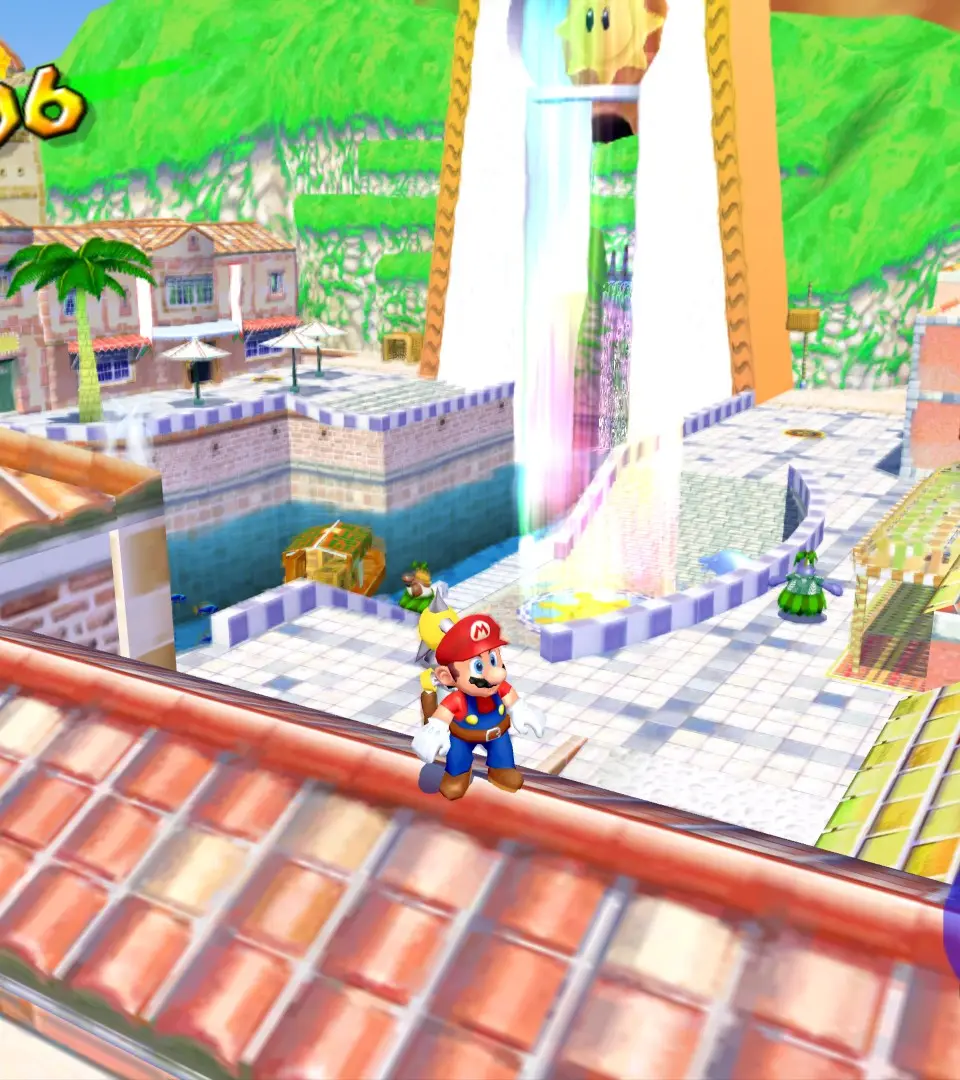
- The Delfino Airstrip Secret: After completing the game, if you return to the Delfino Airstrip, you can find a secret Shine Sprite by ground-pounding a specific manhole cover. This is a classic Mario trope – revisiting the starting area for a final hidden reward.
Developer Insights & Unused Content
While not strictly in-game Easter Eggs, understanding some developer choices and cut content can be fascinating.
- Early Concepts: Initial concepts for Super Mario Sunshine included a more realistic art style and even a different protagonist. The final whimsical, tropical aesthetic was a deliberate choice to differentiate it from previous Mario titles.
- FLUDD's Origins: FLUDD (Flash Liquidizer Ultra Dousing Device) was designed to introduce a new gameplay mechanic that felt fresh while still being distinctly "Mario." Its water-based abilities were a direct response to the game's tropical setting.
- Voice Acting: Super Mario Sunshine was one of the first mainstream Mario games to feature extensive voice acting for its characters, a significant departure from the series' silent protagonists and minimal dialogue. This added a new dimension to character personalities.
Exploring these Easter Eggs and fun facts not only enhances your appreciation for Super Mario Sunshine's intricate design but also connects it to the broader legacy of the Super Mario franchise. Keep your eyes peeled and your FLUDD charged, because Isle Delfino still holds many secrets!