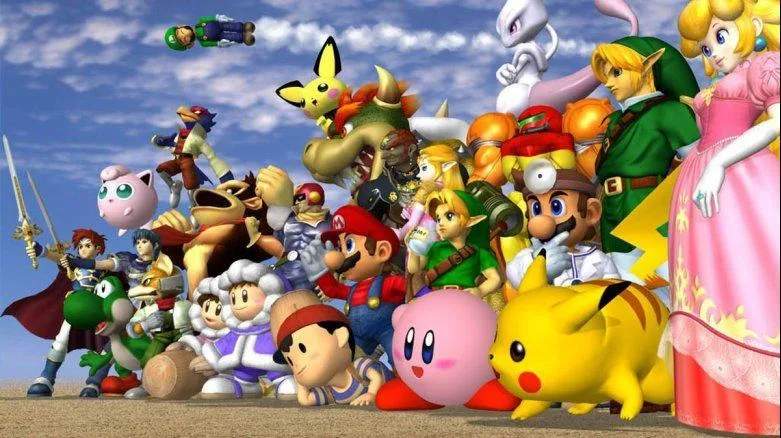
Classic Mode
Classic Mode in the original Super Smash Bros. for Nintendo 64 is the quintessential single-player experience, offering a structured progression through a series of iconic Nintendo characters. Unlike later iterations, this mode is a straightforward arcade ladder, designed to test your mastery of a chosen fighter against a fixed sequence of opponents, culminating in a showdown with the enigmatic Master Hand. It's a fantastic way to familiarize yourself with the game's mechanics, unlock hidden characters, and challenge yourself against increasingly difficult foes.
The Path to Master Hand
When you select Classic Mode, you'll choose one of the initial eight characters. Your journey will consist of eight distinct stages, each presenting a unique challenge:
- Stage 1: A 1-on-1 battle against a single opponent.
- Stage 2: A 1-on-1 battle against a single opponent.
- Stage 3: A 1-on-1 battle against a single opponent.
- Bonus Stage 1: "Break the Targets!"
- Stage 4: A 1-on-1 battle against a single opponent.
- Stage 5: A 1-on-1 battle against a single opponent.
- Bonus Stage 2: "Board the Platforms!"
- Stage 6: A 1-on-1 battle against a single opponent.
- Stage 7: A 1-on-1 battle against a single opponent.
- Stage 8: A 1-on-1 battle against a single opponent.
- Stage 9: The "Metal Mario" battle.
- Stage 10: The "Giant Donkey Kong" battle.
- Stage 11: The "Fighting Team" battle.
- Final Stage: The Master Hand battle.
The specific opponents you face in Stages 1, 2, 3, 4, 5, 6, 7, and 8 are semi-randomized from the roster of available characters, ensuring some variety across playthroughs. However, the structure and the final three unique battles remain consistent.
Difficulty Settings
Before starting your Classic Mode run, you can select one of five difficulty settings. This choice significantly impacts the AI's aggressiveness, damage output, and resilience. Higher difficulties yield greater rewards, including more points for your score and a higher chance of unlocking characters.
- Very Easy: Opponents are passive and deal minimal damage. Ideal for beginners.
- Easy: A slight step up, but still manageable for most players.
- Normal: The standard experience, offering a fair challenge.
- Hard: Opponents become more aggressive, block more often, and execute combos.
- Very Hard: The ultimate challenge, with highly skilled and relentless AI. Expect precise dodges, powerful attacks, and unforgiving edge-guarding.
If you lose a stock during a battle, you can continue by spending a "Continue." You start with a limited number of Continues, and running out means your Classic Mode run ends. Successfully completing Classic Mode on higher difficulties without using any Continues is a mark of true skill.
General Strategies for Success
- Master Your Character: Each character has unique strengths and weaknesses. Understand their basic attacks, smash attacks, special moves, and recovery options. Practice their combos and learn their optimal K.O. moves.
- Stage Awareness: While the stages are fixed for certain battles, understanding the general layout of each arena is crucial. Utilize platforms for evasive maneuvers or to gain a height advantage. Be wary of stage hazards, though the N64 version is less hazard-heavy than later titles.
- Item Management: Items appear frequently. Learn which items are beneficial (e.g., Super Mushroom for size and power, Starman for invincibility, Heart Container for healing) and which can be used strategically (e.g., Bob-omb for area denial, Hammer for devastating attacks). Prioritize grabbing healing items when available.
- Edge-guarding: Preventing opponents from recovering to the stage is a highly effective strategy against the AI. Learn your character's best aerial attacks or projectiles for knocking opponents off-stage and keeping them there.
- Shield and Dodge: Don't just attack. Blocking incoming attacks with your shield (Z button or R button) is vital. Learn to spot openings after an opponent's attack to counter-attack. Dodging (shield + direction) can help you avoid powerful blows.
- Recovery: Always be mindful of your own recovery. If you get launched off-stage, know your character's Up+B special move and double jump to get back safely.
Bonus Stages
Classic Mode features two unique bonus stages that test your platforming and precision skills. Your performance in these stages contributes to your overall score.
Bonus Stage 1: "Break the Targets!"
In this stage, your goal is to destroy all ten targets scattered across a unique, character-specific stage within a time limit. Each character has their own distinct "Break the Targets!" layout, designed to highlight their movement and attack capabilities. There are no opponents, only the targets and the clock.
- Strategy:
- Learn the Layout: Before attempting, take a moment to observe the target placements. Some are easy to reach, others require precise jumps or specific attacks.
- Optimize Your Route: Plan an efficient path to hit all targets. Often, hitting targets in a specific order can save time.
- Utilize Special Moves: Many characters have special moves that can hit targets from a distance or through platforms. Experiment with your character's Up+B, Side+B, and Neutral+B moves.
- Practice: Achieving a perfect score (all targets destroyed quickly) often requires multiple attempts to memorize the layout and perfect your execution.
- Rewards: Completing this stage quickly and efficiently earns you bonus points, contributing to a higher overall score.
Bonus Stage 2: "Board the Platforms!"
Similar to "Break the Targets!", this stage presents a character-specific layout of platforms. Your objective is to touch all ten designated platforms within a time limit. You don't need to destroy them, just make contact.
- Strategy:
- Observe the Platforms: Note the location of all ten platforms. Some are stationary, others might move or disappear.
- Prioritize Movement: This stage primarily tests your character's aerial mobility and jump control. Use your double jump and recovery moves effectively.
- Plan Your Route: Just like "Break the Targets!", an efficient route is key. Often, starting with the highest or most difficult-to-reach platforms first can be beneficial.
- Precision Jumping: Avoid falling off the stage, as this costs valuable time. Focus on precise jumps and landings.
- Rewards: Successfully touching all platforms within the time limit grants bonus points.
Unique Battles
After the standard 1-on-1 battles and bonus stages, you'll face three unique challenges before confronting Master Hand.
Stage 9: Metal Mario
You will face a giant, metallic version of Mario on the Peach's Castle stage. Metal Mario is significantly heavier, making him incredibly difficult to launch. He also takes reduced damage from attacks.
- Strategy:
- High Damage/Knockback Moves: Focus on your character's strongest smash attacks and special moves that deal high damage and have good knockback.
- Grabs and Throws: Grabs are particularly effective against heavy opponents. Get a grab, deal some pummel damage, and then throw Metal Mario off the stage. Repeated throws can eventually wear him down.
- Edge-guarding: Once you manage to launch him off-stage, aggressively pursue him to prevent his recovery. His heavy weight makes his recovery options more limited.
- Avoid Being Grabbed: Metal Mario's grabs are powerful and can lead to significant damage or even a K.O. if you're at high percentages.
- Common Pitfall: Trying to rely on weak, rapid attacks. These will do minimal damage and won't launch him effectively.
Stage 10: Giant Donkey Kong
This battle pits you against an enormous Donkey Kong on the Kongo Jungle stage. Giant Donkey Kong has increased attack power and range, but his size also makes him a much larger target.
- Strategy:
- Aerial Attacks: His large size makes him vulnerable to aerial attacks. Jump and use your character's strong aerials to rack up damage.
- Target Weak Points: While not explicitly a "weak point," aiming for his head or upper body can sometimes be more effective for launching him.
- Stay Mobile: Giant DK's attacks, especially his Giant Punch, are devastating. Continuously move and dodge to avoid his powerful blows.
- Edge-guarding: Despite his size, he still has a recovery limit. If you can launch him off-stage, follow up with aerials to prevent him from returning.
- Common Pitfall: Getting caught in his powerful grabs or smash attacks. His range is deceptively large due to his size.
Stage 11: Fighting Team
You will face a horde of Fighting s, generic, translucent versions of the game's characters. The number of s you face depends on the difficulty setting, but it's always a multi-opponent battle on the Sector Z stage.
- Strategy:
- Wide-Reaching Attacks: Characters with wide-sweeping attacks (e.g., Link's Spin Attack, Samus's Screw Attack, Fox's Blaster) are excellent here for hitting multiple opponents simultaneously.
- Stage Control: Utilize the stage layout to your advantage. Try to group enemies together for multi-hits.
- Item Usage: Items like the Hammer, Starman, or Bob-omb can be incredibly effective for clearing out multiple s quickly. Prioritize grabbing these.
- Avoid Being Surrounded: The s, though individually weak, can overwhelm you if they gang up. Keep moving and try to separate them.
- Focus on K.O.s: Since there are many, focus on quickly K.O.ing s to reduce the numbers.
- Common Pitfall: Getting cornered or overwhelmed by the sheer number of opponents.
The Final Boss: Master Hand
The ultimate challenge of Classic Mode is the battle against Master Hand, the sentient, disembodied hand that serves as the game's final boss. This battle takes place on the Final Destination stage.
- Understanding Master Hand: Master Hand is a unique boss with a distinct set of attacks. He has a large health bar (represented by a percentage meter) and does not take knockback. Your goal is to reduce his health to 0%.
- Master Hand's Attacks & Counter-Strategies:
- Finger Walk: Master Hand walks across the stage on his fingers. Stay on platforms or jump over him.
- Finger Poke: He pokes a finger at you. Shield or dodge.
- Slap: A wide-arc slap. Shield or jump over.
- Flick: He flicks you with his thumb and forefinger. This can launch you far. Shield or dodge.
- Grab: He attempts to grab you. If caught, he'll squeeze you for damage. Mash buttons to escape. This is a good opportunity to attack his fingers while he's holding you.
- Laser Beam: He charges up and fires a laser from his fingertips. Move to the opposite side of the stage or shield.
- Drill: He dives down, spinning like a drill. Move out of the way.
- Ground Pound: He slams his palm onto the stage. Jump to avoid the shockwave. This leaves him vulnerable for a moment.
- Bullet Shots: He shoots small projectiles from his fingertips. Shield or jump.
- Clap: He claps his hands together, often after a grab or if you're between his hands. This is a very powerful attack. Get out of the way immediately.
- General Strategy:
- Learn Patterns: Master Hand's attacks are highly telegraphed. Observe his movements to anticipate his next move.
- Exploit Openings: After certain attacks (like the Ground Pound or when he's charging a laser), Master Hand will be momentarily vulnerable. Use these windows to unleash your strongest smash attacks and special moves.
- Stay Mobile: Constant movement is key to avoiding his powerful attacks. Don't stand still.
- Aerial Attacks: Many characters find aerial attacks effective against Master Hand, especially when he's hovering or performing attacks that leave him exposed.
- Patience: Don't rush. Master Hand can punish reckless play severely. Chip away at his health consistently.
- Recovery: Be extremely careful if launched off-stage. Master Hand will often try to prevent your recovery.
- Common Pitfall: Getting hit by the Clap or Grab attacks, which deal massive damage.
Unlocking Characters
Successfully completing Classic Mode is one of the primary ways to unlock the hidden characters in Super Smash Bros. for N64. Each character has specific unlock requirements, often tied to completing Classic Mode a certain number of times or under specific conditions (e.g., without continuing). Refer to the "Unlockable Characters" section of this guide for specific details on how to acquire each secret fighter.
Mastering Classic Mode is not just about beating the game; it's about understanding the core mechanics, learning your chosen fighter, and developing the skills necessary to excel in any battle. Good luck, and may your smash attacks be mighty!