Online Play
As a pioneering title on the Nintendo 64, Super Smash Bros. launched in an era before widespread internet connectivity was common for home consoles. Therefore, it is crucial to understand that Super Smash Bros. for the Nintendo 64 does NOT feature any form of online multiplayer. The game was designed exclusively for local, couch co-op and competitive play.
Any information you may encounter regarding online features such as "Quick Play," "Battle Arenas," "GSP (Global Smash Power)," or "Online Tournaments" pertains to much newer iterations of the series, specifically Super Smash Bros. Ultimate for the Nintendo Switch. These features are entirely absent from the original N64 title.
The True Multiplayer Experience: Local Battles
The heart of Super Smash Bros. on the Nintendo 64 lies in its robust local multiplayer. Up to four You can gather around a single console, each with their own Nintendo 64 controller, to engage in frantic, fun, and highly competitive battles. This local experience is where the game truly shines and where countless hours of enjoyment are to be found.
Setting Up a Local Multiplayer Match
To initiate a multiplayer match, follow these simple steps:
- Power On: Ensure your Nintendo 64 console is connected to your television and powered on.
- Insert Cartridge: Insert the Super Smash Bros. game cartridge firmly into the console's slot.
- Connect Controllers: Plug in 2, 3, or 4 Nintendo 64 controllers into the controller ports on the front of the console. Each player will need their own controller.
- Start Game: Select "Start" from the title screen.
- Choose "VS. Mode": From the main menu, navigate to and select "VS. Mode." This is the dedicated multiplayer option.
- Player Selection: Each connected controller will activate a player slot. You can then select their desired character from the roster.
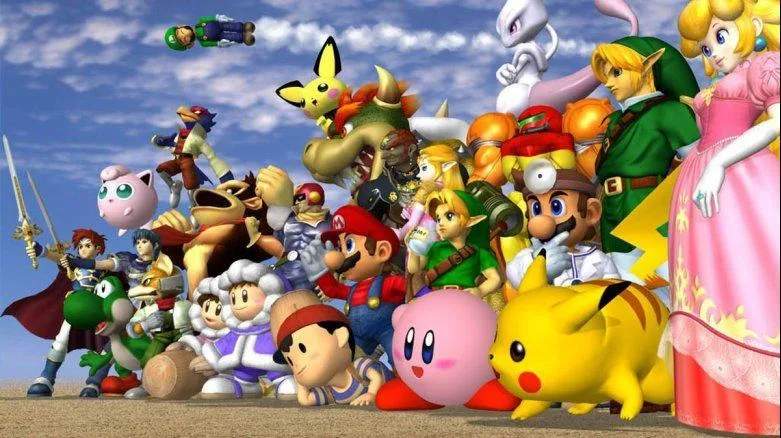
- Character Roster: Initially, 8 characters are available. More characters can be unlocked by completing specific challenges in 1-Player Mode.
- Name Entry: You can enter a three-initial tag for score tracking.
- Ruleset Configuration: Before starting the match, you'll be prompted to set the rules. This is where you customize your local battle experience.
Customizing Local Battle Rules
The N64 version offers a surprising amount of customization for its local matches. Discussing these settings with your friends before a match can lead to more balanced and enjoyable gameplay.
Match Type:
- Stock: Each player has a set number of lives (stocks). The last player with stocks remaining wins. This is the most common and competitive format.
- Recommended Stocks: 3-5 stocks per player for a good balance of length and intensity.
- Time: Players battle for a set amount of time. You with the most KOs (knockouts) and fewest falls (self-destructs or being KO'd) at the end of the timer wins.
- Recommended Time: 3-5 minutes for quick, chaotic matches.
Other Settings:
- Damage Ratio: Adjusts how much damage attacks inflict.
- 1.0x (Normal): Standard damage output.
- 0.5x (Half): Attacks do less damage, leading to longer matches.
- 2.0x (Double): Attacks do more damage, resulting in faster, more explosive matches.
- Item Frequency: Controls how often items appear on the stage.
- None: No items will appear. This is often preferred for highly competitive play to focus purely on character skill.
- Low: Items appear infrequently.
- Medium: Standard item appearance rate.
- High: Items appear very frequently, leading to chaotic and unpredictable battles.
- Stage Selection: After setting the rules, players will choose a stage. There are 9 unique stages, each with its own layout and potential hazards.
- Dream Land: A simple, iconic stage with Whispy Woods blowing wind.
- Hyrule Castle: Features a central structure and two side towers.
- Congo Jungle: A dynamic stage with moving platforms and a barrel cannon.
- Planet Zebes: Acid rises and falls, creating hazardous zones.
- Mushroom Kingdom: Features warp pipes and blocks.
- Saffron City: A skyscraper rooftop with flying Pokémon appearing in the background.
- Sector Z: A large, scrolling stage with the Great Fox providing platforms.
- Peach's Castle: Features two towers and a central platform.
- Meta Crystal: An unlockable stage, a simple flat platform, often favored for competitive play due to its lack of hazards.
Why Local Play Remains King for N64 Smash
Despite the lack of online features, the local multiplayer of Super Smash Bros. on N64 offers a unique and irreplaceable experience:
- No Lag: The most significant advantage is the complete absence of input lag or connection issues, ensuring a perfectly responsive and fair gameplay experience.
- Shared Experience: The camaraderie and rivalry of playing side-by-side with friends are central to the game's appeal. The shouts, cheers, and groans are all part of the fun.
- Controller Familiarity: The iconic N64 controller, with its unique three-pronged design, becomes an extension of the player. Mastering its nuances is part of the game's charm.
- Nostalgia: For many, playing N64 Smash locally is a trip down memory lane, recreating classic gaming sessions.
Common Pitfalls and Missables (in a local context)
- Forgetting to Unlock Characters: To enjoy the full roster in VS. Mode, players must complete 1-Player Mode challenges to unlock characters like Luigi, Captain Falcon, Ness, and Jigglypuff. Ensure these are unlocked to maximize character choices.
- Ignoring Rule Customization: Don't just jump into default settings. Experiment with item frequencies and damage ratios to find what's most fun for your group. Competitive players will almost always prefer "Items: None."
- Controller Issues: Ensure all controllers are fully functional. A faulty joystick or sticky button can severely impact a player's performance and enjoyment. The N64 joystick is particularly prone to wear and tear over time.
- TV Setup: Playing on an older CRT television, if available, can enhance the authentic N64 experience, as the game was designed for these displays. Modern HDTVs may introduce slight input lag or require specific aspect ratio settings.
In conclusion, while the concept of "online play" is entirely foreign to Super Smash Bros. on the Nintendo 64, its local multiplayer remains a timeless and incredibly engaging experience. Gather your friends, grab those iconic controllers, and prepare for some of the most memorable couch co-op battles in gaming history.