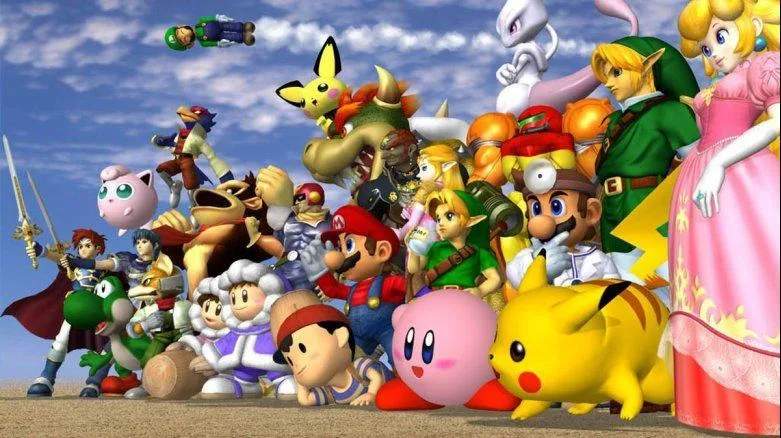
Smash Mode
Welcome to the definitive guide for Smash Mode, the heart of the original Super Smash Bros. for Nintendo 64! This section will equip you with the knowledge to dominate every match, whether you're a newcomer or a seasoned veteran looking to refine your strategy. Smash Mode is where the core fighting action happens, allowing you to customize battles to your exact preferences. Understanding its nuances is key to unlocking your full potential.
Setting Up Your Battle
Before the chaos begins, you'll need to configure your match settings. These choices significantly impact the flow and strategy of each battle. Pay close attention to these options:
- Ruleset: This is your first and most crucial decision.
- Time Battle: You with the most KOs (and fewest self-destructs) when the timer runs out wins. Focus on aggressive play and securing early KOs. Consider characters with strong combo potential like Fox or Captain Falcon.
- Stock Battle: Each player starts with a set number of lives (stocks). The last player standing wins. This mode encourages more defensive play and careful recovery. Characters with good recovery options, such as Kirby or Jigglypuff, excel here.
- Stamina Battle: Fighters have a health bar instead of stocks. Deplete your opponent's health to zero to KO them. This mode often feels more like traditional fighting games. High damage output characters like Donkey Kong can be devastating.
- Time/Stocks/Stamina: Adjust these values based on your preferred match length and intensity. Longer matches allow for more strategic comebacks, while shorter ones demand immediate aggression.
- Handicap: This option allows you to give an advantage to a less experienced player or challenge yourself against stronger opponents. A higher handicap means you take less damage and deal more.
- Stage Selection: Choose from several stages, each with unique layouts, hazards, and moving platforms.
- Specific Stages: Familiarize yourself with stages like Hyrule Castle (watch out for the tornado!), Congo Jungle (bouncing barrels and a moving barrel cannon), Saffron City (Pokémon appear from the building), Planet Zebes (acid rises and falls), and Mushroom Kingdom (breakable blocks and warp pipes). Knowing where hazards appear can turn the tide of battle.
- Items: Decide whether items appear, and at what frequency. Items can drastically alter gameplay.
- Off: For competitive play, items are often turned off to focus purely on character matchups and player skill.
- Low/Medium/High: Increases the frequency of item spawns.
- Specific Items: You can toggle individual items on or off. Experiment to find your preferred balance. Powerful items like the Starman (invincibility) and Poké Ball (summons a helper Pokémon) can be game-changers.
In-Game Strategies & Tips
Once the battle begins, effective execution of fundamental techniques is paramount. Here's how to maximize your performance:
- Character Mastery: Each fighter has a unique moveset, weight, and recovery. Spend time in Training Mode to understand your chosen character's strengths and weaknesses. Learn their optimal combos, kill moves, and recovery options. For example, Mario's Up+B (Super Jump Punch) is excellent for recovery and a decent KO move, while Link's Down+A (Spin Attack) can be charged for powerful damage.
- Movement is Key:
- Dash/Run: Essential for closing distances and escaping pressure.
- Jump/Double Jump: Crucial for aerial combat, recovery, and dodging. All characters have at least one double jump.
- Roll (Dodge Roll): Pressing Shield + Left/Right on the control stick allows you to roll a short distance, granting temporary invincibility. Overuse can make you predictable.
- Spot Dodge: Pressing Shield + Down on the control stick allows you to dodge in place, useful for avoiding attacks without changing position.
- Offensive Play:
- Tilts & Smashes: Tilts (lightly pressing A + direction) are quick, low-damage attacks, while Smashes (quickly pressing A + direction, or C-stick + direction) are powerful, chargeable attacks perfect for KOs.
- Aerials: Attacks performed in the air (A button in the air). Master short-hop aerials for quick pressure and combo extensions. For instance, Captain Falcon's Neutral Air (Nair) is a fast, multi-hit attack.
- Grabs & Throws: Pressing Z (or Shield + A) allows you to grab an opponent. Once grabbed, you can pummel them (A button) or throw them in various directions (Up, Down, Forward, Back on control stick). Throws bypass shields and can set up combos or stage positioning.
- Edgeguarding: Preventing opponents from recovering to the stage after being launched. Use projectiles (e.g., Link's Boomerang), aerials, or even a well-timed down-air to seal the deal.
- Defensive Play:
- Shielding: Holding the Shield button (R or L) blocks most attacks, but can be broken by repeated strong attacks or grabs. A broken shield leaves you vulnerable.
- Recovery: use your character's Up-Special (Up+B) and any remaining jumps to return to the stage. Mix up your recovery angles to avoid predictable edgeguards. Characters like Kirby and Jigglypuff have multiple jumps, making their recovery highly versatile.
- Techs (Ground): If you are hit into the ground and would bounce, pressing Shield just before hitting the ground allows you to "tech" and recover quickly, preventing further damage or follow-ups.
- Item Usage: If items are enabled, learn their effects and optimal usage.
- Offensive Items: Ray Gun (fires rapid projectiles), Super Scope (chargeable projectile weapon), Bob-omb (explodes after a short delay or upon impact), Star Rod (melee weapon that shoots stars), Home-Run Bat (powerful smash attack).
- Defensive/Utility Items: Heart Container (heals 100% damage), Starman (grants temporary invincibility), Warp Star (brief invincibility and a powerful, uncontrollable ascent/descent attack), Superspicy Curry (grants temporary fire breath).
- Strategic Items: Poké Ball (summons a random Pokémon helper, such as a Snorlax, Chansey, or Goldeen, each with unique effects).
Advanced Techniques
For those looking to elevate their game, consider incorporating these advanced maneuvers specific to Super Smash Bros. N64:
- Smash DI (Directional Influence): While being hit by a strong attack, holding a direction on the control stick can slightly alter your trajectory, potentially allowing you to survive a KO or escape a combo. Experiment with holding perpendicular to the knockback direction.
- Shield Dropping: While on a platform, pressing Down on the control stick while shielding allows you to drop through the platform while maintaining your shield for a brief moment. This can be used for quick escapes or surprise attacks from below.
- Ledge Stalling/Invincibility: When grabbing the ledge, your character gains a brief period of invincibility. You can drop from the ledge and immediately re-grab it to extend this invincibility, though repeated use can make you predictable.
- Dash Dancing: Rapidly changing direction while dashing (by quickly tapping left and right on the control stick) can be used to bait out attacks, confuse opponents, or subtly adjust your positioning.
- Crouch Canceling: While crouching (holding Down on the control stick), many attacks will cause less hitstun, allowing you to retaliate faster. This is particularly effective against weaker, multi-hit attacks.
Mastering Smash Mode is a journey of continuous learning and adaptation. Experiment with different fighters, stages, and item combinations. The more you play, the more intuitive these strategies will become, and soon you'll be dominating the competition!