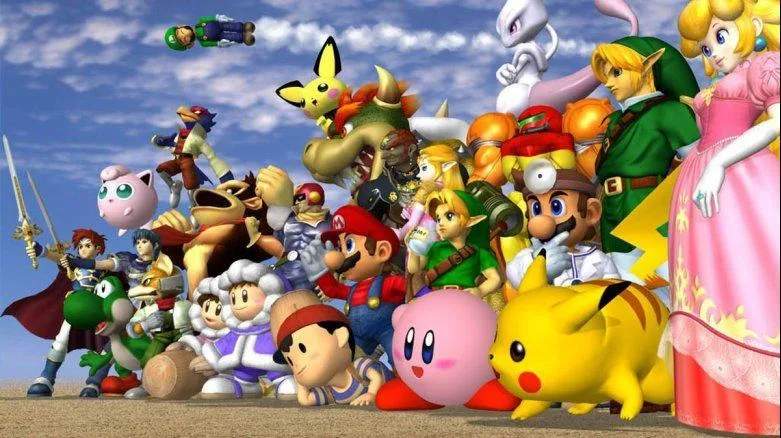
Super Smash Bros. (Nintendo 64) - Game Guide
Stage 1: Mushroom Kingdom
Welcome, aspiring Smash Bros. champion, to the iconic Mushroom Kingdom, the very first stage you'll encounter in Super Smash Bros. for the Nintendo 64! This vibrant and dynamic arena serves as an exceptional introduction to the game's core mechanics, featuring a unique blend of interactive elements, environmental hazards, and strategic opportunities. While the stage is visually reminiscent of Mario's classic adventures, it's a free-for-all brawl where the environment itself can be both a powerful ally and a cunning adversary. Mastering its unique features is not just recommended, it's essential for achieving victory and setting the foundation for your Smash Bros. journey.
The Mushroom Kingdom is more than just a flat fighting ground; it's a living, breathing battleground that demands constant awareness and adaptability. From the unpredictable emergence of classic Mario enemies to the strategic importance of its floating blocks and breakable structures, every element plays a role in shaping the flow of combat. This comprehensive guide will equip you with the knowledge and strategies needed to dominate this foundational stage, turning its potential pitfalls into powerful advantages.
Stage Layout and Key Features
Understanding the physical geography of the Mushroom Kingdom is the first step to mastering it. Each component of the stage offers distinct tactical advantages and disadvantages.
- Main Platform: This is the central, largest, and most stable platform on the stage. It provides ample space for direct combat, combos, and ground-based maneuvers. Most engagements will inevitably lead back to this primary battleground. Its wide-open nature makes it ideal for characters with strong ground games or those who prefer to keep opponents close.
- Side Platforms: Two smaller, elevated platforms flank the main platform, positioned slightly above and to the left and right. These are crucial for strategic positioning, offering vertical escape routes from ground-based pressure, opportunities for launching aerial attacks, and a temporary refuge from stage hazards below. They are also excellent for setting up edge-guarding scenarios or recovering from off-stage.
- Green Pipes: Two iconic green pipes, instantly recognizable from the Mario series, are situated on the main platform. One is located towards the left side, and the other towards the right. These pipes are not warp zones but are the primary source of the stage's dynamic hazards, spewing forth enemies that can disrupt combat.
- Breakable Blocks: Several brown, brick-like blocks are scattered across the main platform. These are not merely decorative; they are interactive elements that can be destroyed to reveal valuable items. Their strategic placement means controlling these blocks can lead to significant item advantages.
- Floating Blocks: Above the main platform, a series of floating question mark blocks and regular blocks provide additional, temporary platforms. These blocks can be stood on, offering verticality to combat, and can also be struck from below to yield items, mimicking their function in traditional Mario games. Controlling the space around these blocks is vital for aerial dominance and item acquisition.
Stage Hazards: Goombas, Piranha Plants, and Koopa Troopas
The Mushroom Kingdom is far from a static arena; it's teeming with classic Mario enemies that emerge as dynamic hazards, capable of turning the tide of battle. Understanding their behavior and learning to either utilize or avoid them is paramount for victory.
- Goombas: These classic, mushroom-shaped foes are the most common hazard. They frequently emerge from both green pipes on the main platform.
- Behavior: Goombas walk slowly and predictably across the main platform. If a fighter makes contact with a Goomba, they will take a small amount of damage (approximately 3-5%) and be briefly stunned, interrupting any ongoing action. They are relatively fragile and can be defeated with almost any attack.
- Strategy: Goombas are a double-edged sword. While they can interrupt your combos or movement, they can also be weaponized. A single attack will defeat a Goomba, often launching it across the stage. A well-placed attack can send a defeated Goomba flying into an opponent, dealing additional damage and knockback, potentially setting up a KO. For example, a quick Dash Attack from Captain Falcon or a well-timed Up-Smash from Fox can turn a Goomba into a projectile. Upon defeat, Goombas often drop items, making them valuable targets for item control. Prioritize clearing them if they pose a threat, or strategically use them to disrupt opponents.
- Piranha Plants: These iconic, flesh-eating plants also emerge from the green pipes, posing a more significant threat than Goombas.
- Behavior: Piranha Plants pop out of the pipes, remain stationary, and perform a biting attack that deals moderate damage (approximately 10-15%) and significant knockback to any fighter caught in their range. Unlike Goombas, Piranha Plants cannot be defeated; they will simply retract back into the pipe after a short period.
- Strategy: Piranha Plants are primarily an avoidance hazard. Due to their high damage and knockback, getting hit by one can be devastating, especially at high percentages. The best strategy is to anticipate their emergence and stay clear of the pipe openings. However, their predictable nature can be exploited. You can bait an opponent into their attack by positioning yourself near a pipe and then quickly dodging away as the plant emerges. This can lead to a free hit on your opponent or disrupt their recovery. Characters with good aerial mobility, such as Kirby or Jigglypuff, can easily float above their attacks, while characters with quick dashes can dart past them.
- Koopa Troopas: Less frequent than Goombas or Piranha Plants, Koopa Troopas occasionally emerge from the green pipes, offering a unique interactive hazard.
- Behavior: Koopa Troopas walk across the stage. If attacked once, they will retract into their shell. This shell can then be picked up by a fighter and thrown as a projectile. If the shell is not picked up, it will slide across the stage horizontally, dealing damage and knockback to anyone in its path until it hits a boundary or falls off.
- Strategy: Koopa Troopas provide a versatile offensive opportunity. Hitting a Koopa Troopa once transforms it into a powerful projectile. Picking up and throwing the shell at an opponent, particularly if they are off-stage or attempting to recover, can be a highly effective KO option. The shell deals good damage and knockback. Alternatively, you can let the shell slide across the stage to create a temporary barrier, zone out an area, or force an opponent into an unfavorable position. Be extremely cautious, however, as your own thrown or sliding shell can damage you! Use characters with strong throws, like Mario or Donkey Kong, to maximize the shell's potential.
Interactive Elements and Item Control
Beyond the dynamic hazards, the Mushroom Kingdom features several interactive elements that are crucial for item acquisition and overall stage control. Mastering these elements can provide a significant advantage.
- Breakable Blocks: The brown, brick-like blocks scattered across the main platform are not merely scenery.
- Effect: These blocks can be broken by attacking them repeatedly (typically 2-3 hits with a standard attack, or one strong smash attack). Upon breaking, they often reveal valuable items such as:
- Super Mushroom: Increases character size and attack power temporarily.
- Starman: Grants temporary invincibility.
- Beam Sword: A powerful melee weapon with extended reach.
- Home-Run Bat: A devastating weapon capable of one-hit KOs at high percentages.
- Various Projectiles: Including Bob-ombs (explosive), Green Shells (sliding projectile), and sometimes even a Fire Flower (short-range projectile).
- Strategy: Prioritize breaking these blocks early in the match to gain an item advantage. A quick Dash Attack, a strong aerial, or a well-placed Smash Attack can often break them efficiently. However, be mindful that while you are focused on breaking blocks, you are vulnerable to opponent attacks. Consider breaking them when an opponent is recovering, off-stage, or otherwise distracted. Controlling these item spawns can dictate the pace of the match.
- Effect: These blocks can be broken by attacking them repeatedly (typically 2-3 hits with a standard attack, or one strong smash attack). Upon breaking, they often reveal valuable items such as:
- Floating Blocks: The question mark blocks and regular blocks floating above the main platform are both platforms and item sources.
- Effect: These blocks can be stood on, providing verticality for aerial combat, escaping ground pressure, or setting up downward aerial attacks. Crucially, when struck from below (similar to Mario's traditional block mechanics), they will yield items. Common items include:
- Heart Containers: Recover a small percentage of damage.
- Super Mushrooms: (As above)
- Various Projectiles: Similar to those found in breakable blocks.
- Strategy: Utilize these blocks for aerial combat, to escape ground-based attacks, or to gain height for powerful downward aerials. Striking them from below can provide crucial items during intense battles, especially Heart Containers for damage recovery. Characters with good vertical recovery, such as Kirby or Jigglypuff, can easily access and control these blocks for item dominance. Controlling the space around these blocks is vital for maintaining item advantage and dictating aerial engagements.
- Effect: These blocks can be stood on, providing verticality for aerial combat, escaping ground pressure, or setting up downward aerial attacks. Crucially, when struck from below (similar to Mario's traditional block mechanics), they will yield items. Common items include:
Advanced Strategy: Mastering the Mushroom Kingdom
The Mushroom Kingdom is an excellent training ground for new players, offering a contained environment to learn fundamental Smash Bros. mechanics. For veterans, it presents unique tactical opportunities that can be exploited for consistent victories. Here’s how to elevate your game on this stage:
Movement and Recovery
- Utilize Side Platforms: These elevated platforms are invaluable. Use them to escape relentless ground combos, to set up edge-guards by dropping down onto recovering opponents, or to launch surprise aerial attacks from above. Practice fast-falling through them to quickly return to the main stage, or use them as a temporary safe haven from ground-based hazards or projectiles. They are also excellent for extending recovery if you are knocked off the main platform.
- Pipe Recovery: While the green pipes are hazard sources, they can also be used as a recovery aid in desperate situations. If you are knocked off the stage horizontally, aim to recover onto or behind a pipe. This can provide a small ledge to grab or a solid surface to wall jump off (for characters with that ability), potentially saving you from a KO. Be wary of Piranha Plants emerging, however!
- Floating Block Mobility: Master using the floating blocks for vertical movement. Characters with multiple jumps or good vertical recovery can dominate the air above the main platform, making it difficult for opponents to approach or recover. Use these blocks to gain height for powerful downward aerials or to escape ground pressure.
Item Control and Weaponization
- Prioritize Item Spawns: The Mushroom Kingdom is an item-heavy stage. Controlling the breakable blocks and floating blocks for item acquisition is crucial. If you see an opponent heading for a block, try to intercept them or break it first.
- Early Game Item Rush: At the start of a match, consider a quick dash to a breakable block to secure an early item advantage.
- Mid-Game Item Denial: If you're ahead, denying opponents access to items, especially Heart Containers, can solidify your lead.
- Weaponize Hazards: Don't just avoid Goombas and Koopa Troopas; turn them into weapons.
- Goomba Projectiles: A well-timed attack on a Goomba can send it flying into an opponent. This is particularly effective against opponents who are recovering or are in the middle of an attack.
- Koopa Shell Offense: The Koopa Troopa shell is one of the most potent projectiles on this stage. Practice picking it up and throwing it accurately. It can be used for:
- Edge-guarding: Throwing a shell at an opponent trying to recover can be a devastating KO option.
- Combo Extenders: A sliding shell can hit an opponent you've just launched, extending a combo or setting up a follow-up attack.
- Zoning: Letting a shell slide across the stage can force opponents into specific areas or interrupt their approach.
- Piranha Plant Baiting: While you can't weaponize Piranha Plants directly, you can use their predictable emergence to your advantage. Position yourself near a pipe, bait an opponent into approaching, then quickly dodge away as the plant emerges, leaving your opponent vulnerable to its attack or your own follow-up.
Character-Specific Strategies
While general strategies apply, certain characters excel or require specific adjustments on the Mushroom Kingdom:
- Heavy Characters (Donkey Kong, Bowser): Their strong throws make them excellent at weaponizing Koopa shells. Their weight also makes them less susceptible to early KOs from stage hazards. However, their slower movement can make avoiding Piranha Plants more challenging.
- Light/Fast Characters (Pikachu, Fox): Their speed allows for quick item acquisition and evasion of hazards. Their rapid attacks can quickly break blocks. However, their lighter weight means they need to be extra careful around Piranha Plants and weaponized Goombas/Koopa shells.
- Aerial Characters (Kirby, Jigglypuff): Their multiple jumps and good aerial mobility make them masters of the floating blocks, allowing for easy item collection and aerial dominance. They can also easily float over Piranha Plant attacks.
- Projectile Characters (Link, Samus): While the stage offers many items, characters with their own projectiles can add another layer of pressure, especially when opponents are focused on breaking blocks or dealing with stage hazards.
Common Pitfalls and How to Avoid Them
Even experienced You can fall victim to the Mushroom Kingdom's unique challenges. Be aware of these common mistakes:
- Underestimating Stage Hazards: Never assume a Goomba or Piranha Plant is harmless. A single hit at high percentages can be a KO, and even minor damage can add up. Always be aware of the pipes and anticipate enemy spawns.
- Ignoring Item Control: Allowing opponents to freely collect items from blocks can quickly turn the tide of a match. Make item acquisition a priority, especially valuable ones like the Starman or Home-Run Bat.
- Getting Trapped by Koopa Shells: A sliding Koopa shell can be surprisingly dangerous. If you're caught between a shell and the edge of the stage, you could be KO'd. Always be ready to jump over or shield a sliding shell. Remember, your own thrown shell can also hit you!
- Over-committing to Block Breaking: While items are good, don't tunnel vision on breaking blocks. You are vulnerable during the animation, and a smart opponent will punish you for it. Break blocks when it's safe or when you can simultaneously pressure an opponent.
- Predictable Recovery: The side platforms and pipes offer varied recovery options. Don't always recover to the same spot, as opponents will anticipate and edge-guard you. Mix up your recovery angles and use the stage elements to your advantage.
Conclusion
The Mushroom Kingdom is more than just the first stage in Super Smash Bros. for the N64; it's a masterclass in interactive stage design. By understanding its layout, respecting its hazards, and strategically utilizing its interactive elements, you can transform this seemingly simple arena into a powerful tool for victory. Practice your movement, master item control, and learn to weaponize the environment, and you'll be well on your way to becoming a true Smash Bros. champion!